
Barbell Collar Mistakes: Securing Loads Past 140 Pound Dumbbells
Discover common barbell collar mistakes when transitioning from 140 pound dumbbells to heavy barbell loads. Compare clamp types and troubleshoot slippage.

The Transition Problem: Why Collar Choice Matters at Elite Loads
When athletes max out their commercial gym's rack—often hitting the ceiling with 140 pound dumbbells for heavy incline presses, chest flyes, or bent-over rows—the transition to an Olympic barbell is mandatory for continued progressive overload. However, loading 325 pounds on a barbell to mimic the bilateral stimulus of pressing 140 pound dumbbells introduces massive rotational torque and lateral plate shift. This is where most lifters fail: they treat barbell collars as an afterthought. A dropped plate during a heavy eccentric phase doesn't just ruin a set; it can cause catastrophic bar tipping, wrist injuries, or damaged flooring. In this 2026 troubleshooting guide, we break down the most common collar mistakes lifters make when handling elite loads and compare the hardware required to keep your plates locked in place.
Expert Insight: The rotational force generated during a 315+ pound barbell row (the rough equivalent of rowing 140 pound dumbbells per arm) exerts up to 40% more lateral shear force on the barbell sleeve than a standard static bench press. Standard spring clips will fail under this specific torque profile.3 Critical Collar Mistakes (And How to Troubleshoot Them)
Mistake 1: Relying on Spring Clips for Rotational and Unilateral Lifts
Spring clips are cheap, ubiquitous, and entirely inadequate for heavy, dynamic movements. When performing walking lunges, Cuban rotations, or heavy Pendlay rows, the barbell sleeve experiences rapid acceleration and deceleration. Spring clips rely on weak radial tension that easily succumbs to momentum. The Fix: Reserve spring clips exclusively for static, slow-tempo lifts like traditional bench presses or floor presses where the bar path is strictly linear and controlled.
Mistake 2: Misaligning Lever Clamps on Calibrated Steel Plates
High-end lever clamps (like the Rogue HG 2.0) use a cam-action lever to bite into the sleeve. A common mistake is slapping the collar on at an angle or failing to push it flush against the inner hub of the plate before flipping the lever. If there is even a 2-millimeter gap, the plates will 'chatter' and rattle during the lift, degrading your proprioception and loosening the grip over time. The Fix: Always physically shove the collar flush against the plate hub with your palm before engaging the cam lever. Listen for the distinct 'click' of the O-ring seating against the steel.
Mistake 3: Ignoring Sleeve Tolerance and Chalking the Bar Ends
Not all Olympic barbell sleeves are created equal. While the International Weightlifting Federation (IWF) mandates a 50mm sleeve diameter, budget barbells often measure 49.2mm to 49.5mm. If you use a rigid clamp collar designed for a true 50mm sleeve on an undersized bar, the collar will spin freely, no matter how tight you crank it. Furthermore, lifters often get chalk on the bar ends, creating a slippery, low-friction surface. The Fix: Measure your barbell sleeves with digital calipers. If your bar is undersized, switch to Lock-Jaw style collars with thick, compressible O-rings rather than rigid aluminum collars. Always wipe the sleeve ends with a microfiber cloth before loading plates.
Comprehensive Barbell Collar Comparison Matrix
Choosing the right hardware requires understanding the mechanical differences between collar types. Below is a detailed comparison of the most common collar styles available on the market in 2026, tailored for lifters moving past the 140 pound dumbbell threshold.
| Collar Type | Best Use Case | Avg. Price (2026) | Failure Mode / Weakness |
|---|---|---|---|
| Spring Clips | Light static lifts, warm-ups | $10 - $15 / pair | Metal fatigue; slips under rotational torque |
| Lock-Jaw / Clamp | CrossFit, dynamic lifts, undersized sleeves | $40 - $55 / pair | O-ring compression over time requires replacement |
| Lever / Flip-Release | Powerlifting, heavy static compounding | $75 - $95 / pair | Can accidentally unlatch if bumped by a spotter |
| Spinlock / Threaded | Standard 1-inch bars (home gyms) | $15 - $25 / pair | Slow to load; threads strip if cross-threaded |
| Competition Calibrated | Olympic weightlifting, IWF meets | $150 - $180 / pair | Extremely heavy (2.5kg each); overkill for casual use |
According to Eleiko's equipment maintenance guidelines, calibrated competition collars must be cleaned of magnesium carbonate (chalk) buildup weekly to prevent the internal locking mechanisms from seizing. Neglecting this reduces the clamping force by up to 30%.
Step-by-Step Troubleshooting for Plate Slippage
If you are loading heavy plates to simulate the intense, localized fatigue of 140 pound dumbbells and your plates are still shifting, follow this diagnostic protocol:
- Inspect the Barbell Sleeve Finish: Bare steel and black oxide sleeves offer high friction, which is great for collars. However, hard chrome and decorative chrome sleeves are incredibly slick. If you have a chrome sleeve, you must use collars with high-durometer rubber O-rings (like the Lock-Jaw Pro) to bite through the slick surface.
- Check for 'Chalk Glaze': Over time, sweat and chalk mix to form a hard, ceramic-like glaze on the ends of the barbell sleeves. This acts as a lubricant. Scrub the sleeves with a nylon brush and a degreaser like recommended in BarBend's barbell care guides. Never use WD-40, as it leaves a residue that attracts more chalk.
- Verify Plate Hub Tolerances: Sometimes the collar is fine, but the plates are the issue. Cheap cast-iron plates often have uneven inner hubs. If the collar is pressing against a slanted plate hub, it will wedge outward under load. Always pair precision collars with calibrated steel plates or high-quality urethane bumper plates with flat steel insert hubs.
- Test the Collar O-Ring: Remove the O-ring from your clamp collar. If it feels flat, cracked, or lacks elasticity, it has lost its Shore A hardness rating. Order replacement O-rings directly from the manufacturer (usually under $10 for a pack) rather than buying a whole new collar.
Expert Verdict: Building Your Collar Arsenal
Transitioning from fixed weights like 140 pound dumbbells to heavy, free-sleeve barbell work requires a fundamental shift in how you view equipment security. You are no longer relying on the enclosed casing of a dumbbell to keep the weight distributed; you are entirely responsible for the mechanical integrity of the load.
For the modern home or commercial gym in 2026, a two-tier collar system is the most practical approach. Keep a pair of Rogue HG 2.0 Aluminum Lever Collars ($85) for your heavy, static powerlifting movements where maximum lateral rigidity is required. Supplement these with a pair of Lock-Jaw Pro clamps ($45) for high-rep Olympic lifts, lunges, and rotational work where the barbell sleeve experiences violent directional changes. By matching the collar mechanics to the biomechanics of the lift, you eliminate the dangerous variable of plate slippage, allowing you to push past your dumbbell limitations with absolute confidence.
More gear to consider
All reviews
Power Rack vs Squat Rack vs Stand + Dumbbell Thigh Exercises
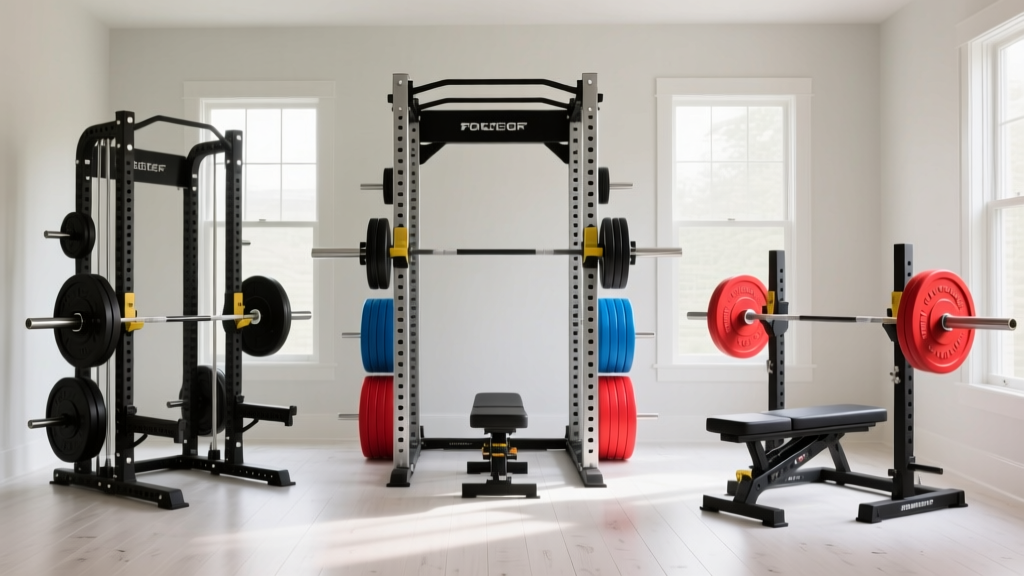
Power Rack vs Squat Rack vs Squat Stand: Best for Power Dumbbells

Olympic Barbell Buying Guide: Weight, Knurling & Dumbbell Waiter Curls

Power Rack vs Squat Rack vs Stand: 10 Pounds Dumbbells Mistakes
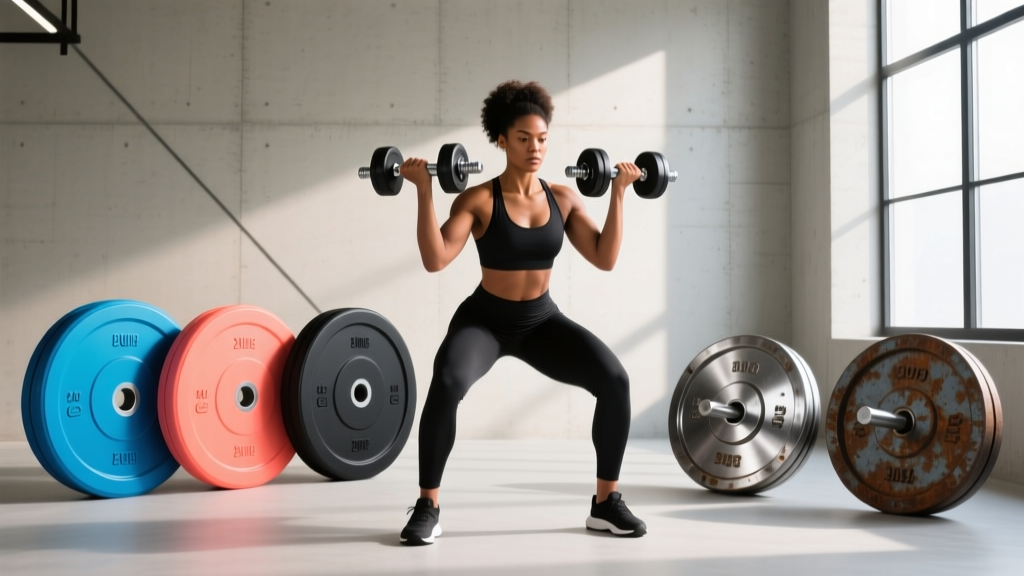
Bumper vs Iron Plates: 2026 Trends & The Woman Lifting Dumbbells Boom
