Barbell Collar and Clamp Types Comparison: Securing Free Weights for Squats and Chest-Supported Dumbbell Rows
Explore our 2026 barbell collar and clamp types comparison. Learn failure modes, pricing, and safety tips for squats and chest-supported dumbbell rows.

The Physics of Sleeve Slippage and Gym Safety
When loading a barbell for a heavy set of squats or deadlifts, the focus is often on the plates themselves. However, the unsung hero of free weight safety is the collar. A failing collar doesn't just result in a noisy plate shift; it causes catastrophic barbell imbalance, leading to severe torque on the lifter's spine and wrists. According to equipment testing data from Garage Gym Reviews, lateral plate shift during dynamic movements like push-presses or Pendlay rows can alter the bar's center of gravity by up to 14% in a single repetition if unsecured.
In this comprehensive barbell collar and clamp types comparison, we break down the exact mechanics, failure modes, and 2026 pricing of the most common securing mechanisms. Furthermore, we will explore how the principles of load security extend beyond the barbell, specifically when setting up plate-loaded handles for heavy accessory work like chest-supported dumbbell rows.
2026 Comparison Matrix: Collar and Clamp Types
Below is a structured breakdown of the primary collar categories available on the market, evaluated on clamping force, material longevity, and ideal use cases.
| Collar Type | Top 2026 Model Example | Avg. Price (per pair) | Grip Mechanism | Primary Failure Mode | Best For |
|---|---|---|---|---|---|
| Spring Clips | Rogue Work Saver Clips | $15 - $22 | Steel coil tension | Metal fatigue / loss of tension | High-rep CrossFit, quick changes |
| Lever / Clamp | Lock-Jaw Pro 2 | $32 - $40 | Nylon cam-lever | Plastic cracking in cold temps | Powerlifting, garage gyms |
| Screw / Spin-Lock | Eleiko Training Collars | $85 - $110 | Threaded steel / brass | Thread stripping / chalk jamming | Olympic weightlifting, competition |
| Quick-Release Alloy | Rogue HG 2.0 Collars | $45 - $55 | Aluminum lever with rubber pad | Lever hinge snapping under torque | Heavy deadlifts, strongman |
Deep Dive: Mechanics, Edge Cases, and Failure Modes
1. Spring Collars (The Budget Standard)
Spring collars rely on the tensile strength of coiled steel. While they are lightweight and allow for rapid plate changes, they offer the lowest lateral clamping force (typically under 40 lbs of pressure). Edge Case: If you are using older barbells with worn-down zinc or chrome sleeves, the diameter drops below the standard 50mm. Spring collars will fail to grip adequately, allowing plates to slide during asymmetrical lifts. Verdict: Fine for bumper plates that naturally grip each other, but dangerous for iron plates on smooth sleeves.
2. Lever and Clamp Collars (The Garage Gym Favorite)
Models like the Lock-Jaw Pro 2 utilize a reinforced nylon body and a cam-lever system that bites into the steel sleeve. They provide immense lateral pressure, often exceeding 120 lbs of clamping force. Failure Mode: The primary vulnerability of nylon clamps is temperature. In unheated garage gyms where temperatures drop below 40°F (4°C), the nylon becomes brittle. Snapping the lever shut in freezing conditions can fracture the hinge. Pro Tip: Keep your clamp collars in a heated mudroom or bring them inside during winter months to preserve the polymer's structural integrity.
3. Threaded and Spin-Lock Collars (The Competition Standard)
Required in International Weightlifting Federation (IWF) competitions, these collars use a threaded brass or steel insert that screws tightly against the plate. They weigh exactly 2.5 kg each, which is factored into the total competition lift. Failure Mode: Chalk and metal shavings easily accumulate in the threads, leading to cross-threading or jamming. They require regular maintenance with a wire brush and light machine oil to remain functional.
Equipment Safety Beyond the Barbell: The Chest-Supported Dumbbell Row Connection
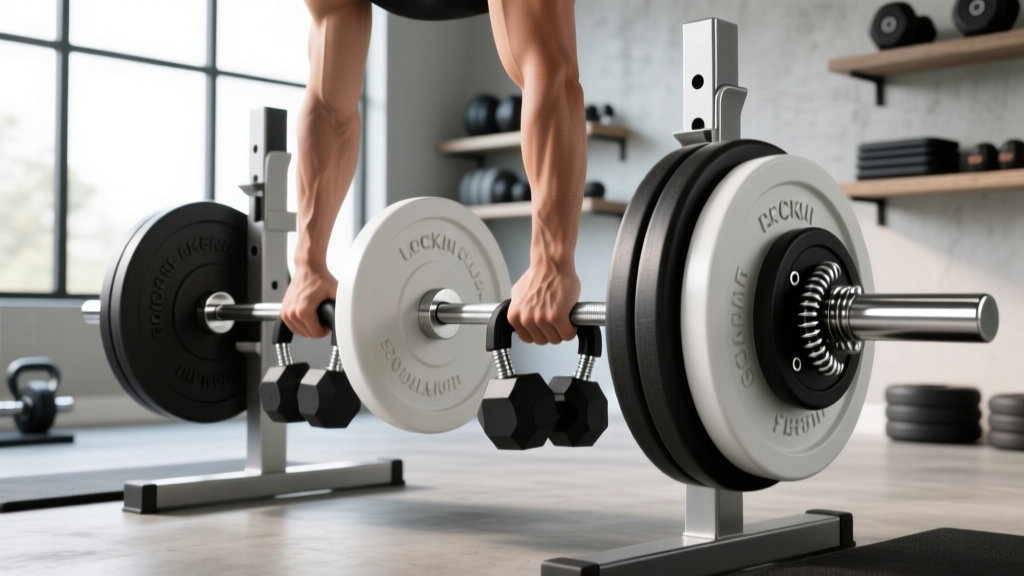
While barbell collars are strictly designed for 50mm Olympic sleeves, the underlying principle of securing your load applies universally across the gym. Consider the transition from heavy barbell bent-over rows to chest-supported dumbbell rows. Many serious lifters prefer using plate-loaded dumbbell handles for chest-supported dumbbell rows to achieve micro-loading and a superior range of motion compared to fixed rubber hex dumbbells.
The Hazard: Plate-loaded dumbbell handles feature much shorter, smoother sleeves than a standard barbell. Standard spring clips often lack the coil width to grip these short sleeves securely. If a spring clip slips during a heavy chest-supported dumbbell row, the plate slides off the handle, instantly tearing the lifter's rotator cuff or latissimus dorsi due to the sudden unilateral load drop.
The Solution: When setting up for chest-supported dumbbell rows with plate-loaded handles, abandon standard spring clips. Use specialized micro-clamps, Lock-Jaw Dumbbell collars, or threaded spin-locks specifically machined for dumbbell sleeves to guarantee absolute lateral security while your torso is isolated against the bench.
Purchasing Framework: Matching Collars to Your Training Style
Choosing the right collar is not about buying the most expensive option; it is about matching the tool to your specific training modality. Use this decision framework based on BarBend's equipment testing methodologies:
- The Olympic Weightlifter: You need collars that won't slip during the violent second pull of a snatch or clean. Buy Threaded/Spin-Lock Collars. The 2.5kg weight is mandatory for competition, and the mechanical thread guarantees zero slippage even when the barbell is dropped from overhead.
- The Powerlifter / Strongman: You are loading massive amounts of iron plates and performing slow, high-tension movements like deadlifts. Buy Heavy-Duty Alloy Lever Collars. You need maximum clamping force to prevent iron plates from shifting and altering your grip mechanics mid-pull.
- The CrossFit Athlete / Group Class Coach: Speed of transition is your priority. You are primarily using rubber bumper plates, which naturally resist sliding due to high friction. Buy Spring Clips or Quick-Release Alloy Collars. They allow you to strip and load a barbell in under 10 seconds.
Maintenance and Longevity: Protecting Your Investment
Even premium collars will fail if neglected. To maximize the lifespan of your clamps, implement the following maintenance routine:
- Degrease the Sleeves: Barbell sleeves accumulate a mixture of sweat, chalk, and oil. This creates a lubricated surface that defeats the rubber pads on lever collars. Wipe your barbell sleeves with a nylon brush and a light degreaser weekly.
- Inspect Hinge Pins: On quick-release alloy collars, the steel pin holding the lever hinge is a single point of failure. Check for shearing or bending every 6 months. If the pin shows a visible groove, replace the collar immediately.
- Avoid UV Degradation: If your gym is in a garage with direct sunlight, UV rays will degrade the plasticizers in nylon clamp collars within 12 to 18 months, leading to sudden snapping. Store them in a shaded bin.
Frequently Asked Questions
Do I need collars if I am only using bumper plates?
While bumper plates have a high-friction rubber surface that resists sliding, they are not immune to lateral movement, especially during asymmetric lifts or when dropped at an angle. A basic pair of spring clips is highly recommended even for bumper-only setups to prevent the plates from inching outward over a long workout.
Can I use standard barbell collars on an EZ-curl bar?
Most Olympic EZ-curl bars feature standard 50mm sleeves, meaning lever and spring collars will fit perfectly. However, some cheaper, standard-sized (1-inch) EZ-curl bars require specific friction clips or star-lock nuts. Always measure your sleeve diameter with digital calipers before purchasing collars.
Why do my lever collars leave black marks on my barbell sleeves?
This is caused by the friction pad on the inside of the collar rubbing against the zinc or chrome finish. While cosmetically annoying, it does not damage the structural integrity of the barbell. You can remove these marks using a melamine sponge and a small amount of Bar Keepers Friend.
More gear to consider
All reviews
Space-Saving Loadable Handles for the Dumbbell Farmer's Walk
Can Dumbbells Build Muscle Long-Term? Rubber Hex vs Urethane Care

EZ vs Straight Bar Care & The Standing Alternating Dumbbell Curl

Bumper vs Iron Plates: Layout & How Many Dumbbells Can You Lift

Best Dumbbell Racks 2026: Supersets & Upright Row with Dumbbells