Band Sets: Levels, Types & The Liforme Yoga Mat Discount Code Myth
Master our resistance band set buying guide. Learn levels, types, and troubleshooting tips, plus why chasing a Liforme yoga mat discount code is a trap.

The Anatomy of Elasticity: Band Types Explained
When building a versatile home gym or travel workout kit in 2026, resistance bands are non-negotiable. However, the most common mistake buyers make is treating all elastic resistance as identical. According to the National Strength and Conditioning Association (NSCA), elastic resistance provides variable accommodating resistance, meaning the tension increases as the band elongates. To leverage this correctly, you must match the specific band type to your biomechanical needs and failure-mode tolerances.
41-Inch Continuous Flat Loops
These are the workhorses of powerlifting and physical therapy. Measuring exactly 41 inches in circumference and typically ranging from 0.25 inches to 4 inches in width, they are made from layered strips of natural Malaysian latex. Best for: Pull-up assistance, barbell accommodating resistance (banded squats/deadlifts), and heavy mobility traction. Common Mistake: Buying a single 'medium' band and expecting it to work for both rotator cuff warm-ups and heavy deadlift lockouts. You need a graduated set.
Tubular Bands with Carabiners
Constructed from extruded latex tubing encased in a woven nylon sleeve, these mimic the feel of cable machines. Best for: Bicep curls, tricep pushdowns, and lateral raises. Troubleshooting Alert: The primary failure point is not the rubber, but the hardware. Cheap sets use cast zinc-alloy carabiners that can shear under 40 lbs of lateral torque. Always verify that the set uses forged steel D-rings or heavy-duty locking carabiners rated for at least 150 lbs of tensile force.
12-Inch Mini Loop Bands
Often sold in packs of five, these are designed for lower-body activation. Best for: Glute bridges, clamshells, and lateral band walks. Common Mistake: Confusing Thermoplastic Elastomer (TPE) with natural latex. TPE is cheaper and latex-free, but it suffers from severe plastic deformation (stretching out permanently) after repeated elongation past 150%. If you are training heavily, invest in 100% natural latex mini-loops.
Decoding Tension Levels: The 'Color Code' Lie
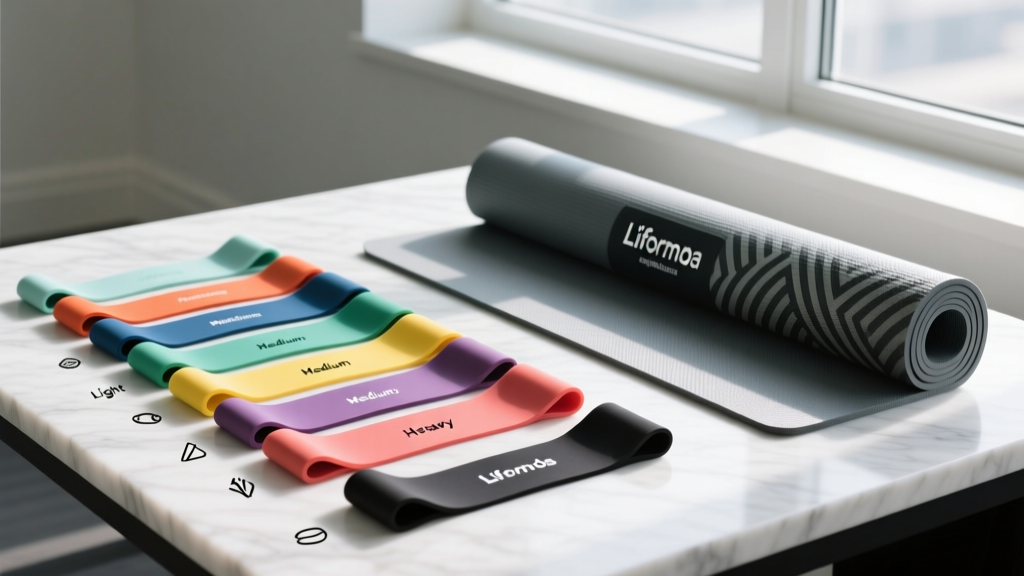
One of the most frustrating aspects of buying a resistance band set is the lack of industry-standardized color coding. A 'green' band from a budget Amazon brand might offer 15 lbs of resistance, while a 'green' band from Rogue Fitness offers 40 lbs. Relying on color alone is a critical error that leads to under-training or muscle strains.
Below is a troubleshooting matrix to help you translate generic color claims into actual poundage requirements for a standard 41-inch loop band stretched to 200% of its resting length (approximately 5 feet of total elongation).
| Band Width | Generic Color | Estimated Tension (at 200% stretch) | Ideal Use Case |
|---|---|---|---|
| 0.25 in (6mm) | Yellow / Orange | 5 - 15 lbs | Rehab, rotator cuff, elderly mobility |
| 0.5 in (13mm) | Red / Green | 15 - 35 lbs | Warm-ups, light pull-up assist, bicep curls |
| 1.0 in (25mm) | Blue / Black | 35 - 65 lbs | Moderate pull-up assist, banded bench press |
| 1.75 in (44mm) | Purple / Green | 65 - 100 lbs | Heavy pull-up assist, banded squats, deadlifts |
| 4.0 in (102mm) | Black / Silver | 100 - 175+ lbs | Advanced powerlifting accommodating resistance |
Note: Always check the manufacturer's specific tension chart. The American Council on Exercise (ACE) recommends starting with a band that allows you to complete 8-12 repetitions with proper form before progressing to the next width tier.
Troubleshooting Premature Snaps and Material Fatigue
Nothing destroys confidence in elastic training like a band snapping mid-set. While catastrophic failure is rare with high-quality natural latex, it does happen. Here is how to troubleshoot and prevent material fatigue:
- Micro-Fissures from Knurling: If you wrap flat loop bands around a knurled Olympic barbell for squats, the aggressive steel grip will cut microscopic tears into the latex. Over 10-15 sessions, these micro-tears propagate, leading to sudden snaps. Solution: Use smooth-sleeve bars or dedicated band pegs.
- UV and Ozone Degradation: Natural latex (cis-1,4-polyisoprene) is highly susceptible to ultraviolet light and ozone. Leaving your bands in the trunk of a hot car or near a sunny window will cause the rubber to dry rot, turning it chalky and brittle. Solution: Store bands in a cool, dark, climate-controlled drawer.
- Chemical Breakdown: Cleaning your bands with harsh household disinfectants or alcohol-based wipes strips the natural oils from the latex. Solution: Wipe down only with a damp cloth and mild soap.
Warning: The Anchor Point Hazard
Over 40% of resistance band injuries occur not from the band breaking, but from the anchor point failing. Never anchor a band to a sharp-edged door hinge, a free-standing pole, or a piece of furniture that can slide. Always use a dedicated, structurally sound wall mount or a heavy-duty door anchor placed over the top hinge.
The Promo Code Trap: Value vs. Illusion
When outfitting a home gym in 2026, consumers frequently misallocate their budget and time due to psychological pricing traps. A classic example is the endless internet hunt for a working liforme yoga mat discount code. Liforme produces premium, biodegradable yoga mats that retail well over $130, and the company strictly controls its margins, rarely offering genuine public coupon codes. Yet, shoppers will spend hours scouring sketchy coupon aggregators and browser extensions for that elusive liforme yoga mat discount code, only to give up and blindly click 'buy' on a $14.99 generic resistance band set without checking the tensile strength ratings or hardware quality.
'The time you spend chasing non-existent promo codes for premium accessories is time stolen from researching the safety and material science of the equipment that will actually bear your physical load and tension.'
This is a critical troubleshooting failure in the buying process. A premium yoga mat is a luxury comfort item; a resistance band is a high-tension kinetic tool that, if poorly manufactured, can snap back into your cornea or cause a severe muscle tear. Stop chasing viral discount myths. Instead, allocate your budget toward verified, multi-layered natural latex band sets from established fitness manufacturers that publish their exact elongation limits and quality control testing data.
Step-by-Step Pre-Workout Inspection Routine
To ensure safety and longevity, implement this 30-second inspection protocol before every heavy resistance band session:
- The Visual Scan: Run the entire length of the band between your fingers under good lighting. Look for any white, chalky spots (UV damage) or small nicks on the edges.
- The Tactile Stretch: Gently stretch the band to 150% of its length. Feel for any inconsistencies in thickness or areas that seem significantly thinner or more rigid than the rest of the loop.
- Hardware Check: If using tubular bands, inspect the carabiner gate. Ensure the spring mechanism snaps shut instantly and that the metal shows no signs of bending or rust near the swivel joint.
- Anchor Verification: Tug the anchor point with 20 lbs of manual force before attaching the band and stepping into your working stance.
By understanding the precise mechanics of band types, ignoring arbitrary color codes in favor of verified poundage, and avoiding the distraction of online discount code myths, you can build a highly effective, safe, and durable elastic resistance arsenal. For further reading on elastic training variables, consult the educational resources available through the Liforme wellness blog or the NSCA's official strength and conditioning journals.
More gear to consider
All reviews
Exercise Ball Size Guide: Buying Tips and Grey Yoga Mat Pairings

Yoga Blocks, Straps & Sanuk Yoga Mat Flip Flops: 2026 Space Guide

Manduka Pink Yoga Mat Slipping? Grip & Thickness Troubleshooting
Decathlon Yoga Mat Basic 4mm Reviews & Pilates Accessories Guide

Elevate Your Yoga Mat Workout: 2026 Material & Grip Comparison