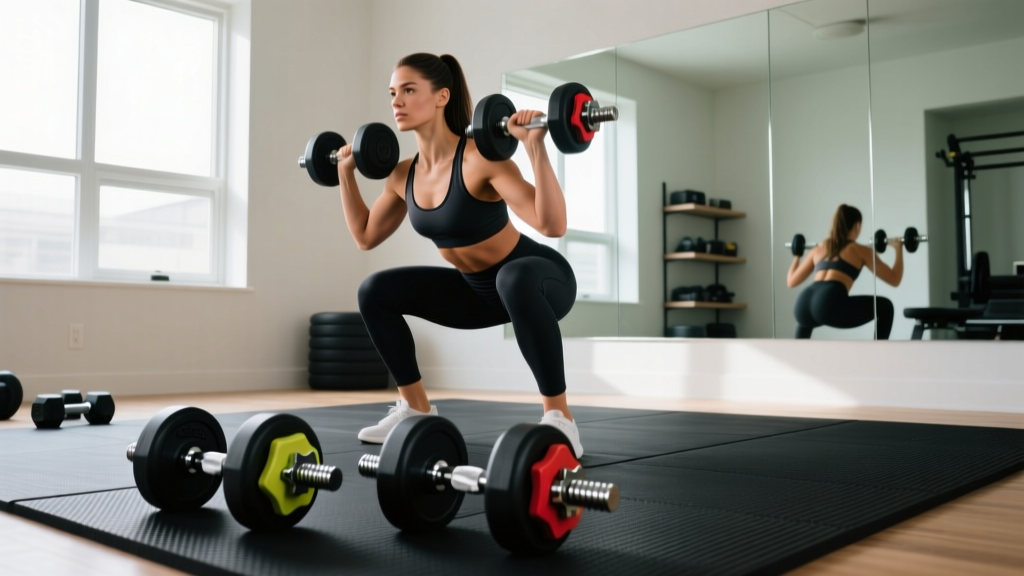
Beyond the Arm Circuit with Dumbbells: Barbell Collar & Clamp Types Comparison
Upgrading from an arm circuit with dumbbells to heavy barbell lifts? Compare spring, clamp, and competition collars to secure your sleeves in 2026.

The Unsung Hero of the Home Gym: Why Sleeve Security Matters
When building a versatile home gym, most lifters obsess over barbell whip, knurling aggressiveness, and plate calibration. Yet, the critical link between your plates and your bar is often an afterthought. Whether you are transitioning from a high-rep arm circuit with dumbbells to a heavy barbell complex, or stepping up to a 1RM deadlift, the collar you use dictates both safety and performance.
A shifting plate doesn't just make an annoying clanking sound; it fundamentally alters the barbell's center of mass. According to biomechanical principles highlighted by the National Strength and Conditioning Association (NSCA), asymmetrical load distribution during dynamic movements like the snatch or clean creates unpredictable torsional whip. This rotational inertia can easily overwhelm your grip and tear a rotator cuff. In 2026, with home gym equipment more specialized than ever, choosing the right barbell collar is a non-negotiable safety requirement.
⚠️ Safety Callout: Never perform Olympic lifts or heavy squats with standard spring clips. The kinetic energy of a dropped barbell can cause spring collars to deform and eject plates mid-lift, posing a severe hazard to you and your equipment.The 2026 Collar Taxonomy: From Budget Springs to Calibrated Clamps
Not all collars are created equal. The market has evolved significantly, moving away from cheap plastics toward glass-filled nylons and aircraft-grade aluminum. Let's break down the four primary categories, their exact failure modes, and where your money is best spent.
1. Traditional Spring Clips (The False Economy)
The classic 9-inch steel wire spring clip is the default inclusion with almost every budget barbell set. Priced between $6 and $12 per pair, they rely on mechanical tension to grip the 50mm Olympic sleeve.
- Clamping Force: Starts around 40-45 lbs of pressure when brand new.
- Failure Mode: Metal fatigue. After approximately 300-500 compressions, the steel loses its temper, dropping clamping force below 15 lbs. Furthermore, they offer zero lateral lock; plates will slide during the descent of a bench press.
- Verdict: Acceptable only for static, slow-tempo isolation movements. Useless for dynamic lifting.
2. Polymer & Aluminum Clamp Collars (The Home Gym Standard)
Clamp-style collars use a hinged lever mechanism to apply massive, even pressure around the sleeve. As of 2026, the market leaders utilize either glass-filled nylon or CNC-machined aluminum with TPU (Thermoplastic Polyurethane) inner linings.
- Top Models: LockJaw Pro ($35/pair), Rogue Monster Aluminum Collars ($45/pair), and Harbinger FlexFit ($28/pair).
- Clamping Force: Exceeds 150 lbs of lateral pressure. The TPU lining creates high-friction contact with steel or chrome sleeves, completely eliminating plate shift.
- Failure Mode: Polymer hinges can snap if dropped directly onto raw concrete in sub-zero garage temperatures. Aluminum models can suffer from latch-cam wear if chalk builds up in the locking mechanism.
- Verdict: The absolute best ROI for 90% of lifters. Essential for powerlifting, CrossFit, and general strength.
3. Threaded Spin-Locks (The Vintage Niche)
Designed for 1-inch standard bars (not Olympic), spin-locks require you to thread a heavy steel or cast-iron nut down the sleeve. While incredibly secure, they are agonizingly slow to load and unload, making them obsolete for modern training methodologies that require rapid weight changes.
4. IWF-Calibrated Competition Collars (The Elite Tier)
For competitive Olympic weightlifters, collars aren't just safety devices; they are part of the total calibrated load. The International Weightlifting Federation (IWF) Technical Rules mandate that competition collars must weigh exactly 2.5 kilograms each. Models like the Eleiko IWF Training Collar ($165+) or Uesaka competition clamps feature precision-machined steel bodies with secondary locking pins to prevent the lever from vibrating open during a heavy jerk.
Head-to-Head Comparison Matrix
| Collar Type | Avg. Price (2026) | Weight Impact | Best Application | Durability Rating |
|---|---|---|---|---|
| Spring Clips | $6 - $12 | ~0.1 lbs | Static isolation, warm-ups | Low (High fatigue) |
| Polymer Clamps (e.g., LockJaw) | $30 - $40 | ~0.5 lbs | CrossFit, Powerlifting, Home Gyms | High (Indoor use) |
| Aluminum Clamps (e.g., Rogue) | $45 - $65 | ~0.8 lbs | Heavy Compounds, Drop Sets | Very High |
| IWF Calibrated (e.g., Eleiko) | $150 - $190 | 2.5 kg (5.5 lbs) | Olympic Weightlifting, Meets | Generational |
Programming Integration: Complexes, Circuits, and Quick Changes
Why does collar selection matter for general fitness programming? Consider the modern trend of hybrid conditioning. You might start your session with a targeted arm circuit with dumbbells—hitting high-rep curls, tricep extensions, and lateral raises to induce localized fatigue. To finish the session, you transition to a heavy barbell complex (e.g., hang cleans into front squats).
If you are running an EMOM (Every Minute on the Minute) or a drop-set protocol, fumbling with stubborn spring clips or threading spin-locks destroys your rest intervals and heart-rate management. Quick-release clamp collars allow you to strip 45lb plates and load 25lb plates in under 4 seconds. This seamless transition maintains the metabolic demand of your workout, bridging the gap between dumbbell hypertrophy work and barbell conditioning without breaking your flow.
Expert Insight: 'Time under tension and rest-interval integrity are the primary drivers of hypertrophy and conditioning adaptations. If your equipment friction forces you to take an unplanned 45-second rest while wrestling with a barbell collar, you've compromised the stimulus of the entire superset.'
Expert Maintenance Protocol: Extending Collar Lifespan
Even the most expensive aluminum clamps will fail prematurely if neglected. Chalk dust, mixed with sweat and environmental humidity, creates an abrasive paste that eats away at TPU linings and seizes metal hinges.
- The Isopropyl Wipe: Once a month, use a microfiber cloth dampened with 70% isopropyl alcohol to wipe down the inner TPU lining of your clamp collars. This removes chalk residue and restores the rubber's natural tackiness.
- Hinge Lubrication: Apply a single drop of PTFE (Teflon) dry lubricant to the metal cam and hinge pin of aluminum collars. Avoid WD-40, which attracts dust and creates a grinding compound.
- Temperature Storage: If you train in an unheated garage during winter, bring your polymer clamp collars inside. Glass-filled nylon becomes brittle below 32°F (0°C) and can shatter if dropped onto a concrete floor.
Frequently Asked Questions
Do I need collars if I'm only doing bench press?
Yes. During a heavy bench press, if you fail to unrack the bar perfectly level, plates can slide outward on the lower side. This creates an immediate, unrecoverable asymmetrical load that has resulted in countless shoulder injuries and dropped bars. Always use clamp collars for bench pressing.
Can I use Olympic collars on a standard 1-inch bar?
No. Olympic collars are engineered specifically for 50mm (approx. 1.97 inches) sleeves. Attempting to use them on a 1-inch standard bar will result in zero clamping force and immediate slippage. You must use 1-inch specific spring clips or spin-locks for standard bars.
Why do competition collars weigh exactly 2.5kg?
In sanctioned Olympic weightlifting, the total weight lifted must be meticulously tracked down to the gram. Because the collars are required to secure the plates, the IWF standardized their weight at 2.5kg each so that referees and loaders can easily calculate the total barbell load without needing to account for variable collar weights.
More gear to consider
All reviews
Best Neoprene Dumbbells for an Underarm Workout with Dumbbells
Best Racks for Bowflex SelectTech 552i Dumbbells: 2026 Value Guide

Beyond Dumbbell Hang Cleans: Olympic Barbell Knurling & Weight Guide

Bar vs Dumbbell Storage: Rack Maintenance & Longevity Guide
Power Rack vs Squat Stand: How to Draw Dumbbells & Plan Your Gym