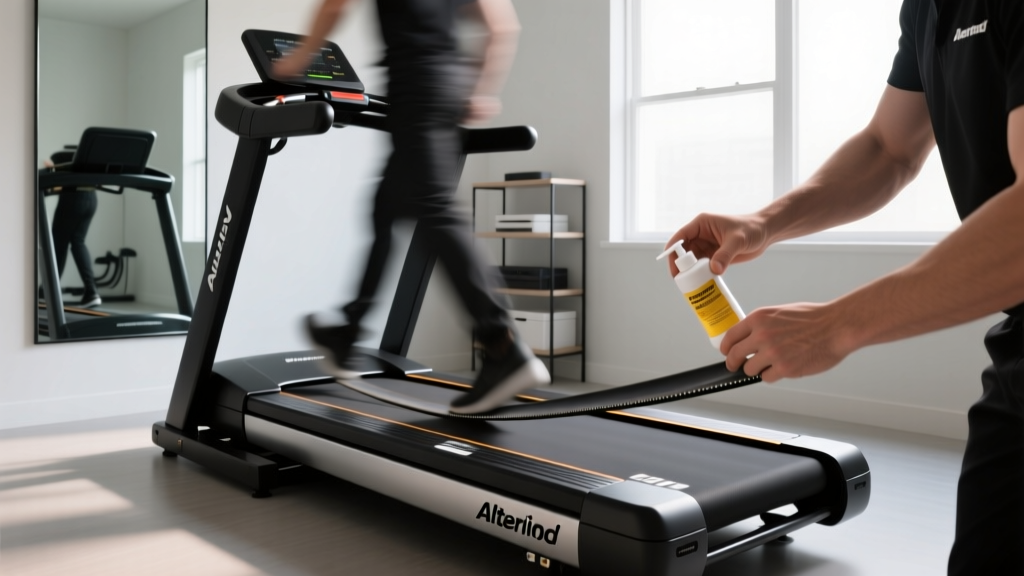
AlterG Treadmill Belt Maintenance in Compact Gym Layouts
Learn how to perform AlterG treadmill belt maintenance and lubrication in space-optimized home gyms and clinical layouts without moving the machine.

The Spatial Paradox: AlterG Footprint vs. Maintenance Access
Integrating an AlterG treadmill into a space-optimized home gym or a high-density clinical rehabilitation bay presents a unique architectural challenge. These anti-gravity machines are marvels of biomechanical engineering, but their physical footprint and specialized enclosures demand rigorous spatial planning. While standard commercial treadmills require uniform clearance for user safety, the AlterG Via (weighing upwards of 800 lbs) and the more compact AlterG M320 (approx. 350 lbs) require what facility designers call a 'maintenance halo'—specific zones of empty space dedicated not to the user, but to the technician.
When optimizing a room's layout, the instinct is to push the non-motor side of the treadmill flush against a wall or custom cabinetry. However, doing so severely restricts access to the belt deck, motor hood, and rear roller tensioning bolts. Belt maintenance and lubrication are non-negotiable for preserving the high-durometer PVC belts used in these machines. If you cannot access the belt edges or the rear tracking bolts due to a tight layout, a simple 15-minute lubrication job turns into a costly, multi-hour machine extraction process.
Space vs. Service: The Clearance Matrix
| AlterG Model | Machine Footprint | Standard User Clearance | Minimum Maintenance Halo |
|---|---|---|---|
| AlterG Via | 84" L x 36" W | 36" all sides | 24" non-motor side, 30" rear |
| AlterG M320 | 76" L x 32" W | 24" all sides | 18" non-motor side, 24" rear |
Note: The National Strength and Conditioning Association (NSCA) recommends 36 inches of clearance for safety, but in tight layouts, the maintenance halo can be reduced if sliding partitions or access hatches are integrated into the wall design.
Step-by-Step Belt Lubrication in Restricted Layouts
When your AlterG treadmill is positioned with only 18 inches of clearance on the left side, you cannot simply lift the belt from both sides to apply lubricant. You must adopt a unilateral lubrication strategy using specialized tools.
1. Select the Correct Lubricant
Never use aerosol silicone sprays. The AlterG's Differential Air Pressure (DAP) enclosure is made of a specialized urethane-coated nylon. Aerosol propellants and petroleum distillates will degrade the canopy fabric, leading to catastrophic pressure leaks. You must use 100% pure liquid silicone (such as Horizon Fitness or ProForm branded pure silicone liquids).
2. The Long-Reach Wand Technique
- Power Down: Unplug the machine and remove the safety key.
- Edge Access: Stand in your restricted 18-inch corridor. Use a flat, non-marring pry tool to gently lift the left edge of the belt by exactly 2 inches.
- Wand Insertion: Insert a 24-inch long-reach silicone applicator wand under the belt, aiming toward the center of the deck.
- Dispense: Squeeze exactly 15ml to 20ml of liquid silicone in a zig-zag pattern as you slowly withdraw the wand. Repeat this process at the front, middle, and rear thirds of the deck.
- Distribution: Plug the machine in, stand on the side rails, and run the belt at 3 MPH for 5 minutes to distribute the silicone evenly across the phenolic deck.
Protecting the DAP Enclosure During Maintenance
The most common failure mode during DIY treadmill maintenance in tight spaces is accidental damage to the AlterG's anti-gravity tent. When working in a cramped layout, your elbows and tools are constantly brushing against the DAP fabric.
Critical Warning: Even a micro-tear in the AlterG canopy from a stray Allen wrench will compromise the differential air pressure seal. Always drape a soft, lint-free microfiber cloth over the lower section of the DAP enclosure before beginning any belt tracking or lubrication work in a restricted spatial layout.
Belt Tension and Tracking Without Full Extraction
Over time, the treadmill belt will stretch and may drift to one side. If the rear of your AlterG M320 is positioned just 12 inches from a wall to maximize floor space, accessing the rear roller tensioning bolts is nearly impossible with standard tools.
The Layout Solution: Recessed Access Hatches
In high-end space-optimized gyms, we recommend building the rear wall with a custom, flush-mounted cabinetry access hatch. This allows you to reach the rear roller bolts from behind the wall or through a discreet panel without ever moving the 350 lb machine.
The Tool Solution: Extended Hex Keys
If architectural modifications aren't possible, invest in an extra-long 3/16-inch hex key (at least 12 inches in length). To center a drifting belt:
- Locate the rear roller adjustment bolts at the very back of the machine.
- If the belt drifts to the left, insert your extended hex key into the left bolt.
- Turn the left bolt clockwise by exactly one-quarter (1/4) turn.
- Turn the right bolt counter-clockwise by one-quarter (1/4) turn to maintain overall tension.
- Run the machine at 4 MPH and observe for 2 minutes. Repeat only if necessary. Over-tightening will cause premature motor burnout and deck friction.
Data Highlight: Lubrication Intervals by Usage
Maintenance frequency scales directly with usage hours, not just calendar months. In busy clinical layouts where the AlterG is used for back-to-back patient sessions, the belt requires more frequent attention.
- Light Use (Under 3 hours/week): Lubricate every 6 months (approx. 15ml per session).
- Moderate Use (3-10 hours/week): Lubricate every 3 months (approx. 20ml per session).
- Heavy Clinical Use (10+ hours/week): Lubricate monthly and inspect deck wear bi-annually.
Designing the 'Pivot-and-Lock' Layout
If you refuse to sacrifice the 36-inch clearance on the non-motor side but still need full access for deep belt maintenance and deck replacement, the 'Pivot-and-Lock' layout is the gold standard for space optimization.
This involves mounting the front feet of the AlterG M320 onto heavy-duty, lockable swivel casters rated for 500+ lbs, while the rear feet rest on a low-friction UHMW (Ultra-High Molecular Weight) polyethylene glide track installed into the floor. When maintenance is required, you unlock the front casters, push the side of the machine, and pivot the entire treadmill 45 degrees away from the wall. This instantly opens up the non-motor side for full belt access, deck inspection, and motor hood removal. Once serviced, you pivot it back into the track and lock the casters, returning the room to its optimized, space-saving configuration.
Frequently Asked Questions
Can I use WD-40 Specialist Silicone on my AlterG belt?
No. Even though it contains silicone, aerosol sprays contain propellants that can off-gas and degrade the AlterG's DAP enclosure fabric. Always use a 100% pure liquid silicone applied with a squeeze bottle and wand.
How do I know if the belt tension is correct after adjusting it in a tight space?
With the machine powered off, reach under the center of the belt and lift. You should be able to lift the belt exactly 2 to 2.5 inches off the deck. If it lifts higher, it is too loose and will slip during heavy user loading; if it lifts less, it is too tight and will strain the drive motor.
Does the AlterG Via require different lubrication than the M320?
The underlying belt and deck mechanics are similar, utilizing commercial-grade phenolic decks. Both require 100% liquid silicone. However, the Via's larger deck surface area may require closer to 25ml of lubricant per application compared to the M320's 15ml requirement.
More gear to consider
All reviews
Top Treadmill Challenge for Weight Loss: Sole F85 vs NordicTrack

Elliptical vs Treadmill: What a Paragon Sports Running Services Gait Analysis Treadmill Video New York Runners Trust Teaches Us

Orangetheory Fitness Treadmill Workout: Walking Pad vs Compact Treadmill

ProForm 425 Treadmill vs Stationary Bikes: 2026 Budget Analysis
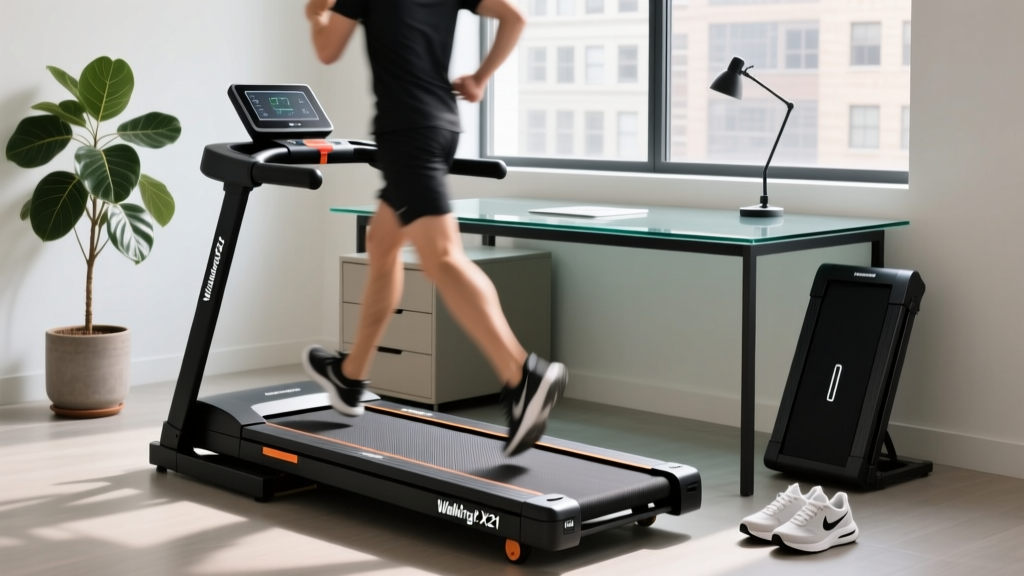
WalkingPad X21 Double Fold Treadmill Review: Under Desk Office Test
