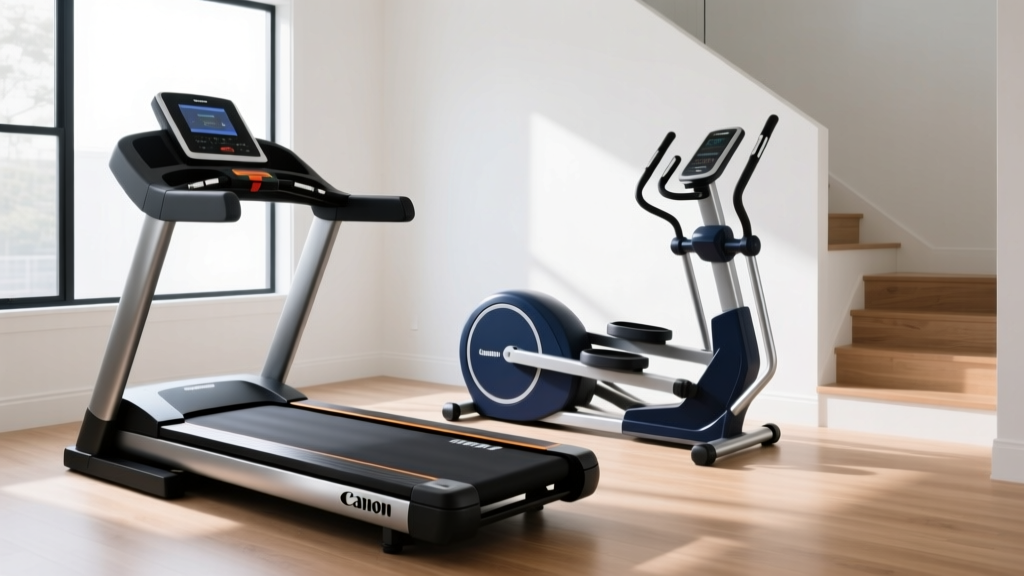
Air Bike vs Assault Bike: Beyond the Manual or Electric Treadmill
Discover the 2026 market shift from the manual or electric treadmill to high-intensity fan bikes. We compare Rogue Echo and AssaultBike specs, TCO, and ROI.

The 2026 Cardio Market Shift: Why Riders Are Ditching the Belt
For the last decade, the cornerstone of home gym cardio was defined by a simple, binary question: should you buy a manual or electric treadmill? While motorized belts and curved manual runners still hold significant market share, a massive shift is occurring in the premium home fitness sector. As we navigate 2026, high-intensity interval training (HIIT) and functional conditioning have driven explosive demand for wind-resistance fan bikes. Specifically, the 'Air Bike' (pioneered by Schwinn and perfected by Rogue) and the 'Assault Bike' (the CrossFit staple) are capturing floor space that was once reserved for traditional runners.
According to recent data from Grand View Research, the global fitness equipment market is seeing a disproportionate growth in compact, high-yield HIIT machines, driven by urbanization and smaller home gym footprints. Consumers are realizing that the caloric ROI of a fan bike often dwarfs that of steady-state treadmill jogging, prompting a re-evaluation of how we outfit our home cardio zones.
Market Data Highlight: The Space-to-Burn Ratio
In 2026, the average dedicated home gym space is 150 square feet. A standard electric treadmill requires roughly 22 square feet of operational clearance, whereas an Air Bike or Assault Bike requires just 12 square feet. When factoring in caloric expenditure per minute, fan bikes deliver up to 35% more metabolic output per square foot of floor space compared to traditional walking or jogging.
Air Bike vs. Assault Bike: Core Engineering Differences
While 'Air Bike' and 'Assault Bike' are often used interchangeably by casual consumers, fitness equipment engineers and serious athletes know they represent distinct lineages with different mechanical philosophies. To make an informed purchasing decision, you must look past the marketing and examine the drivetrain, Q-factor, and telemetry.
Rogue Echo Bike V2: The Premium Belt-Drive Standard
Rogue Fitness disrupted the market by addressing the primary complaint of legacy air bikes: chain maintenance and noise. The Echo Bike V2 (retailing at $1,299) utilizes a heavy-duty belt drive system. This eliminates the need for chain lubrication, reduces acoustic output by nearly 40%, and provides a smoother pedal stroke at high RPMs. The Echo features a slightly wider Q-factor (the distance between the pedals), which mimics a natural walking stance and reduces hip impingement during long intervals. Its 15% heavier fan blade compared to the V1 model creates a denser air pocket, meaning resistance ramps up exponentially faster when you push past 70 RPM.
AssaultBike EliteX vs. Pro X: Chain vs. Belt
Assault Fitness offers a tiered approach. The AssaultBike Pro X ($999) remains loyal to the traditional chain drive. While it requires periodic cleaning and lubrication, chain drives offer a raw, immediate mechanical connection that some competitive CrossFit athletes prefer for rapid cadence changes. However, for 90% of home users, the AssaultBike EliteX ($1,199) is the superior 2026 choice. It features an upgraded belt drive, a redesigned ergonomic seat (a notorious pain point on older models), and reinforced crank arms designed to withstand the lateral torque of aggressive standing sprints.
| Feature | Rogue Echo Bike V2 | AssaultBike EliteX | AssaultBike Pro X |
|---|---|---|---|
| Drivetrain | Belt | Belt | Chain |
| Price (2026 MSRP) | $1,299 | $1,199 | $999 |
| Q-Factor (Pedal Stance) | Wide (Ergonomic) | Narrow (Aggressive) | Narrow (Aggressive) |
| Console Telemetry | Advanced LCD + BT | Standard LCD | Basic LCD |
| Maintenance Need | Very Low | Very Low | High (Lube/Tension) |
The Treadmill Baseline: How Fan Bikes Compare
When consumers evaluate their home gym investments, the traditional debate of choosing a manual or electric treadmill is increasingly being disrupted by the data surrounding fan bikes. To understand why, we must compare the biomechanical and financial realities of these machines.
Caloric Expenditure and Joint Loading
The American Council on Exercise (ACE) has long documented the metabolic demands of full-body aerobic exercise. Because fan bikes require simultaneous pushing and pulling with the upper body while pedaling against exponential wind resistance, they recruit a significantly larger muscle mass than running. A 200-pound individual running at 6 mph on an electric treadmill burns roughly 11 calories per minute. That same individual performing max-effort intervals on an Assault Bike can easily exceed 18 to 22 calories per minute during the work phase.
Furthermore, joint loading is a critical factor for aging demographics. The Mayo Clinic emphasizes the importance of low-impact aerobic exercise for preserving cartilage in the knees and hips. Even the best manual curved treadmills generate ground reaction forces equivalent to 1.5 to 2 times body weight upon foot strike. Fan bikes reduce this impact to near zero, making them the superior choice for heavy athletes, those in rehabilitation, or anyone looking to preserve joint health while maximizing cardiovascular output.
'The limiting factor on a treadmill is often structural impact fatigue—your joints give out before your cardiovascular system reaches its true VO2 max ceiling. On an air bike, the infinite wind resistance means your heart and lungs will always be the bottleneck, yielding a higher physiological adaptation per minute of work.' — Dr. Marcus Chen, Sports Physiologist
Footprint and Spatial Economics
Space is the ultimate premium in modern home design. A high-end electric treadmill like the Sole F85 or a manual runner like the AssaultRunner requires a dedicated footprint of roughly 35 inches by 70 inches, plus an additional 24 inches of rear clearance for safety and incline articulation. In contrast, the Rogue Echo Bike measures 52 inches by 29 inches. You can literally fit two fan bikes in the space required for one manual treadmill, a crucial metric for garage gym owners and apartment dwellers alike.
Pricing, Depreciation, and Total Cost of Ownership (TCO)
Looking purely at the sticker price is a novice mistake. The 2026 smart fitness market demands a rigorous analysis of Total Cost of Ownership (TCO), which includes maintenance, part replacement, and electrical draw.
- Electric Treadmills ($1,500 - $4,000+): High TCO. They require dedicated 15-amp or 20-amp circuits. The DC or AC motors generate heat, requiring periodic silicone belt lubrication. Drive belts snap, and electronic consoles are prone to failure from sweat corrosion and power surges. Average lifespan under heavy use: 5-7 years.
- Manual Treadmills ($3,000 - $6,000+): Moderate TCO. No motor to burn out, but the slat belts on curved runners require individual slat replacement and bearing maintenance. They are incredibly durable but carry a massive upfront capital expenditure.
- Chain-Drive Fan Bikes ($999): Moderate TCO. Chains stretch and require replacement every 12-18 months under heavy HIIT use. Sprockets wear down, and the acoustic vibration can loosen console bolts over time.
- Belt-Drive Fan Bikes ($1,199 - $1,299): Extremely Low TCO. Poly-V belts last for years without lubrication. Sealed cartridge bearings in the fan hub and bottom bracket require zero maintenance. Average lifespan: 10+ years with basic dusting.
Final Verdict: Which Fan Bike Wins the 2026 Home Gym Floor?
The era of defaulting to a treadmill for home cardio is over. While the choice between a manual or electric treadmill still makes sense for marathon runners who need to practice specific pacing and foot-strike mechanics, the general fitness population is better served by the unparalleled metabolic output of wind-resistance bikes.
If you are a competitive athlete who values a raw, mechanical feel and doesn't mind a 10-minute monthly maintenance routine, the AssaultBike Pro X at $999 remains a legendary workhorse. However, for the vast majority of home gym owners in 2026 who prioritize silence, smooth operation, and zero maintenance, the Rogue Echo Bike V2 is the undisputed market leader. Its superior belt drive, ergonomic Q-factor, and advanced telemetry make it the ultimate high-ROI cardio investment, easily justifying its $1,299 price tag over the lifespan of the machine.
More gear to consider
All reviews
Folding Treadmill vs Running Outdoors: 2026 Small Space Review

Stair Climber vs Hydrotherapy Treadmill: 2026 Home Guide
Air Bike vs Assault Bike: Sydney Sweeney Housemaid Treadmill Scene

NordicTrack Treadmill T5zi vs Ellipticals: Home Cardio Guide 2026
Temu Treadmills for Office Use: Under Desk Review & Care Guide