Air Bike vs Assault Bike Care for 5k Run on Treadmill Recovery
Compare air bike and Assault Bike maintenance for 5k run on treadmill recovery. Learn longevity tips, belt vs chain care, and cross-training routines.

Why Runners Pivot to Air Resistance for Active Recovery
When you are deep in a training block, the repetitive impact of a 5k run on treadmill can quickly lead to shin splints, patellar tendonitis, or plantar fascia strain. To maintain cardiovascular output without the eccentric loading of running, elite coaches frequently prescribe air bike cross-training. According to the Hospital for Special Surgery, integrating non-impact cardio modalities is critical for preserving joint cartilage and balancing muscle recruitment patterns in distance runners.
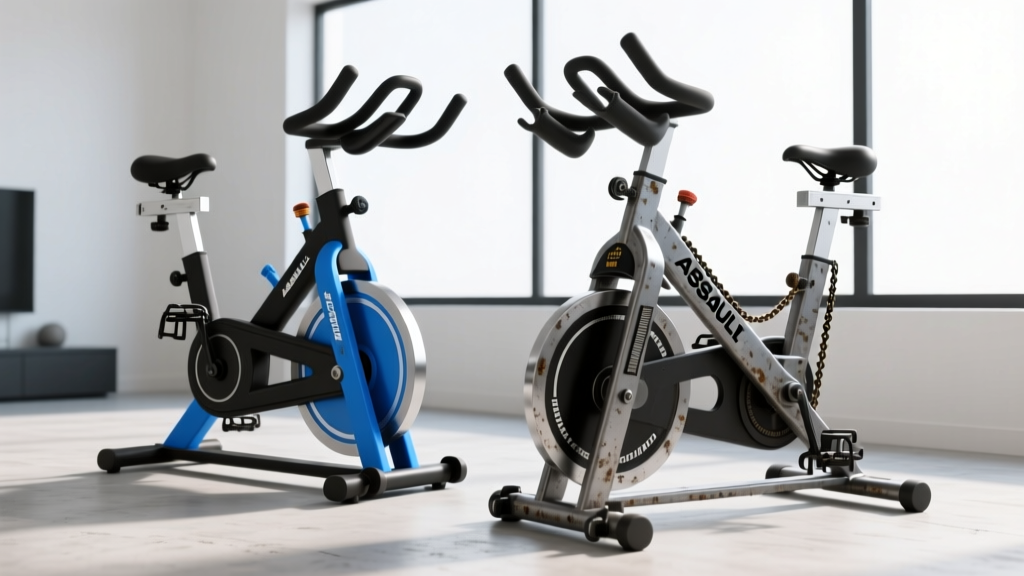
However, the commercial fitness market is dominated by two distinct mechanical philosophies: the belt-driven air bike (popularized by the Rogue Echo and Schwinn Airdyne AD7) and the chain-driven Assault Bike (specifically the Assault Fitness Classic). While both deliver the same grueling wind-resistance workouts, their maintenance requirements, failure modes, and long-term longevity differ drastically. If you are using these machines to supplement your running, understanding how to maintain them ensures your equipment is always ready when your legs need a break from the treadmill belt.
Expert Insight: Air bikes pull in massive volumes of ambient air to generate resistance. This means they act as giant vacuums for dust, pet hair, and micro-debris. Neglecting the fan cage and drivetrain is the number one reason these machines degrade prematurely in home gyms.The Mechanical Divide: Polygroove Belt vs. Roller Chain
The core difference in maintenance stems from how the crankset transfers power to the fan. Belt-driven models use a continuous polygroove rubber belt, while traditional Assault Bikes utilize a standard metal roller chain. Each system demands a completely different approach to lubrication, tensioning, and cleaning.
Maintaining Belt-Driven Models (Rogue Echo, Schwinn Airdyne AD7)
Belt drives are generally favored for home gyms because they are quieter and do not require liquid lubricants. The Rogue Echo Bike, for instance, uses a heavy-duty polygroove belt that can last for years if properly tensioned. However, belts are highly susceptible to misalignment and debris buildup.
- Tension Verification (Every 50 Hours): Unlike chains, belts do not stretch significantly, but the tensioner pulley can settle. Press your thumb into the longest exposed span of the belt. It should deflect exactly 10mm to 15mm. Over-tightening the belt is a catastrophic error; it places extreme lateral load on the bottom bracket bearings, leading to premature grinding and failure.
- Groove Cleaning (Monthly): Dust packs into the ribs of the belt and the pulley grooves, causing a high-pitched squeal and accelerating rubber degradation. Use a stiff nylon brush and a mild degreaser to scrub the pulley grooves. Never use petroleum-based solvents, which will dry out and crack the rubber.
- Debris Shielding: Ensure the plastic fan cage is fully secured. A missing cage screw can allow the belt to slip off the track during high-RPM sprints, instantly shredding the belt edges against the internal frame.
Maintaining Chain-Driven Models (Assault Fitness Classic)
The Assault Fitness Classic mimics the drivetrain of a single-speed bicycle. It is incredibly robust and can handle massive torque, but it requires regular lubrication and adjustment to prevent the dreaded 'chain slap' and metal-on-metal wear.
- Proper Lubrication (Every 30 Days): Never use standard WD-40 on an air bike chain. It strips the factory grease and attracts dust, creating an abrasive grinding paste that will destroy your sprockets. Instead, apply a dry PTFE bicycle chain lube (such as Finish Line Dry). Apply one drop per roller, let it penetrate for five minutes, and wipe away all excess with a microfiber cloth.
- Slack Adjustment: Chains elongate over time. Locate the rear axle tensioners and adjust them until the chain has exactly 1/2 inch to 3/4 inch of vertical play at its midpoint. A chain that is too tight will whine and wear out the bottom bracket; a chain that is too loose will skip teeth during standing starts.
- Sprocket Inspection: Every six months, inspect the teeth on the front chainring. If they begin to look hooked or asymmetrical (resembling shark fins), the chain and sprocket must be replaced as a matched set to prevent catastrophic slipping.
5-Year Longevity and Cost of Ownership Matrix
When budgeting for your cross-training setup, the initial purchase price is only half the equation. Below is a comparative analysis of the true cost of ownership for the top models used by runners.
| Model | Drive Type | Initial Cost (Approx.) | 5-Year Maintenance Cost | Primary Failure Point |
|---|---|---|---|---|
| Rogue Echo | Polygroove Belt | $995 | $45 (Belt replacement) | Bottom Bracket Bearings |
| Assault Classic | Roller Chain | $799 | $85 (Chain, Lube, Sprockets) | Chain Stretch & Sprocket Wear |
| Schwinn Airdyne AD7 | Polygroove Belt | $1,199 | $60 (Belt, Console PCB) | Console Sweat Damage |
Troubleshooting Edge Cases: Bottom Brackets and Sweat Corrosion
Beyond the drivetrain, air bikes face unique environmental and mechanical stresses that treadmill users might not anticipate.
- Bottom Bracket Bearing Failure: When runners transition to the air bike, they often use a heavy, side-to-side rocking motion during high-RPM sprints. This lateral torque is devastating to sealed cartridge bearings. If you hear a rhythmic clicking or feel a grinding sensation through the pedals, the bottom bracket is failing. Replacing this requires a standard bottom bracket tool and a new sealed cartridge (typically a $30 to $50 part), but ignoring it will score the metal frame housing, turning a minor repair into a total frame replacement.
- Console PCB Corrosion: Unlike a 5k run on treadmill where sweat drips onto a deck, air bike riders lean forward, allowing highly saline sweat to drip directly onto the console and the steering column pivot points. Always use a silicone-based frame protectant on the handlebars and drape a towel over the monitor during high-intensity intervals. If your console begins dropping wattage readings or flickering, open the battery compartment and check for green corrosion on the contacts; clean it with isopropyl alcohol and a cotton swab.
- Fan Cage Dust Loading: A fan clogged with dust and pet hair loses aerodynamic efficiency. This forces the user to pedal at a higher RPM to achieve the same wattage output, skewing your training metrics. Use a shop-vac with a brush attachment to clean the fan blades bi-monthly.
Periodizing Your 5k Run on Treadmill with Air Bike Recovery
To maximize longevity for both your body and your equipment, integrate the air bike strategically into your running macrocycle. The Centers for Disease Control and Prevention (CDC) recommends at least 150 minutes of moderate-intensity aerobic activity per week, but for runners, the intensity distribution matters.
Use the air bike for Zone 2 active recovery sessions (30-45 minutes at a conversational pace) the day after your long treadmill runs. This flushes metabolic waste from the calves and hamstrings without the impact forces of the treadmill deck. Reserve the chain-popping, maximum-effort Tabata sprints for days when you are completely fresh, ensuring your central nervous system is primed and your form remains stable, which inherently reduces the lateral sway that destroys bottom bracket bearings.
Ultimately, whether you choose the silent, low-maintenance belt drive of the Rogue Echo or the rugged, serviceable chain drive of the Assault Classic, consistent mechanical care is non-negotiable. By dedicating just 15 minutes a month to drivetrain tensioning, cleaning, and targeted lubrication, you guarantee that your cross-training equipment will outlast your running shoes, supporting countless pain-free recovery sessions for years to come.
More gear to consider
All reviews
Troubleshooting the 715t Plus Treadmill Motor & Horsepower Guide
Rowing Machine Buying Guide: Rowing vs Hill Training on Treadmill
Walking Pad vs. Heavy-Duty: Treadmill Weight Capacity 500 lbs Guide
Home Stair Climber Guide 2026: Escape Treadmill Squeaking
CT05 Treadmill Review: Office Use & Maintenance Tips
