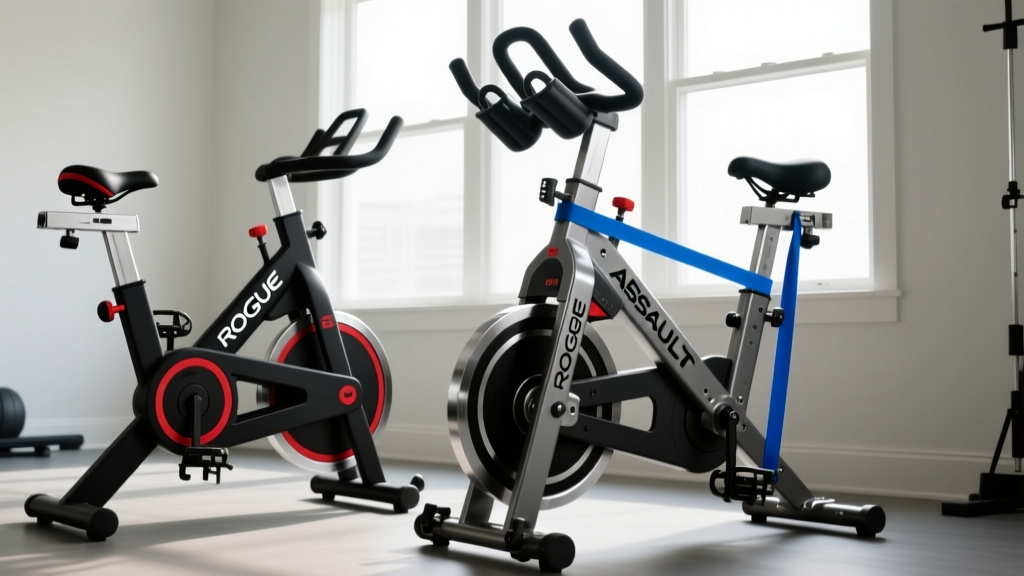
Air Bike vs Assault Bike Maintenance for the Man on a Treadmill
Comparing Rogue Echo and Assault AirBike maintenance. Discover longevity tips, failure modes, and why the man on a treadmill is switching to fan bikes.

The Shift from the Deck to the Fan: A New Maintenance Paradigm
For the dedicated man on a treadmill, the steady hum of a motorized deck and the predictable wear of a running belt are familiar comforts. Treadmill maintenance is largely passive: wipe down the console, lubricate the silicone deck every six months, and tighten the rear roller if the belt slips. But as joint preservation and high-intensity interval training (HIIT) take priority in 2026, a massive demographic shift is occurring. The traditional cardio enthusiast is trading the impact of the running deck for the infinite, wind-resistant torque of the air bike.
According to Mayo Clinic's guidelines on aerobic exercise and joint impact, fan bikes offer a zero-impact, full-body cardiovascular stimulus that spares the knees and lower back from the repetitive strike forces of running. However, transitioning from a motorized treadmill to a human-powered fan bike introduces a completely different mechanical ecosystem. The two titans of this space—the Rogue Echo Bike Gen 2 and the Assault Fitness AirBike Pro—utilize vastly different drivetrains, bearing systems, and electronics. Understanding these differences is the key to maximizing longevity and protecting your $1,000+ investment.
The Core Drivetrain: Belt vs. Chain Longevity
The most significant mechanical divergence between the Rogue Echo and the Assault AirBike lies in how power is transferred from the crank to the fan blade. This single difference dictates 80% of your routine maintenance.
Assault AirBike Pro: The Chain Drive Reality
The Assault AirBike Pro utilizes a traditional steel roller chain, similar to a single-speed bicycle. While chain drives are incredibly durable and can handle massive torque spikes during all-out sprints, they are exposed to the elements and require active lubrication.
- Lubrication Protocol: You must apply a PTFE-based dry lube (like Tri-Flow or Finish Line Dry) to the chain every 4 to 6 weeks, depending on usage. Avoid wet lubes or heavy greases, as they attract dust and pet hair, creating an abrasive paste that accelerates sprocket wear.
- Chain Stretch Monitoring: Use a standard bicycle chain checker tool every 3 months. If the chain stretches beyond 0.75% (roughly 1/16 inch over 12 links), it will begin to eat the teeth on your front chainring and rear cog. Replacement chains cost around $15, but a ruined chainring will cost $60+ and require a full drivetrain teardown.
Rogue Echo Bike Gen 2: The Belt Drive Advantage
Rogue engineered the Echo Bike Gen 2 with a polyurethane cogged belt drive. This is a direct response to user complaints about chain noise and maintenance. The belt requires zero lubrication and operates in near silence.
- Tensioning over Lubrication: Your primary maintenance task is checking belt tension. Press down on the center of the belt with about 10 lbs of force; it should deflect exactly 1/2 inch. If it's too loose, the belt will skip teeth during high-wattage sprints, causing catastrophic wear to the cog teeth.
- Cleaning: Simply wipe the belt with a damp microfiber cloth monthly to remove sweat salts and airborne dust. Never use chemical degreasers, as they degrade the polyurethane matrix.
Over a 5-year period of moderate use (3x per week), the Assault AirBike chain drive will require approximately 3 replacement chains and 4 cans of PTFE lube, totaling around $75 in maintenance parts. The Rogue Echo belt drive requires $0 in replacement parts, provided the tension is correctly maintained and the bike is kept in a climate-controlled environment to prevent polyurethane dry-rot.
Structured Maintenance Comparison Matrix
Below is a side-by-side breakdown of the critical maintenance intervals and failure modes for both machines.
| Component | Rogue Echo Gen 2 (Belt) | Assault AirBike Pro (Chain) | Maintenance Interval |
|---|---|---|---|
| Drivetrain Lube | None required | PTFE Dry Lube | Every 4-6 weeks (Assault) |
| Bottom Bracket | Sealed Cartridge (Threaded) | Sealed Cartridge (Press-fit) | Replace every 3-4 years |
| Fan Bearings | Heavy-duty sealed | Standard sealed | Listen for grinding monthly |
| Pivot Bushings | Polyurethane | Nylon / Bronze | Silicone grease bi-annually |
Fan Blade Bearings and the Dust Problem
The defining feature of an air bike is the massive front fan. As the fan spins, it acts as a giant vacuum, pulling in dust, pet dander, and microscopic sweat aerosols. Over time, this debris bypasses the seals on the fan hub bearings, causing them to dry out and grind.
The Edge Case Failure: Many users ignore the fan hub until it seizes. When a fan bearing seizes on an Assault AirBike, the sudden deceleration can snap the drive chain or strip the rear cog. On the Rogue Echo, it can snap the polyurethane belt. To prevent this, use a compressed air duster (or a low-PSI air compressor) to blow out the fan hub housing every two months. If you hear a faint metallic 'crunching' sound when spinning the fan by hand, the sealed cartridge bearings are dead. You can press these out and replace them with standard industrial SKF 6203-2RS bearings for about $12 a pair, rather than buying an OEM replacement hub assembly for $80+.
Electronics and Sweat Corrosion Prevention
The man on a treadmill is used to wiping down a plastic console. But on an air bike, the console sits directly in the 'splash zone' of an upright, high-sweat HIIT workout. The Assault AirBike Pro console is notorious for battery terminal corrosion, while the Rogue Echo features a slightly more robust, sweat-resistant housing.
'Sweat is highly acidic and saline. When it drips into the battery compartment or the ribbon cable connecting the console to the wind sensor, it creates galvanic corrosion that will brick your display within 18 months if left unchecked.' — FitGearPulse Equipment Lab Notes, 2025
Actionable Electronics Care:
- Dielectric Grease: Open the battery compartment and apply a thin dab of dielectric grease to the positive and negative spring terminals. This creates a waterproof barrier against saline drip.
- Console Covers: Invest in a $15 neoprene console cover. It sounds trivial, but it extends the life of the LCD backlight and membrane buttons by years.
- Ribbon Cable Check: Once a year, unscrew the console mount, disconnect the primary data ribbon cable, and wipe the copper contacts with 90% isopropyl alcohol to prevent ghost readings on the wattage display.
Pedal Spindles and Crank Arm Integrity
Air bikes generate immense torque. When you are pushing 800+ watts during a sprint, the lateral force on the pedal spindles is exponentially higher than on a treadmill or even a standard road bike. The stock plastic-composite pedals on the Assault AirBike have a known failure mode: the spindle can snap at the threading point under heavy, out-of-the-saddle sprinting.
The Upgrade Path: Do not wait for the stock pedals to break. Swap them out immediately for a set of metal-cage platform pedals or robust SPD pedals (like the Shimano PD-M520). Ensure you use a 15mm pedal wrench and apply a thin layer of anti-seize compound to the 9/16" threads before installation. The Rogue Echo Gen 2 ships with slightly more robust aluminum-alloy pedals, but upgrading to aftermarket BMX-style pins will drastically improve grip when your shoes are slick with sweat.
Frequently Asked Questions (FAQ)
Can I use my air bike outdoors or in an unheated garage?
It is highly discouraged. The polyurethane belt on the Rogue Echo becomes brittle in freezing temperatures and can snap under high torque. Furthermore, the steel chain on the Assault AirBike will flash-rust within 48 hours in a humid, unclimate-controlled garage, destroying the O-rings and rollers.
How do I fix a squeaking sound coming from the moving arms?
The moving arms pivot on bushings at the base of the frame. If they squeak, do not use WD-40, as it will strip away the existing factory lubrication. Instead, remove the pivot bolt, clean the bushing, and apply a generous amount of white lithium grease or marine-grade silicone paste before reassembling.
Is the transition from a treadmill to an air bike difficult on the calves?
Yes. Treadmill running relies heavily on the stretch-shortening cycle of the Achilles tendon. Air biking requires continuous, forceful plantarflexion and dorsiflexion without the elastic rebound of a running deck. Expect severe delayed onset muscle soreness (DOMS) in the tibialis anterior and calves for the first two weeks. Start with 10-minute intervals to condition the lower leg connective tissue.
Final Thoughts on Longevity
The transition from being the quintessential man on a treadmill to an air bike athlete is one of the best decisions you can make for your cardiovascular health and joint longevity in 2026. However, an air bike is a raw, mechanical beast that demands respect. The Rogue Echo Gen 2 wins the war on low-maintenance drivetrains with its sealed belt system, making it ideal for the 'set it and forget it' user. The Assault AirBike Pro offers a slightly more traditional, repairable feel, provided you stay on top of chain lubrication and dust management. Treat the bearings, protect the electronics from sweat, and your fan bike will outlast your treadmill by a decade.
More gear to consider
All reviews
NYRR RunCenter Gait Analysis 2024 & Older NordicTrack Treadmills

Elliptical vs Treadmill Layouts: Space Planning & Km Pace Chart

Air Bike vs Assault Bike: Beyond the Manual or Electric Treadmill

Air Bike vs Assault Bike vs Treadmill for Rehab: Budget Breakdown
How to Unfold a NordicTrack Treadmill & Rower Guide
