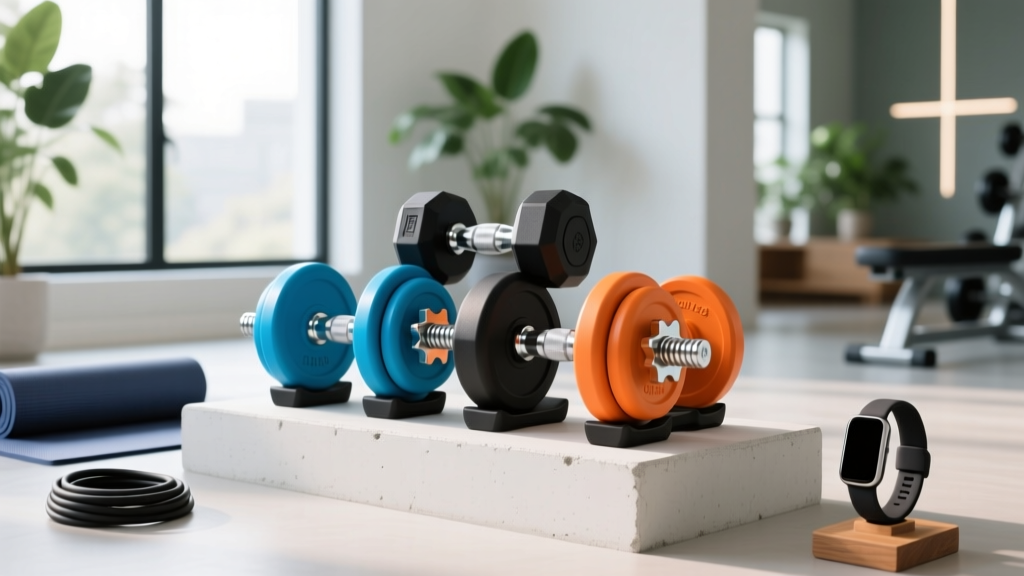
Best Adjustable Dumbbells for Starting Dumbbell Exercises (2026)
Find the best adjustable dumbbells for starting dumbbell exercises in 2026. Compare top models, avoid failures, and follow a beginner step-by-step guide.

The Smart Beginner’s Guide to Adjustable Free Weights
Walking into a commercial gym, you are greeted by a sprawling dumbbell rack spanning from 5 to 120 pounds. Replicating that setup at home is a logistical and financial nightmare; a full set of fixed rubber hex dumbbells and a tiered rack will easily consume over 40 square feet of space and cost upwards of $1,200 in 2026. For beginners focused on starting dumbbell exercises and building foundational strength, adjustable dumbbells are the undisputed solution.
However, not all adjustable mechanisms are created equal. Some are engineered for rapid drop-sets, while others are designed for budget-conscious buyers. This guide breaks down the top adjustable dumbbells on the market, highlights their specific mechanical failure modes, and provides a step-by-step beginner routine to get you lifting safely.
💡 The Space-to-Cost Ratio
A standard pair of 52.5 lb adjustable dumbbells replaces up to 15 pairs of fixed weights. This reduces your footprint from roughly 12 square feet (for a tiered rack) to just 2.5 square feet, while saving you an average of $600 to $800 compared to buying individual cast-iron or urethane pairs.
2026 Adjustable Dumbbell Comparison Matrix
When selecting equipment for your home gym, understanding the internal engineering is just as important as the exterior coating. Below is a direct comparison of the three market leaders based on current 2026 pricing, mechanism durability, and biomechanical feel.
| Model | Adjustment Mechanism | Weight Range | 2026 Street Price (Pair) | Handle Length | Durability & Failure Risk |
|---|---|---|---|---|---|
| Nuobell 80 lb | Twist-Grip (Steel Pin) | 5 - 80 lbs | $429 | Fixed (Standard) | High risk if dropped; internal plastic base cracks. |
| Bowflex SelectTech 552 | Rotary Dial (ABS Plastic) | 5 - 52.5 lbs | $349 | Adjustable (Up to 16.9') | Medium risk; dials jam if plates are misaligned in cradle. |
| PowerBlock Sport 24 | Magnetic Pin (Welded Steel) | 3 - 24 lbs | $279 | Fixed (Compact) | Extremely high; virtually indestructible, but limited max weight. |
Deep Dive: Mechanical Failure Modes
- The Nuobell Vulnerability: Nuobells utilize a brilliant steel twist-grip that aligns internal pins. However, the weight plates themselves are encased in a hard plastic shell. If you finish a set of dumbbell floor presses and drop the weights from a height of just 12 inches onto a hard floor, the impact can fracture the internal retaining clips. Rule: Always place Nuobells down gently.
- The Bowflex Alignment Issue: The SelectTech 552 relies on interlocking plastic teeth inside the dial. If you set the dumbbell back into its cradle at a slight angle, the teeth do not seat properly. Forcing the dial will strip the plastic gears, permanently locking the weight. Rule: Always ensure the dumbbell is perfectly flush in the tray before turning the dial.
- The PowerBlock Constraint: PowerBlocks are essentially welded steel cages. You can drop them, and they will survive. The trade-off is the blocky shape, which can feel restrictive during exercises like dumbbell flies or curls, as the cage limits your wrist's natural supination path.
Step-by-Step: Your First Week of Starting Dumbbell Exercises
According to the Mayo Clinic, adults should aim for at least two days of strength training per week, targeting all major muscle groups. When starting dumbbell exercises, the goal is neuromuscular adaptation—teaching your brain to fire the correct motor units—rather than immediate muscle exhaustion.
Perform the following full-body circuit twice a week, resting 90 seconds between sets.
Step 1: The Dumbbell Goblet Squat (Lower Body)
- Weight Selection: Start with a single 20 lb to 25 lb dumbbell held vertically against your chest.
- Execution: Stand with feet shoulder-width apart, toes pointed slightly outward. Keep your elbows tucked in, acting as a physical barrier for your knees.
- Depth & Tempo: Lower yourself for a count of 3 seconds until your thighs are parallel to the floor. Drive through your mid-foot to stand back up.
- Volume: 3 sets of 10-12 repetitions.
Step 2: The Dumbbell Floor Press (Chest & Triceps)
- Weight Selection: 15 lbs per hand for women, 20-25 lbs per hand for men.
- Execution: Lie flat on your back with knees bent and feet flat on the floor. Press the dumbbells up so your arms are fully extended, then lower them until your triceps (back of the arm) gently touch the floor.
- Why the Floor? The floor naturally restricts your range of motion, preventing the humerus (upper arm bone) from dropping below the torso. This eliminates the risk of shoulder impingement, a common injury for beginners attempting bench presses without a spotter.
- Volume: 3 sets of 8-10 repetitions.
Step 3: Single-Arm Dumbbell Row (Back & Biceps)
- Weight Selection: 20 lbs to 30 lbs.
- Execution: Place your left knee and left hand on a sturdy bench (or the edge of a sofa). Hold the dumbbell in your right hand, letting it hang straight down. Pull the weight toward your hip pocket, keeping your elbow tucked close to your ribs.
- Form Cue: Imagine you are starting a lawnmower, but keep your torso completely still. Do not twist your spine to generate momentum.
- Volume: 3 sets of 10 repetitions per arm.
Step 4: Seated Overhead Press (Shoulders)
- Weight Selection: 10 lbs to 15 lbs per hand.
- Execution: Sit on a chair with back support. Press the dumbbells overhead until your arms are straight, but do not lock out your elbows aggressively. Lower the weights until they are at ear level.
- Core Engagement: Squeeze your glutes and brace your abs to prevent your lower back from arching off the chair.
- Volume: 2 sets of 8-10 repetitions.
⚠️ The ‘2-for-2’ Rule for Progressive Overload
Do not increase your weight arbitrarily. The National Strength and Conditioning Association (NSCA) recommends the ‘2-for-2 rule’: If you can complete 2 extra repetitions beyond your target goal in the final set for 2 consecutive workouts, it is time to increase the weight by 5 lbs on your adjustable dumbbells.
Crucial Maintenance Tips for Longevity
Adjustable dumbbells are precision instruments, not solid blocks of cast iron. To ensure your investment lasts through your entire fitness journey, follow these maintenance protocols:
- Keep Them Clean: Sweat contains salts that cause oxidation. Wipe down the handles and weight plates with a microfiber cloth and a mild, non-corrosive cleaner after every session. Avoid harsh bleach-based wipes, which can degrade the ABS plastics and urethane coatings.
- Lubricate Moving Parts: Every six months, apply a single drop of dry PTFE (Teflon) lubricant to the selector pins or dial tracks. Never use WD-40, as it attracts dust and creates a sticky residue that will eventually jam the mechanism.
- Store in a Climate-Controlled Room: Extreme temperature fluctuations in unheated garages can cause the metal plates to expand and contract, altering the tight tolerances required for the selector pins to engage smoothly.
Frequently Asked Questions
Can I drop adjustable dumbbells during a heavy set?
No. Unlike solid cast-iron or competition bumper plates, adjustable dumbbells contain internal moving parts, springs, and plastic housings. Dropping them, even onto rubber gym flooring, will eventually cause the internal mechanisms to misalign or shatter. Always control the eccentric (lowering) phase of your lift and place the weights down gently.
Are adjustable dumbbells balanced like fixed dumbbells?
Yes, but the weight distribution can feel slightly different depending on the brand. For example, when a Bowflex SelectTech 552 is set to a low weight like 10 lbs, the bulk of the mass is concentrated near the handle, making it feel slightly more compact. When dialed up to 52.5 lbs, the mass extends outward, requiring more stabilizing muscle engagement during exercises like lateral raises.
What is the best adjustable dumbbell for small apartments?
If space is your primary constraint, the PowerBlock Elite series offers the most compact footprint. Their cubic design stacks the weight plates internally, resulting in a block that is significantly shorter and narrower than dial-based alternatives, making them easy to slide under a bed or into a closet.
“Consistency in your early training phases is vastly more important than the absolute weight you are lifting. Master the movement patterns with lighter adjustable settings before chasing heavy numbers.” — FitGearPulse Biomechanics Review Team
By selecting the right adjustable mechanism for your training style and adhering to a structured, progressive routine, you can build a highly effective home gym that supports your fitness goals for years to come. For more detailed biomechanical breakdowns and equipment stress-tests, explore our complete CDC-backed physical activity guidelines and gear reviews.
More gear to consider
All reviews
EZ Curl Bar vs Straight Bar: Maintenance & Hack Squat Dumbbell Tips
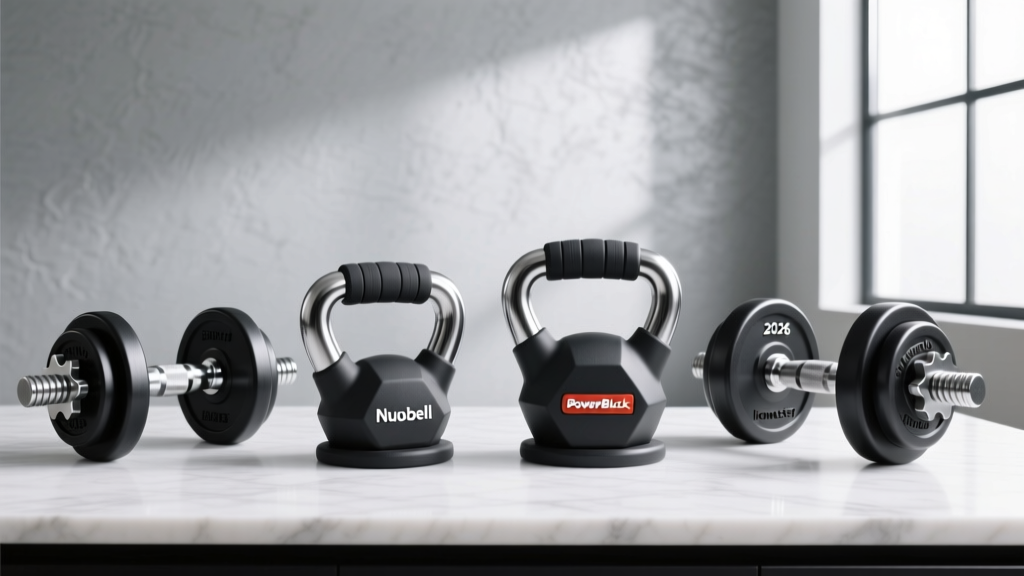
Dumbbell Cost Per Pound: 2026 Adjustable Model Comparison

Best Adjustable Dumbbells for a Hack Squat With Dumbbells (2026)
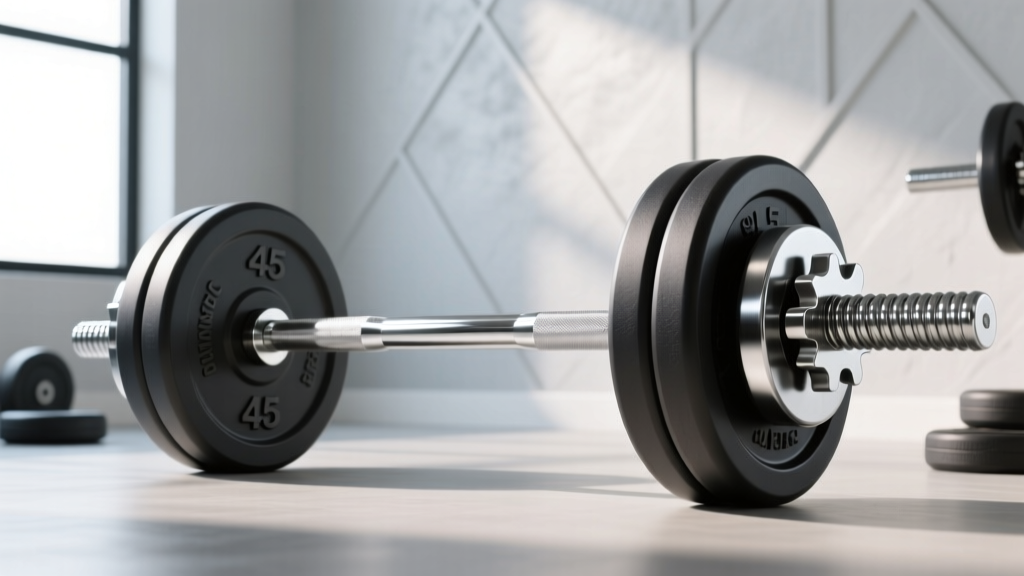
Collar and Clamp Types Comparison for the Unilateral Dumbbell Row

EZ Curl Bar vs Straight Bar for Your Full Body Dumbbell Circuit
