
How to Adjust Leg Press Machine for Calves: Standing vs Seated
Master lower leg training. Learn how to adjust leg press machine for calf raises, compare standing vs seated biomechanics, and fix common form mistakes.

The Biomechanical Divide: Standing vs. Seated Calf Training
Building complete lower leg development requires a nuanced understanding of calf anatomy. The calf complex is primarily composed of two muscles: the gastrocnemius and the soleus. Understanding how these muscles interact with knee flexion is the foundation of troubleshooting any calf raise machine. According to biomechanical data from ExRx.net Kinesiology, the gastrocnemius crosses both the knee and ankle joints, meaning it is most active when the leg is straight (standing). Conversely, the soleus only crosses the ankle joint and becomes the primary mover when the knee is bent (seated).
Expert Insight: Many lifters suffer from stubborn calf growth because they exclusively perform standing variations. If your gastrocnemius is naturally dominant, your soleus will remain underdeveloped unless you prioritize seated calf raises. In 2026, top-tier bodybuilding coaches mandate a 1:1 ratio of standing to seated volume for complete lower leg hypertrophy.However, dedicated machines are not always available, and even when they are, lifters frequently misuse them. This troubleshooting guide breaks down the most common mistakes on dedicated standing and seated machines, and provides a masterclass on how to adjust leg press machine setups to safely execute standing-style calf raises when dedicated equipment is lacking or flawed.
Troubleshooting Dedicated Calf Raise Machines
Commercial gyms in 2026 typically stock plate-loaded or selectorized standing and seated calf machines from brands like Hammer Strength, Panatta, and Prime Fitness. Despite ergonomic advancements, user error remains rampant.
Standing Calf Raise Machines: Common Mistakes & Fixes
- Mistake: Bouncing out of the hole. Utilizing the Achilles tendon's stretch reflex by bouncing at the bottom of the movement removes tension from the muscle belly and places immense shear force on the tendon. Fix: Implement a strict 2-second isometric pause at the bottom of every rep to dissipate elastic energy.
- Mistake: Improper shoulder pad height. If the pads are too high, you'll be on your toes before the weight engages. If too low, you'll lose the stretch. Fix: Adjust the yoke so that with your heels hanging off the block, the pads rest firmly on your traps with zero daylight between the pad and your body.
- Mistake: Rolling onto the lateral edge of the foot. This shifts the load away from the gastrocnemius and stresses the ankle ligaments. Fix: Point your toes strictly forward or slightly inward (pigeon-toed) to bias the lateral head, but ensure the ball of the big toe remains firmly planted.
Seated Calf Raise Machines: Common Mistakes & Fixes
- Mistake: Knee pad placed directly on the patella. This causes severe joint compression and limits force transfer. Fix: Adjust the thigh pad so it rests exactly 1 to 1.5 inches above the knee cap, directly on the distal quadriceps tendon.
- Mistake: Inadequate range of motion (ROM). The soleus responds best to deep stretches. Fix: Ensure the machine's base block allows your heels to drop at least 3 inches below the horizontal plane of the footplate.
- Mistake: Using momentum to lift the weight. Because the soleus is a slow-twitch dominant muscle (as noted in ExRx Soleus Anatomy), it responds poorly to explosive, low-time-under-tension reps. Fix: Use a 3-1-2-1 tempo (3 seconds eccentric, 1 second stretch, 2 seconds concentric, 1 second peak contraction).
How to Adjust Leg Press Machine for Calf Raises (The Ultimate Workaround)
Not every facility has a high-quality standing calf machine. In many cases, a 45-degree leg press is the superior alternative, provided you know exactly how to configure it. Learning how to adjust leg press machine parameters for calf raises is a critical troubleshooting skill for avoiding lower back compression and Achilles strain.
WARNING: The most common catastrophic failure mode on the leg press calf raise is the foot slipping off the platform, resulting in the carriage dropping onto the safety stops (or worse, the user's torso). Never skip the safety pin setup.Step-by-Step Adjustment Protocol
- Set the Safety Stop Pins: Before loading a single plate, adjust the mechanical safety stops on the guide rods. Set them so that if your foot slips, the carriage stops exactly 2 inches below your maximum stretch depth. This prevents the weight from crushing your pelvis.
- Adjust the Seat Backrest: Recline the seat to the lowest possible angle (usually around 45 degrees). A more upright seat increases hip flexion, which can pull on the hamstrings and alter your pelvic tilt, reducing the stretch on the calves.
- Position the Carriage for Foot Placement: Press the sled up and lock the safety latches. Place the balls of your feet on the bottom edge of the footplate. Your heels must hang off the edge with an exact overhang of 2.5 to 3.5 inches. Any less, and you'll slip; any more, and you'll lose leverage.
- Establish the Knee Micro-Bend: Unlock the sled. Your knees should be completely straight to target the gastrocnemius, but never hyperextended. Maintain a 5-degree micro-bend to keep the joint safe under heavy loads (often exceeding 400 lbs in commercial settings).
- Execute with Strict ROM: Lower your heels until you feel a deep stretch in the upper calf. Press through the balls of your feet, stopping just short of full ankle plantarflexion to keep continuous tension on the muscle.
Equipment Comparison Matrix: Dedicated vs. Leg Press
When designing a 2026 leg day program, you must weigh the biomechanical benefits against equipment availability and joint stress. Use this matrix to decide which variation to prioritize.
| Equipment Type | Primary Muscle Target | Spinal Loading | Slip Risk / Safety | 2026 Commercial Cost Range |
|---|---|---|---|---|
| Standing Machine (Plate-Loaded) | Gastrocnemius | High (Axial) | Low (Fixed path) | $1,800 - $3,200 |
| Seated Machine (Selectorized) | Soleus | None (Seated) | Very Low | $1,500 - $2,800 |
| 45-Degree Leg Press | Gastrocnemius | None (Supported) | High (Requires safeties) | $2,500 - $5,000 (Multi-use) |
Troubleshooting Edge Cases & Asymmetries
Even with perfect machine adjustment, lifters encounter physiological roadblocks. Here is how to troubleshoot advanced edge cases based on modern physical therapy protocols outlined by Physio-pedia.
Edge Case 1: Achilles Tendonopathy During Deep Stretches
If you experience sharp pain or morning stiffness in the Achilles tendon after heavy seated or leg press calf raises, you are likely overloading the tendon in the fully lengthened position. Fix: Temporarily restrict the bottom ROM by placing a 1-inch block or mat under the machine's footplate. Focus on the mid-range and peak contraction until the tendon remodels and tolerates deep stretches again.
Edge Case 2: Unilateral Calf Asymmetry
It is incredibly common for one calf to lag behind the other due to dominant leg push-off patterns in daily walking or running. Fix: While most leg presses and dedicated machines are bilateral, you can perform single-leg calf raises on the leg press. Adjust the sled to a lighter weight, place one foot on the bottom edge of the platform, and cross the non-working leg over your working knee. Always start your sets with the weaker leg, and match the rep count with the stronger leg to force symmetry over a 12-week mesocycle.
Edge Case 3: Numbness in the Toes
Numbness or tingling during high-rep seated calf raises is usually caused by compressing the plantar nerves against a hard, flat metal footplate. Fix: Wrap a standard neoprene bar pad around the edge of the footplate, or wear training shoes with a thick, dense forefoot (like weightlifting shoes) rather than flat, minimalist shoes to distribute the pressure evenly across the metatarsals.
Summary: Precision Over Ego
Whether you are utilizing a $3,000 Panatta standing calf machine, a basic seated selectorized unit, or figuring out how to adjust leg press machine carriages for a makeshift standing variation, the rules of lower leg training remain absolute. Eliminate momentum, respect the anatomical differences between the gastrocnemius and soleus, and prioritize joint safety through meticulous equipment setup. By applying these troubleshooting frameworks, you will transform stubborn calves into a point of structural dominance.
More gear to consider
All reviews
Hack Squat vs Leg Press: Installation & Leg Press Machine Placement

Hack Squat vs Leg Press Setup: Calculating Leg Press Machine Weight
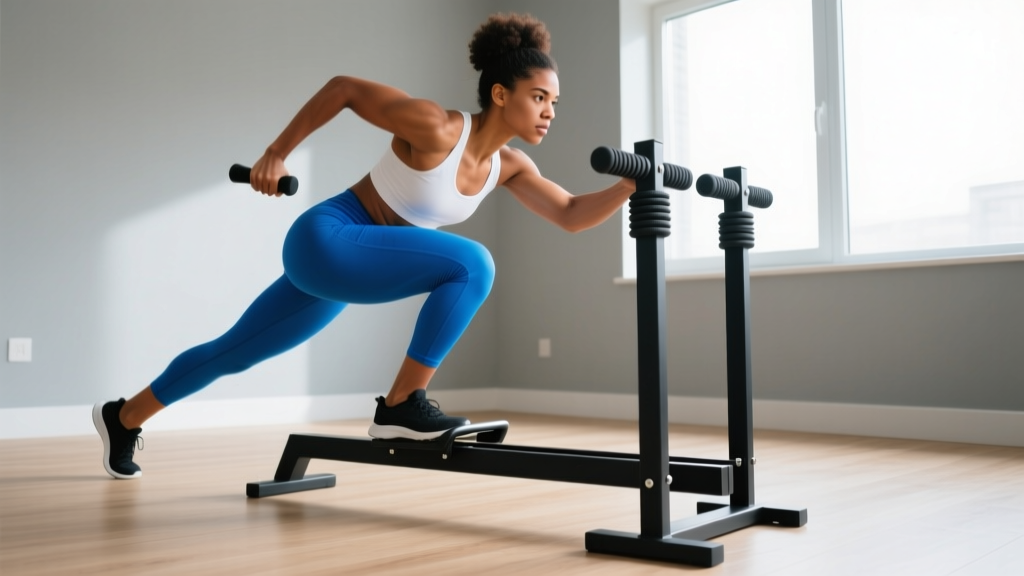
Beyond the Leg Press Curl Machine: Sled Push Pull Beginner Guide

Best Leg Press Machine for Home Gyms: 2026 Titan vs Rogue

Setting Up a Rogue Leg Press Machine vs Hack Squat
