
12-3-30 Treadmill Workout: Belt Maintenance in Compact Home Gyms
Optimize your compact home gym for the 12-3-30 treadmill workout. Learn spatial layout tips, clearance rules, and belt lubrication to prevent motor failure.

The Spatial Thermodynamics of the 12-3-30 Treadmill Workout
The viral 12-3-30 treadmill workout—walking at a 12% incline, 3 mph, for 30 minutes—has become a cornerstone of home fitness routines. However, from a mechanical and spatial design perspective, this specific protocol is brutally demanding on your equipment. Unlike running at a 0% incline where momentum assists the belt's rotation, the 12-3-30 routine forces the treadmill's drive motor to continuously push your entire body weight uphill. This results in a massive, sustained amp draw and generates intense friction between the walking belt and the deck.
When you factor in space optimization and layout design, the problem compounds. In 2026, the trend toward ultra-compact, foldable treadmills and tight alcove gym layouts means these machines are often starved of adequate ventilation. According to equipment longevity data cited by Consumer Reports, poor ambient airflow combined with high-friction, low-speed routines is the leading cause of premature deck warping and motor thermal shutdowns in home gyms. If your treadmill is wedged into a space-saving corner, the heat generated by the 12-3-30 workout has nowhere to dissipate, rapidly degrading your belt lubricant and accelerating wear.
Clearance Requirements for Compact Layouts
Optimizing a small room for cardio equipment requires balancing spatial efficiency with mechanical breathing room. The American Council on Exercise (ACE) emphasizes that home gym layouts must account for both user safety and equipment thermodynamics. When designing your treadmill footprint, you must adhere to minimum clearance zones to ensure the motor shroud's intake vents can pull in cool air.
| Clearance Zone | Minimum Space Required | Primary Function | Space-Saving Compromise |
|---|---|---|---|
| Rear (Behind Belt) | 36 inches | User safety (fall zone) & exhaust ventilation | Never compromise; 36" is a strict safety mandate. |
| Sides (Left & Right) | 18 inches | Motor intake airflow & emergency dismount | Can be reduced to 12" if using a wall-mounted fan for forced induction. |
| Front (Console) | 12 inches | Console electronics cooling | Can be reduced to 4" if not facing a solid wall (e.g., facing a window). |
| Vertical (Ceiling) | 84 inches | Accommodates 12% incline elevation + user height | Measure from the deck at max incline, not the floor. |
Belt Lubrication: The Antidote to Spatial Heat Traps
In a tightly optimized layout where ambient temperatures around the motor can exceed 110°F during a 30-minute incline walk, standard factory lubricant breaks down faster. You must implement a rigorous, high-friction lubrication protocol to protect the belt and reduce the electrical load on the motor.
Selecting the Right Lubricant
Never use petroleum-based products, WD-40, or household oils. These will dissolve the cotton underbelly of the walking belt and destroy the PVC deck coating. You must use 100% pure liquid silicone. Brands like Spot On or the Horizon Fitness 3-pack (typically priced between $12 and $16) offer the correct viscosity for high-incline, low-speed friction.
⚠️ CRITICAL WARNING: Applying aerosol silicone sprays often results in overspray coating the treadmill's optical speed sensor or drive belt, causing E1 (speed sensor) error codes and dangerous mid-workout belt stuttering. Always use a liquid squeeze bottle with an applicator wand.Step-by-Step Lubrication Protocol for High-Incline Routines
- Power Down & Unplug: Never lubricate a live machine. Unplug the treadmill to prevent accidental startup and protect the lower control board from static discharge.
- Release Belt Tension: Locate the rear roller adjustment bolts. Using the provided Allen wrench, turn both the left and right bolts exactly one-quarter turn counter-clockwise. This creates just enough slack to slide the applicator wand underneath.
- Apply the Silicone: Insert the wand to the center of the deck. Squeeze exactly 0.5 ounces of 100% silicone in a zig-zag pattern from the center outward to the edges. Repeat on the opposite side. Over-lubricating will cause the belt to slip during the 12% incline phase.
- Restore Tension: Turn both rear bolts one-quarter turn clockwise to return them to their original position.
- Distribute the Lubricant: Plug the machine in and run it at 2.0 mph (0% incline) for 5 minutes. Walk on the belt lightly to help press the silicone evenly across the entire deck surface.
Diagnosing Belt Wear in Space-Constrained Gyms
How do you know if your compact layout is suffocating your treadmill during the 12-3-30 workout? Because the machine is often tucked away, visual cues are easily missed. Rely on these tactile and auditory diagnostics to identify thermal belt degradation before it results in a blown lower control board (a $150–$250 replacement part).
"A treadmill motor operating in a poorly ventilated alcove will draw up to 20% more amperage to maintain a 12% incline. This excess current translates directly into heat, which bakes the walking belt from the underside, leading to micro-fractures that are invisible from the top surface."
— Home Fitness Equipment Technician Guidelines, NordicTrack Support Archives
The 3-Point Diagnostic Checklist
- The Lift Test: With the machine off, reach under the center of the walking belt and lift. In a properly tensioned and lubricated state, the belt should lift exactly 2 to 3 inches off the deck. If it lifts less than 2 inches, the friction is too high; if it lifts more than 4 inches, the belt will slip during incline walks.
- The Shroud Touch Test: Immediately after completing your 30-minute incline walk, carefully place your hand near the front motor shroud intake vents. If the air exiting is uncomfortably hot to the touch (exceeding 120°F), your spatial layout is trapping heat.
- Console Dimming: If the console screen flickers or dims when the treadmill hits the 12% incline mark, the dry belt is causing the motor to pull excessive voltage, starving the upper control board. Immediate lubrication is required.
Layout Hacks for Maximum Airflow and Belt Longevity
If you cannot physically move your treadmill to a more open area, you must engineer active airflow solutions into your space-optimized layout to protect the belt and motor during high-torque workouts.
- Strategic Oscillating Fans: Do not point a fan directly at the user or the console. Instead, place a small, high-velocity floor fan 24 inches to the side of the treadmill, angled directly at the motor shroud's side intake vents. This forces cool ambient air into the electronics bay, counteracting the heat trapped by nearby walls.
- Elevation Riser Pads: If your treadmill sits on thick carpet or a plush rug, the underside ventilation ports may be choked. Place rigid, interlocking EVA foam puzzle mats (at least 0.5 inches thick) under the treadmill footprint. This creates a crucial micro-gap between the floor and the machine's belly pan, allowing heat to escape downward.
- Avoid "Dead Corners": When mapping your home gym layout, never place the rear of the treadmill in a literal corner where two walls meet. The 12-3-30 workout exhausts hot air out the back; a corner layout will create a localized thermal pocket that will bake the rear roller bearings and dry out the back third of your walking belt within weeks.
- Smart Plug Monitoring: Plug your treadmill into a smart energy monitor (like a Kasa or Wyze plug, roughly $15). Track the wattage draw during your 12-3-30 sessions. A healthy, well-lubricated belt on a 12% incline should draw between 600W and 900W depending on user weight. If you notice the baseline wattage creeping up past 1,100W over a few weeks, spatial heat buildup is degrading your lubricant, and it is time to re-apply silicone.
By treating your treadmill's spatial environment as a critical component of its mechanical ecosystem, you can safely execute the demanding 12-3-30 workout without sacrificing the longevity of your belt, deck, or drive motor. Proper clearances, rigorous 100% silicone maintenance, and active airflow management are the keys to a sustainable, space-optimized home gym.
More gear to consider
All reviews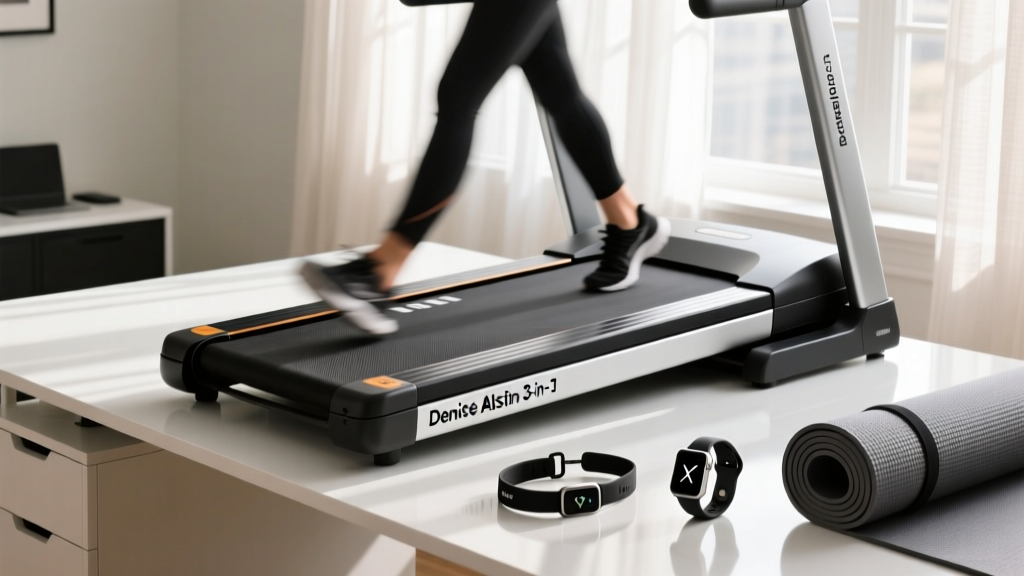
Denise Austin 3-in-1 Treadmill Under Desk Review & 2026 Alternatives
Portable Cardio Maintenance: When to Choose a Treadmill for Hire

LifeSpan Treadmill TR5500i: Office Use & Maintenance

The Ultimate Treadmill Motor HP & Deck Def. Buying Guide

Treadmill Abuse Murder Trial Lessons: Stationary Bike Maintenance
