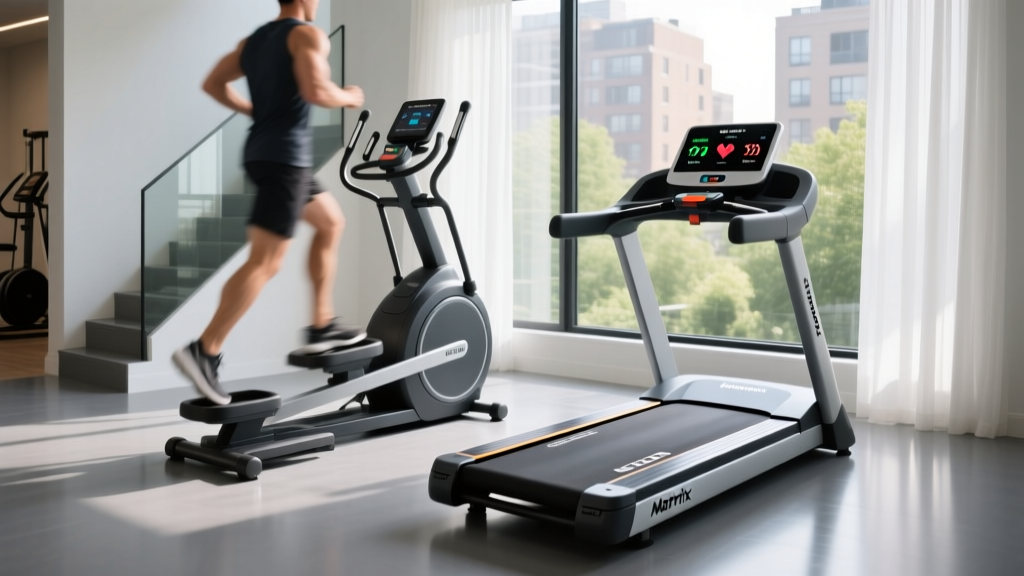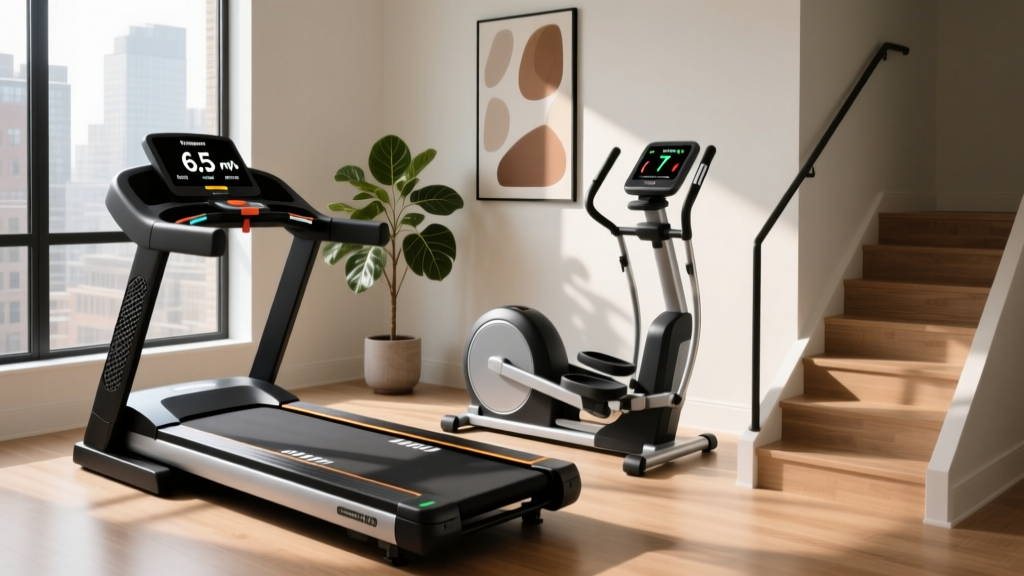
12-3-30 Treadmill Method vs. Home Stair Climbers: 2026 Guide
Compare the viral 12-3-30 treadmill method against home stair climbers. We analyze costs, calorie burn, joint impact, and top 2026 models.

The Showdown: 12-3-30 Treadmill Method vs. Stair Climbing
Since its viral explosion on social media, the 12-3-30 treadmill method has remained a dominant force in home cardio routines. The protocol is deceptively simple: set your treadmill to a 12% incline, walk at 3.0 miles per hour, and maintain the pace for 30 minutes. But as home gym enthusiasts look to diversify their equipment in 2026, a major question persists: How does this incline walking protocol stack up against a dedicated home stair climber machine?
Both modalities promise robust glute activation, high caloric expenditure, and low-impact cardiovascular conditioning. However, the biomechanics, equipment costs, and spatial requirements differ drastically. In this head-to-head comparison, we break down the exact physics, pricing, and real-world failure modes of both approaches to help you decide which machine deserves a spot in your home gym.
Decoding the Modalities: What Are We Actually Comparing?
Before evaluating the hardware, we must define the physiological demands of each workout.
- The 12-3-30 Treadmill Method: This is a steady-state, high-incline walking protocol. By forcing a 12% grade, you shift the biomechanical load from the quadriceps to the posterior chain (glutes, hamstrings, and calves) while keeping the heart rate in Zone 2 or low Zone 3 (roughly 60-75% of max HR).
- Steady-State Stair Climbing: Using a mini hydraulic stepper or a motorized stair climber, this involves continuous concentric and eccentric muscle contractions against gravity. A standard 30-minute session at 60-80 steps per minute mimics the metabolic demand of hiking a steep grade but introduces a higher degree of knee flexion.
Head-to-Head Equipment Matchup: 2026 Market Leaders
To execute these workouts properly, you need reliable hardware. A common pitfall for beginners is buying a budget treadmill that only reaches an 8% or 10% incline, completely invalidating the 12-3-30 method. Below, we compare a premium entry-level treadmill capable of the 12-3-30 method against the most popular home stair climbers.
| Feature | Sole Fitness F63 (Treadmill) | Sunny Health SF-S9112 (Mini Stepper) | Bowflex Max M9 (Premium Climber) |
|---|---|---|---|
| 2026 Retail Price | $1,199 | $349 | $2,299 |
| Max Incline/Resistance | 15% Motorized Grade | Hydraulic Tension Dial | 20 Levels Magnetic Resistance |
| Footprint (L x W) | 82" x 32" | 17" x 12" | 49" x 30" |
| Weight Capacity | 325 lbs | 220 lbs | 300 lbs |
| Power Requirement | 120V Dedicated Outlet | None (Self-powered) | 120V Standard Outlet |
| Warranty (Frame/Motor) | Lifetime / 3 Years | 1 Year / 30 Days Parts | 3 Years / 1 Year Parts |
Biomechanics and Muscle Recruitment Patterns
While both machines target the lower body, the muscle recruitment sequences are distinctly different.
The 12-3-30 Treadmill Method
Walking on a 12% incline requires significant hip extension. According to biomechanical analyses of incline walking, the gluteus maximus and hamstrings work overtime to pull the torso upward against gravity with each stride. Furthermore, the 3.0 mph speed ensures that the calf muscles (gastrocnemius and soleus) experience a deep eccentric stretch at the bottom of the stride, improving ankle mobility over time.
Stair Climber Mechanics
Stair climbing is inherently more quad-dominant. The act of driving the knee upward and extending the leg to lift your body weight heavily recruits the quadriceps and hip flexors. While the glutes are certainly engaged—especially if you press through your heel rather than your toe—the range of motion places significantly more sheer force on the patellar tendon.
'Incline walking favors the posterior chain and hip extensors, making it ideal for individuals looking to develop the glutes without excessive knee flexion. Stair climbing, conversely, demands greater knee flexion and quad dominance, which can be problematic for users with pre-existing patellofemoral issues.' — Adapted from principles published by the American Council on Exercise (ACE).
Caloric Expenditure: The MET Data Breakdown
Calorie burn is the primary metric most home gym users track. To provide an accurate comparison, we use Metabolic Equivalent of Task (MET) values. According to the Compendium of Physical Activities, walking at 3.0 mph on a 12% incline carries a MET value of approximately 8.0. General stair climbing carries a MET value of roughly 9.0.
Here is how that translates to a 30-minute session for a 155 lb (70 kg) individual, cross-referenced with data from Harvard Health Publishing:
- 12-3-30 Treadmill Method (30 mins): ~280 - 310 kcal
- Steady Stair Climbing (30 mins): ~315 - 345 kcal
The Verdict on Calories: The stair climber wins slightly on raw caloric expenditure per minute due to the continuous lifting of the body's entire center of mass. However, the 12-3-30 method is often easier to sustain for the full 30 minutes without form breakdown, leading to higher actualized calorie burn for beginners who might quit a stair climber at minute 15.
Joint Impact, Injury Profiles, and Failure Modes
When investing in home cardio equipment, longevity and joint health are paramount. Both machines are classified as 'low impact' regarding ground reaction forces (no pounding like running), but they carry distinct overuse injury risks.
Treadmill Incline Risks
The primary failure mode for the 12-3-30 method is Achilles tendinopathy and plantar fasciitis. The constant 12% dorsiflexion angle keeps the calf complex under continuous tension. If a user lacks adequate ankle mobility, the strain transfers directly to the Achilles tendon. Additionally, holding onto the handrails while leaning back completely negates the core engagement and reduces the effective incline angle by up to 4%.
Stair Climber Risks
Stair climbers are notorious for aggravating patellofemoral pain syndrome (runner's knee). The repetitive deep knee flexion under load can irritate the cartilage under the kneecap. Furthermore, a critical equipment failure mode for budget hydraulic steppers (like the Sunny SF-S9112) is cylinder overheating. Hydraulic fluid degrades when used continuously for more than 20-30 minutes, leading to a loss of tension and eventual seal failure.
Home Gym Realities: Space, Noise, and Power
Your living situation will likely dictate your final choice.
- Space Constraints: A treadmill like the Sole F63 requires a dedicated 70-square-foot area and cannot be easily moved. The Sunny mini stepper can be shoved under a desk or into a closet, making it the undisputed king of apartment living.
- Acoustics: Motorized treadmills generate a low-frequency hum (usually 60-75 decibels) that easily travels through floorboards to neighbors below. Magnetic and hydraulic stair climbers are nearly silent, limited only to the sound of your breathing and the mechanical click of the pedals.
- Power Draw: Running a 3.0 HP treadmill on a shared 15-amp household circuit can trip breakers if the motor surges during heavy incline use. Stair climbers require zero electricity, eliminating this hazard entirely.
The Final Verdict: Which Machine Should You Buy?
There is no universal 'best' machine, only the right tool for your specific physiological and spatial needs.
Choose the Treadmill (12-3-30 Method) If:
- You want to prioritize posterior chain (glute/hamstring) development.
- You have a history of knee pain or patellar tendonitis and need to minimize deep knee flexion.
- You have the floor space, a dedicated 20-amp circuit, and a budget exceeding $1,000 for a machine that actually hits a 12% grade.
- You want a machine that can also be used for flat walking, jogging, and interval training.
Choose the Stair Climber If:
- You want maximum caloric burn per minute and prefer a quad-dominant workout.
- You live in an apartment with strict noise ordinances or limited square footage.
- You are on a strict budget (under $400) and cannot afford a treadmill with a true 12% incline motor.
- You want to improve your functional strength for activities like hiking or mountaineering.
Frequently Asked Questions
Can I modify the 12-3-30 method if my treadmill only goes to 10%?
Yes. To match the metabolic and muscular demand of a 12% grade at 3.0 mph on a 10% incline machine, you must increase the speed. Bumping your pace to 3.5 mph on a 10% incline will yield a nearly identical MET value and caloric burn, though it will shift slightly more load to the calves and cardiovascular system rather than pure muscular endurance.
Is the stair climber better for losing belly fat?
No machine targets belly fat specifically. Spot reduction is a physiological myth, as confirmed by decades of endocrinological research. Both the 12-3-30 treadmill method and the stair climber create a systemic caloric deficit. Fat loss will occur globally across your body based on your genetic predisposition and overall nutritional intake, regardless of which cardio machine you choose.
How often should I do the 12-3-30 method?
Because of the intense strain on the Achilles and plantar fascia, we recommend limiting the 12-3-30 protocol to 2 or 3 days per week. Alternate with flat walking, cycling, or upper-body resistance training to allow the connective tissues in your lower legs to recover and adapt.
More gear to consider
All reviews
Folding Treadmill Small Space Review & Heavy Duty Surge Protector
Air Bike vs Assault Bike Care: Is StairMaster or Treadmill Better?
Weslo Cadence 5.2 Treadmill Setup & Walking Pad Review

Elliptical vs Treadmill: Sole F85 Treadmill Older Model Analysis

ProForm 415 Treadmill Motor Guide: Is 2.0 HP Enough?