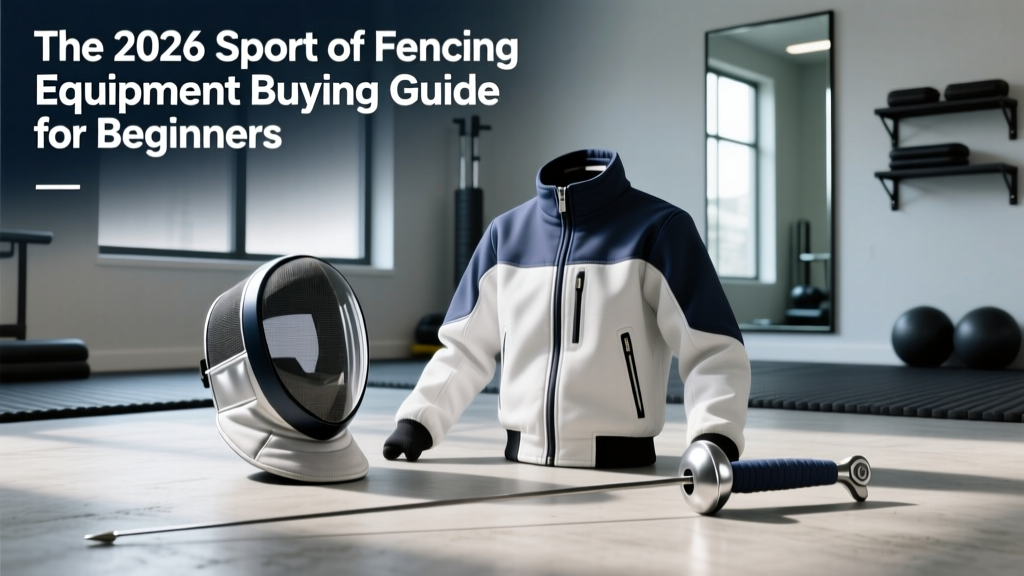
The 2026 Sport of Fencing Equipment Buying Guide for Beginners
Master the sport of fencing equipment with our 2026 beginner buying guide. Step-by-step advice on masks, jackets, weapons, and exact costs.

Introduction to the Sport of Fencing Equipment
Stepping onto the piste for the first time is thrilling, but navigating the sport of fencing equipment can feel like learning a new language. Unlike general fitness gear, fencing requires highly specialized, safety-certified apparatus that conforms to strict international and national regulations. In 2026, advancements in lightweight Kevlar blends and conductive fabrics have made gear more comfortable than ever, but the fundamental safety requirements remain rigid.
This step-by-step buying guide is designed specifically for beginners. We will break down exact measurements, safety standards (measured in Newtons), and real-world pricing so you can build a reliable kit without overspending on elite-level gear you don't yet need.
Step 1: Selecting Your Weapon Discipline
Before buying a single piece of protective gear, you must know which weapon you are fencing: Foil, Épée, or Sabre. Your weapon dictates your target area, the electrical scoring apparatus you need, and the specific type of glove and mask you must purchase.
| Weapon | Valid Target Area | Right of Way? | Max Weight | Blade Cross-Section |
|---|---|---|---|---|
| Foil | Torso only | Yes | 500g | Rectangular/V-Shape |
| Épée | Entire body | No | 770g | Triangular |
| Sabre | Above the waist | Yes | 500g | Flat/Y-Shape |
Beginner Tip: Most clubs in the US and UK start beginners on Foil to teach right-of-way rules and point control. If you are unsure, buy a basic foil setup first.
Step 2: Sizing and Safety Standards for Uniforms
Fencing uniforms are rated by their puncture resistance, measured in Newtons (N). According to the USA Fencing Rulebook, domestic competitions require a minimum of 350N resistance for jackets, knickers, and masks, while international FIE competitions mandate 800N.
The Jacket and Knickers
For a beginner, a 350N stretch-cotton or synthetic blend jacket is perfectly adequate and costs between $60 and $90. When sizing, measure your chest and waist while in a deep lunge position. The jacket must overlap the knickers by at least 10 centimeters to prevent bare skin exposure during deep lunges.
The Plastron (Underarm Protector)
CRITICAL SAFETY RULE: Even if your jacket is 350N, the FIE Material Rules and most national federations require the plastron (the half-shirt worn under the jacket on the weapon arm side) to be rated at 800N. This provides a secondary layer of protection over the armpit and chest, where the jacket seams are weakest. Expect to pay $45 to $70 for an 800N plastron.Step 3: Masks, Gloves, and Extremity Protection
Your mask is your most vital piece of the sport of fencing equipment. Never buy a used mask, as the internal padding degrades and the metal mesh can suffer micro-fractures invisible to the naked eye.
- Foil Masks: Standard 350N mesh with a non-conductive bib.
- Épée Masks: Standard 350N mesh with a non-conductive bib (insulated to prevent false touches).
- Sabre Masks: Must feature a conductive mask cover (or conductive mesh) over the bib, as the head is a valid target area. These cost roughly $30 to $50 more than foil/épée masks.
The Glove
You only need one glove, worn on your weapon hand. Look for a glove with a Velcro wrist closure for easy removal during equipment checks. In 2026, models like the Leon Paul Absolute or Allstar Ergo Concept offer excellent blade-feel with reinforced index fingers to prevent blistering from the bell guard friction. Budget around $25 to $40.
Step 4: Footwear (Do Not Skip This)
A common and expensive beginner mistake is wearing running shoes to the piste. Running shoes are designed for forward motion and lack the lateral stability required for fencing footwork. Furthermore, the 'drag' of the back foot during a lunge will blow out the inner heel of a standard running shoe in less than three months.
Fencing shoes feature a reinforced medial edge (the inner side of the foot) specifically designed to withstand the friction of the piste.
Top Beginner Footwear Options:
- Leon Paul X-Change: Excellent entry-level shoe with a dedicated heel-strike cushion. (~$85)
- Adidas Fencing Pro: A step up, offering superior grip and a wider toe box for fencers with broader feet. (~$110)
- Do-Win Fencing Shoes: The ultimate budget option, often found for under $50, though they lack the advanced shock absorption of premium brands.
Step 5: The Electrical Apparatus
Modern fencing relies on electrical scoring boxes. To connect your weapon to the scoring reel, you need a body cord.
For Foil and Sabre, you will also need a lamé—a conductive metallic vest worn over the jacket that outlines the valid target area. Épée fencers do not use a lamé, as the entire body is a valid target, but their weapons require a specialized tip with a spring mechanism that must depress with exactly 750 grams of pressure to register a touch.
Buying Advice: Buy a 2-prong bayonet body cord for foil/épée, and a specific sabre body cord if you fence sabre. Do not buy a lamé immediately; most clubs provide club lamés for beginners until you are ready for your first rated tournament.
2026 Cost Breakdown: Starter vs. Competitive
To help you budget, here is a realistic look at what you will spend on the sport of fencing equipment in 2026. Data synthesized from major retailers and British Fencing equipment guidelines.
| Item | Beginner / Club Kit (350N) | Competitive / FIE Kit (800N) |
|---|---|---|
| Weapon (Carbon vs. Maraging Steel) | $45 - $75 | $120 - $180 |
| Mask | $65 - $85 | $130 - $160 |
| Jacket & Knickers | $110 - $150 | $250 - $350 |
| Plastron (800N Required) | $45 - $60 | $60 - $80 |
| Glove & Socks | $40 - $55 | $70 - $90 |
| Shoes | $50 - $85 | $110 - $160 |
| Lamé (Foil/Sabre only) | $65 - $90 | $140 - $200 |
| Total Estimated Cost | $420 - $600 | $880 - $1,220 |
Common Beginner Mistakes to Avoid
- Buying FIE gear too early: 800N gear is heavier, stiffer, and significantly more expensive. Stick to 350N until you are competing in national or international events that mandate FIE certification.
- Ignoring the weapon hand blister: Fencing grips (especially French and Pistol grips) cause severe calluses on the index finger and thumb. Wrap your grip with friction tape or use a specialized fencing glove with a reinforced index patch.
- Storing gear wet: Fencing generates immense sweat. If you roll your jacket and plastron up wet, the metallic threads in the lamé and the cotton blends will mildew and degrade rapidly. Always air-dry your gear on a wide hanger before putting it in your fencing bag.
Final Thoughts
Building your first kit for the sport of fencing equipment is an investment in your safety and your development as an athlete. Focus on a properly fitted mask, an 800N plastron, and dedicated fencing footwear. By following this step-by-step framework, you will walk onto the piste confident, protected, and ready to fence.
More gear to consider
All reviews
Home Boxing Gym to Racquet Sports: Tennis & Badminton Setup Guide

Therapy Alternatives to Massage: Evidence-Based Modalities for Recovery, Pain Relief, and Performance Enhancement

Ideas vs. SMART: Why Goal-Setting Frameworks Fail Athletes (and How to Fix It)

Theragun Home Gym Storage Essentials: Smart, Safe, and Space-Smart Solutions for Your Recovery Tools

Boxing and MMA Training Equipment vs. Discus Sports Equipment for Rotational Power
