
Troubleshooting Weight Plate Trees & Rep Fitness Dumbbell Racks
Fix common home gym storage mistakes. Learn to troubleshoot weight plate trees and integrate the Rep Fitness dumbbell rack for maximum safety.

The Hidden Hazards of Home Gym Storage
Home gym organization is often an afterthought until a 45-pound bumper plate rolls across the garage floor or a loaded storage tree tips over mid-workout. As home fitness spaces evolve in 2026, the integration of heavy storage solutions requires precise planning and an understanding of basic physics. Two of the most common pieces of organization equipment—the traditional weight plate storage tree and the highly popular Rep Fitness dumbbell rack—are frequent culprits of spatial inefficiency, workflow bottlenecks, and safety hazards when misused or improperly assembled.
This troubleshooting guide dives deep into the common mistakes home gym owners make with weight plate storage trees and rack options, specifically focusing on how they interact with premium dumbbell storage. By identifying these failure modes early, you can protect your equipment, your floor, and your joints.
The Physics of Failure: Common Weight Plate Tree Mistakes
Weight plate trees are deceptively simple. However, their vertical design makes them highly susceptible to center-of-mass shifts. Whether you are using a budget-friendly Amazon find or a premium Rogue Fitness Plate Tree 2.0 (priced around $175), the physics of tipping remain the same.
Mistake 1: Top-Loading Heavy Olympic Plates
The most critical error gym owners make is storing 45 lb (20 kg) and 35 lb plates on the top pegs of a storage tree. A standard Olympic plate tree features a base footprint of roughly 24 inches by 24 inches. When you load 200 lbs of iron on the top tier, you raise the center of gravity well above the 30-inch mark. If you pull a plate aggressively from the top peg, the lateral force can easily exceed the base's stabilizing torque, causing the entire tree to tip forward.
- The Fix: Always employ a "bottom-heavy" loading strategy. Store 45 lb and 35 lb plates on the lowest pegs (closest to the floor). Reserve the top pegs exclusively for 10 lb, 5 lb, and 2.5 lb fraction plates, or lighter accessories like lifting belts and chains.
Mistake 2: Ignoring Sleeve Diameter Tolerances
Not all plate trees are machined equally. Budget trees often use 1.9-inch steel tubing for their sleeves to cut costs. While standard Olympic plates have a 2-inch center hole, the 0.1-inch variance can cause severe scraping, chipping the powder coat off your plates, and creating metal-on-metal screeching that echoes through the house.
- The Fix: Measure the sleeve diameter with digital calipers before purchasing. Look for trees with CNC-machined sleeves featuring a 1.98-inch diameter and a UHMW plastic liner to protect your equipment.
Rep Fitness Dumbbell Rack Integration Errors
The Rep Fitness dumbbell rack line—specifically the 3-Tier DB-5000 (approx. $149) and the 5-Tier DB-5100 (approx. $249)—are industry standards for home gyms. Their angled shelves and rubber-padded lips protect dumbbell knurling and handles. However, integrating them into a room alongside plate trees often leads to ergonomic nightmares.
Mistake 3: The "Catch-All" Shelf Syndrome
Because the top tier of the Rep Fitness DB-5000 sits at a comfortable 32-inch height, users inevitably turn it into a dumping ground for water bottles, chalk, resistance bands, and loose 2.5 lb micro-plates. This not only ruins the aesthetic of your gym but creates a severe trip hazard and obscures the weight markings on the top row of dumbbells.
Mistake 4: Inadequate Clearance and Flow Spacing
When placing a plate tree adjacent to a Rep Fitness dumbbell rack, most owners push them flush against each other to save space. This is a massive workflow error. When you are holding a pair of 70 lb dumbbells, your peripheral vision is compromised, and your lateral footprint expands. Bumping your elbow into a steel plate tree while racking heavy dumbbells can lead to wrist sprains or dropped weights.
The 36-Inch Rule: Always maintain a minimum of 36 inches of clear lateral walking space between the edge of your dumbbell rack and the outermost sleeve of your plate tree. This allows for safe maneuvering when carrying heavy loads.
Storage Solution Comparison Matrix
Choosing the right weight plate storage tree and rack options depends heavily on your available floor space and wall structural integrity. Below is a comparison matrix to help you troubleshoot your current layout and decide if a pivot is necessary.
| Storage Type | Footprint (L x W) | Max Safe Capacity | Pros & Cons | Avg. Cost (2026) |
|---|---|---|---|---|
| Freestanding Plate Tree | 24" x 24" | 600 - 800 lbs | Pros: Portable, no drilling. Cons: High tipping risk, consumes central floor space. | $99 - $185 |
| Wall-Mounted Plate Shelf | 48" x 6" (Wall) | 400 lbs (Stud dependent) | Pros: Zero floor footprint, ultra-safe. Cons: Requires drilling into studs, permanent. | $120 - $200 |
| Power Rack Attachment | 0" (Uses Rack) | 1000+ lbs | Pros: Extremely stable, integrates with rig. Cons: Limits rack interior space, plate rattle. | $80 - $150 |
Step-by-Step Troubleshooting Guide for Wobbly Racks
Even high-end equipment like the Rep Fitness dumbbell rack or a heavy-duty Titan Fitness plate tree can develop a frustrating wobble over time. This is rarely a manufacturing defect; it is usually a result of hardware settling and floor compression. Follow this step-by-step protocol to eliminate the wobble.
Step 1: The 30-Day Hardware Re-Torque
When steel racks are assembled, the bolts are tightened against fresh powder coating and raw steel. Over the first 30 days of loading and unloading heavy iron, the powder coat compresses, and the metal experiences micro-settling. This creates a 1-2mm gap in the joints, leading to a wobble.
- Wait exactly 30 days after initial assembly.
- Using a torque wrench or hex key, re-tighten all M8 and M10 structural bolts.
- Do not overtighten to the point of stripping; apply firm, even pressure until the joint is fully seated.
Step 2: Diagnosing Floor Compression and Shimming
If your plate tree wobbles diagonally (e.g., front-left and back-right feet lift off the ground), your garage concrete slab is likely uneven, or your rubber horse-stall mats have compressed unevenly under the load.
- Empty the rack or tree completely.
- Place a 48-inch spirit level across the floor where the unit sits to identify the low spot.
- Use 3mm neoprene or hard rubber shims under the floating feet. Never use cardboard or wood shims, as these will compress and rot from garage humidity, recreating the wobble within weeks.
Step 3: Checking the Rep Fitness Rack Lip Pads
If your dumbbells are sliding or rattling on the Rep Fitness rack, inspect the rubber lip pads. Over time, the adhesive backing can degrade, especially in unclimate-controlled garages where summer temperatures exceed 95°F. If the pads are peeling, clean the steel lip with isopropyl alcohol and apply a high-strength, heat-resistant 3M VHB (Very High Bond) tape to re-secure them.
Expert Callout: The 2026 Garage Gym Safety Standard
According to guidelines emphasized by the American Council on Exercise (ACE) regarding safe workout environments, trip hazards and improper equipment spacing are leading causes of non-impact home gym injuries. In 2026, the standard for safe home gym storage dictates that all freestanding weight plate trees exceeding 400 lbs in total loaded capacity must either feature an extended 30-inch base footprint or be physically bolted to the floor or an adjacent wall stud. Never rely solely on the weight of the iron to keep a narrow-based tree upright.
Final Thoughts on Gym Organization
Troubleshooting your home gym storage is not just about aesthetics; it is a critical component of workout safety and efficiency. By respecting the physics of weight plate storage trees, maintaining strict clearance zones around your Rep Fitness dumbbell rack, and performing routine 30-day hardware maintenance, you transform your garage from a chaotic storage unit into a professional-grade training facility. Take an hour this weekend to audit your footprint, re-torque your bolts, and re-rack your plates from the bottom up.
More gear to consider
All reviews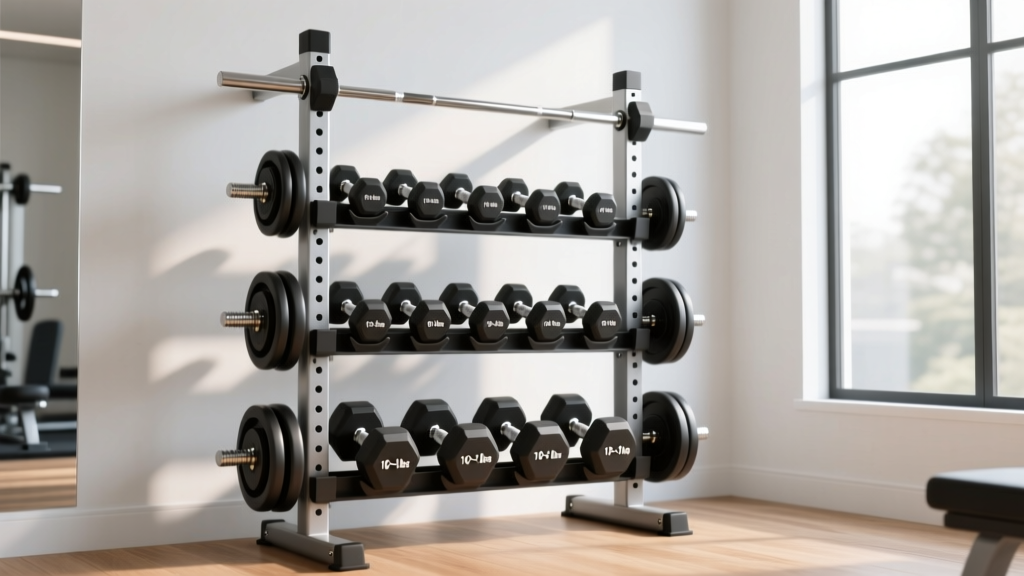
Dumbbell Storage Rack Fixes for the Dumbbell Standing Outer Thigh Lift

The 2026 Market Shift to Wall Mounted Compact Dumbbell Racks
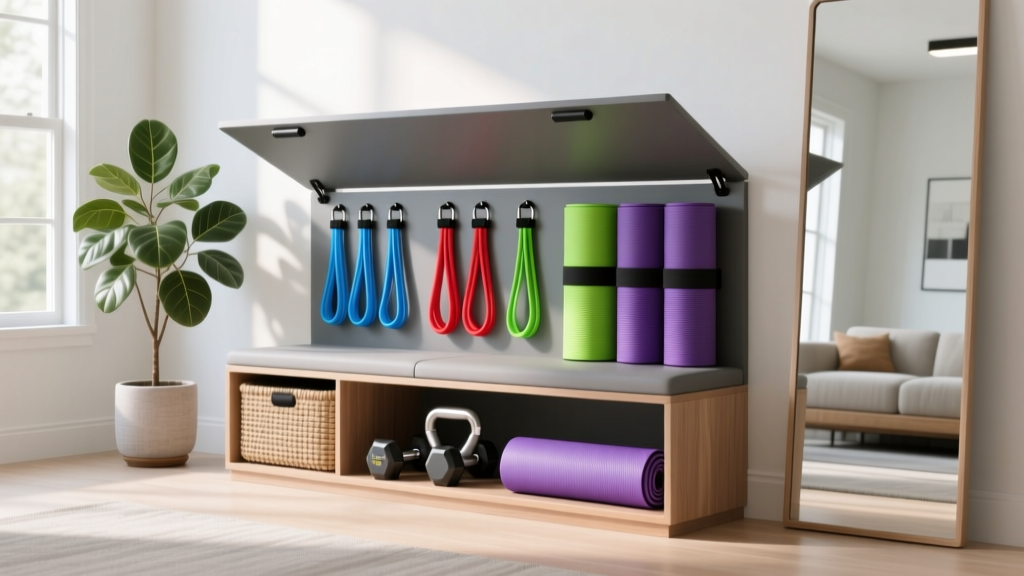
Space Optimization: Resistance Bands & The Home Gym Storage Bench

Best Equip Body Chest for Boot: Smart Storage Solutions for Home Gyms & Tactical Environments

How to Maintain Your 5-50 Dumbbell Rack for Maximum Longevity
