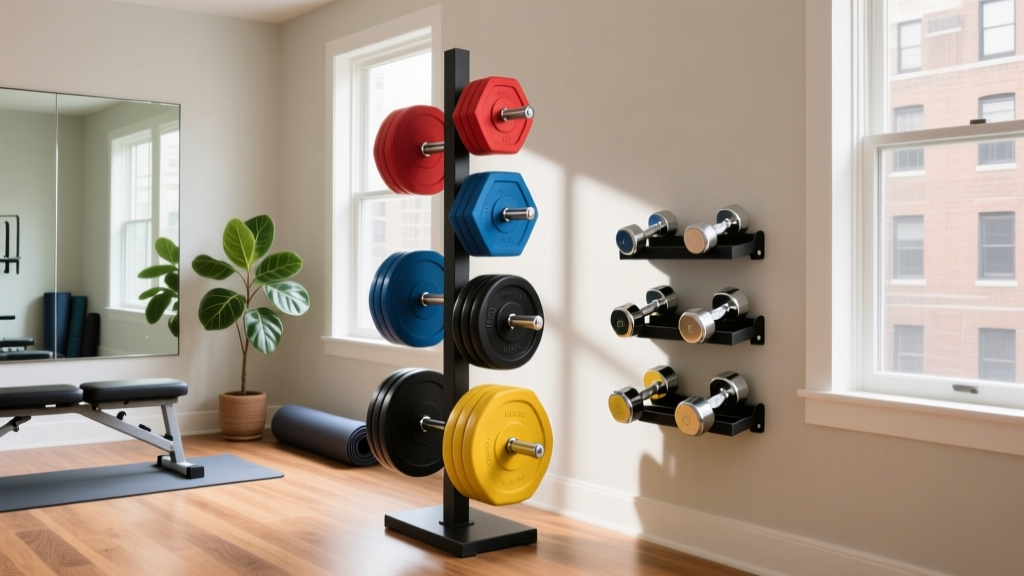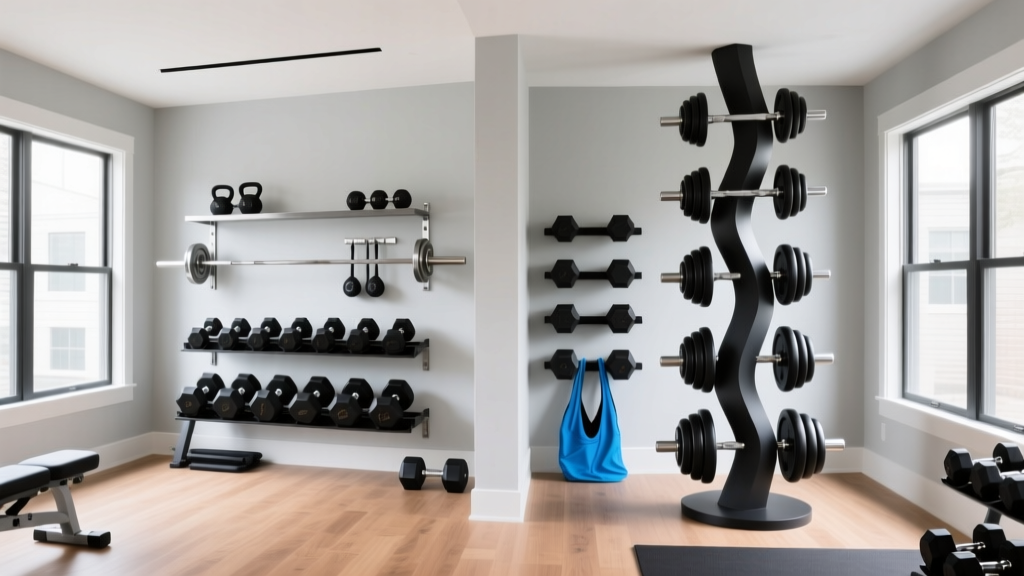
Wall Storage vs a Dumbbell Tree with Weights: Space Layout Guide
Optimize your home gym layout. We compare wall-mounted racks against a freestanding dumbbell tree with weights for maximum space efficiency and safety.

The 2026 Home Gym Spatial Dilemma
As home fitness spaces evolve in 2026, the trend has shifted aggressively toward modular, wall-mounted equipment. Folding squat racks, wall-ball targets, and vertical plate storage have turned the perimeter of the garage or spare bedroom into premium real estate. But this space optimization strategy inevitably leads to a critical layout bottleneck: where do you put your free weights? When designing a high-efficiency home gym, you are generally forced to choose between integrating your dumbbells into your wall ecosystem or deploying a freestanding unit on the floor.
This guide breaks down the structural, spatial, and ergonomic trade-offs between heavy-duty wall-mounted dumbbell racks and the classic freestanding dumbbell tree with weights. Whether you are working with a tight 10x10 foot bedroom gym or a sprawling two-car garage, understanding the exact measurements, load-bearing limits, and failure modes of these storage systems is the difference between a safe, optimized training environment and a cluttered hazard zone.
Quick Decision Framework
- Choose Wall-Mounted If: You have exposed wooden studs, a premium on floor clearance for deadlifts, and a static dumbbell set (e.g., 5-50 lbs).
- Choose a Freestanding Tree/Rack If: You rent your home (cannot drill into studs), your walls are dominated by mirrors or folding rigs, or you frequently upgrade and add odd-sized kettlebells and specialty bars to your collection.
Analyzing Wall-Mounted Dumbbell Storage Systems
Wall-mounted storage is the gold standard for footprint reduction. By elevating the weight off the floor, you reclaim valuable square footage for dynamic movements like lunges, kettlebell swings, and burpees. However, the physics of storing hundreds of pounds of cast iron on a vertical plane requires strict adherence to structural engineering principles.
Load-Bearing Realities and Stud Spacing
The most common failure mode in home gym wall storage is catastrophic drywall pull-out. A standard 3-tier wall rack holding a full set of rubber hex dumbbells (5 to 50 lbs) can easily exceed 400 pounds of dead weight, not including the dynamic force of dropping a dumbbell back onto the cradle. You cannot rely on drywall toggle bolts for this application.
According to structural mounting guidelines detailed by Family Handyman, heavy architectural and fitness loads must be anchored directly into the center of wooden wall studs. In standard North American construction, studs are spaced 16 inches on center (OC). When selecting a wall-mounted rack, you must ensure the mounting bracket holes align perfectly with this 16-inch OC spacing. If your rack requires 24-inch spacing and your studs are 16-inch OC, you will need to install a horizontal wooden ledger board (like a 2x6) across the studs first, and then mount the rack to the ledger board.
Top Wall-Mounted Models and Pricing
In the current market, premium 11-gauge steel wall racks dominate. For example, the Rogue Fitness Wall Mount Dumbbell Rack remains a benchmark, typically pricing between $175 and $225 depending on the tier configuration. These units feature a 3-inch lip to prevent rubber hex dumbbells from rolling off during vigorous racking. For budget-conscious lifters, CAP Barbell offers wall-mounted brackets that hover around the $80-$110 mark, though they often lack the reinforced gusset welding found on premium models, making them susceptible to bracket bending over years of heavy use.
The Case for a Freestanding Dumbbell Tree with Weights
When your walls are maxed out, or you are dealing with masonry walls that are difficult to drill into, floor-based storage becomes mandatory. When evaluating floor-based options, many lifters default to a traditional dumbbell tree with weights, but this vertical pole design comes with distinct spatial and safety trade-offs compared to modern tiered A-frame racks.
The Anatomy and Failure Modes of Dumbbell Trees
A classic dumbbell tree consists of a single vertical steel pole with protruding pegs, mounted to a wide, heavy base. They are incredibly popular for adjustable dumbbell systems (like PowerBlocks or Bowflex) and lighter fixed-weight sets. However, from a layout and safety perspective, trees have a notorious failure mode: asymmetric loading.
If a user removes a 40 lb dumbbell from the top right peg, but leaves the 40 lb dumbbell on the top left peg, the center of gravity shifts. If the base plate is not sufficiently wide or weighted, the entire tree can tip over when bumped. To mitigate this, experts recommend only using vertical trees for lighter sets (under 25 lbs per dumbbell) or ensuring the base footprint is at least 24x24 inches. For heavier sets, a 3-tier A-frame rack is vastly superior, as it distributes the weight closer to the floor and utilizes a wider horizontal stance.
Footprint vs. Usability Matrix
To visualize the spatial impact of these different storage solutions, review the comparison matrix below. This data assumes a standard 5-50 lb dumbbell set (10 pairs, approx. 550 lbs total).
| Storage Type | Floor Footprint | Installation Time | Tipping Risk | Ergonomic Pickup |
|---|---|---|---|---|
| Wall-Mounted 3-Tier | 0 sq ft (Wall only) | 45-60 mins (Drilling) | Zero (If stud-mounted) | Excellent (Eye level) |
| Freestanding A-Frame | ~6 sq ft | 15 mins (Assembly) | Very Low | Good (Bending required) |
| Vertical Dumbbell Tree | ~4 sq ft | 10 mins (Assembly) | High (If asymmetrical) | Poor (Crowded pegs) |
Hybrid Layout Blueprint: Maximizing a 10x10 Footprint
Space optimization is not just about the storage unit itself; it is about the clearance zones required to use the equipment safely. The American Council on Exercise (ACE Fitness) generally recommends a minimum of 36 inches of clear space in all directions around free weight zones to prevent tripping and allow for safe dropping of weights in an emergency.
Step-by-Step 10x10 Room Layout
- The Anchor Wall (North): Install your folding squat rack and pull-up bar here. This wall is now 'dead space' for dumbbell storage due to the folding mechanism's swing radius.
- The Mirror Wall (East): Do not mount heavy dumbbell racks over large glass mirrors. The vibration of racking heavy iron can crack the glass over time. Keep this wall clear for form-checking.
- The Storage Wall (South): This is your prime real estate for a wall-mounted 3-tier dumbbell rack. Ensure the bottom tier is mounted at least 24 inches off the floor to allow for baseboard heaters and easy sweeping beneath the rack.
- The Overflow Zone (West): If you possess specialty items like adjustable kettlebells or medicine balls that do not fit on a standard wall cradle, place a low-profile, 2-tier freestanding rack in the corner. Avoid the vertical tree here, as the corner traffic flow increases the risk of bumping and tipping the unit.
Expert Verdict on Space Optimization
When it comes to pure space optimization and layout design, wall-mounted storage is the undisputed champion for modern home gyms. It eliminates floor tripping hazards, protects your rubber flooring from permanent compression indentations, and keeps the visual profile of the room clean. However, it demands a structural commitment to your home's framing.
If your structural constraints or rental agreements prevent wall drilling, you must pivot to floor units. In this scenario, abandon the vertical dumbbell tree with weights in favor of a wide-stance, 3-tier A-frame rack. The slight increase in floor footprint (from 4 sq ft to 6 sq ft) is a negligible price to pay for the drastic reduction in tipping hazards and the ergonomic ease of racking heavy weights after a grueling set of lunges. Always measure your specific dumbbell handle lengths before purchasing any rack, as oversized ergonomic handles frequently fail to fit into standard wall cradles or tree pegs.
Frequently Asked Questions
Can I use heavy-duty drywall anchors for a dumbbell rack if I can't find a stud?
No. Even the highest-rated toggle bolts or Snaptoggles are designed for static, straight-down loads (like hanging a ceiling fan). The dynamic, lateral force of slamming a 40 lb dumbbell into a wall cradle will quickly fatigue the drywall surrounding the anchor, leading to catastrophic failure. Always use a stud finder and 3/8-inch structural lag screws.
Do I need special rubber matting under a freestanding dumbbell rack?
Yes. If you opt for a freestanding unit, place it on top of 3/4-inch thick horse stall mats or high-density rubber gym tiles. This prevents the steel feet from cracking your concrete garage floor or denting hardwood floors, and provides a slight vibration dampening effect when weights are dropped onto the rack.
What is the standard depth required for a wall-mounted dumbbell rack?
Most commercial and premium residential wall racks protrude between 14 and 18 inches from the wall. When planning your layout, ensure that this 18-inch protrusion does not interfere with the swing path of doors or the folding mechanism of adjacent wall-mounted squat racks.
More gear to consider
All reviews
Small Space Storage & BalanceFrom Dumbbell Rack Assembly Instructions

Wall Mounted Dumbbell Rack & Weight Plate Tree Setup

Beginner Guide: Setting Up Your Rep Dumbbell Stand & Storage Rack

Marcy 3 Tier Dumbbell Rack for Kettlebell Storage: Full Setup
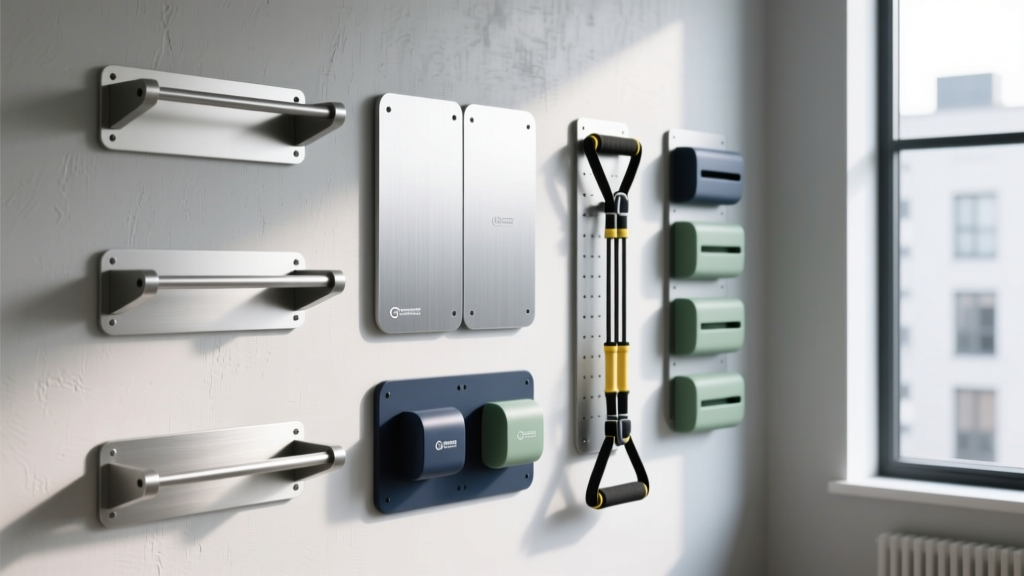
Wall Mounted Home Gym Equipment Storage: 2026 Market Trends