Space Optimization: Resistance Bands & The Home Gym Storage Bench
Master resistance band organization with a home gym storage bench. Learn spatial layout, hardware mods, and elastomer care for space optimization.

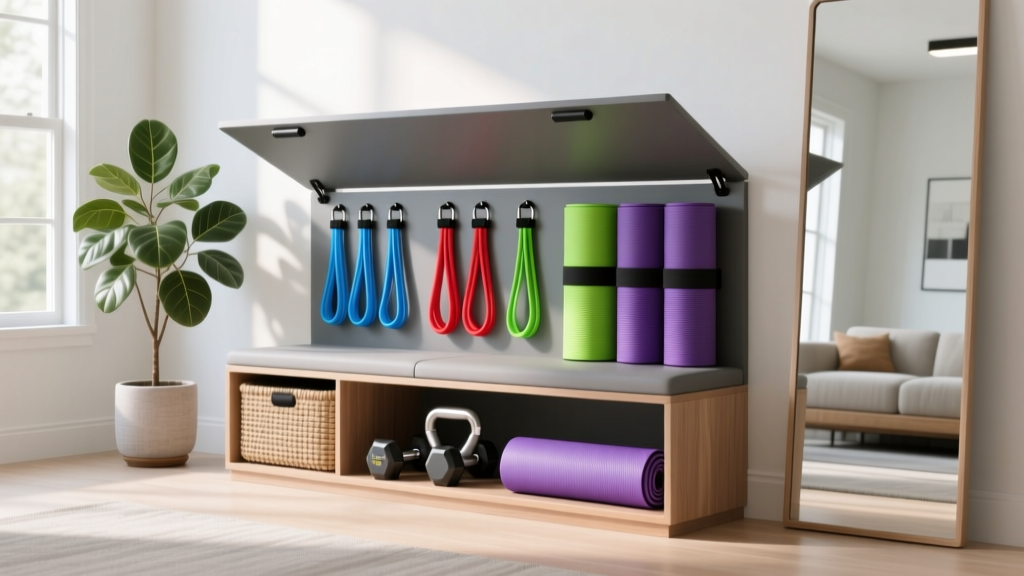
Resistance bands are the undisputed champions of versatile home gym training, offering accommodating resistance, mobility work, and rehabilitation benefits. Yet, from a spatial design perspective, they are a nightmare. Loop bands tangle into Gordian knots, tube bands with plastic handles clatter against dumbbell racks, and fabric mini-bands end up scattered across the floor. For home gym owners prioritizing space optimization, the solution is not a flimsy plastic drawer unit or a wall-mounted pegboard that consumes valuable visual real estate. The ultimate spatial anchor for resistance band organization is a heavily modified home gym storage bench.
By integrating your band arsenal into a multi-functional storage bench, you eliminate dead floor space, protect expensive elastomers from environmental degradation, and create a centralized 'stretching and loading' zone. Below is a comprehensive, expert-level guide to designing, modifying, and organizing a home gym storage bench specifically for resistance bands in 2026.
The Spatial Anchor: Rethinking the Home Gym Storage Bench
In garage and basement gym layouts, every square foot of floor space dictates the flow of movement. A standard 3-drawer rolling tool chest takes up roughly 15 by 24 inches of 'dead' footprint—it serves only one purpose and cannot be sat upon or used as a lifting surface. Conversely, a heavy-duty storage bench (typically 43 inches long by 17 inches wide) utilizes a similar footprint while providing a 500+ lb capacity seating surface.
When you dedicate the internal cavity of a home gym storage bench to resistance band organization, you create a dual-purpose zone. The top of the bench becomes the designated area for seated band stretches, ankle mobility work, and pre-workout warm-ups. The inside becomes a climate-controlled, tangle-free vault for your elastomer gear. This layout design adheres to the 'Triangle of Accessibility' in gym planning: keeping the tool (bands), the usage zone (the bench seat), and the storage hub (the bench interior) in a single, zero-step footprint.
Bench Selection Matrix for Band Integration
Not all benches are created equal when it comes to internal volume and structural modification potential. Below is a comparison of the top bench styles for band storage, evaluating their spatial footprint, modification potential, and current market pricing.
| Bench Model / Type | Internal Dimensions (L x W x D) | Modification Potential | Avg. Price (2026) |
|---|---|---|---|
| Titan Fitness Storage Bench | 40' x 15' x 10' | High (Steel frame, wood slat lid) | $149.99 |
| Rogue Flat Utility Bench + Aftermarket Bin | External bin: 36' x 14' x 12' | Medium (Requires external bin mounting) | $295.00+ |
| DIY Plywood & Steel Hinge Bench | Custom (Optimal: 48' x 18' x 14') | Unlimited (Fully customizable interior) | $85.00 - $120.00 |
| Rep Fitness AB-3100 (Storage Mod) | N/A (Under-bench netting/mods only) | Low (Requires aftermarket netting) | $249.99 |
Note: For dedicated band storage, the Titan Fitness Storage Bench or a custom DIY build offers the best internal depth to accommodate large, heavy-duty power resistance bands without folding them excessively, which can cause micro-tears in the latex.
Internal Hardware & Modification Guide
Throwing bands into an empty bench cavity is a recipe for tangling and frustration. To achieve true space optimization, you must rig the interior of your home gym storage bench with specific hardware. Head to your local hardware store and acquire the following:
- 1.5' Schedule 40 PVC Pipe: Cut into 6-inch segments. These act as vertical spools for loop bands.
- 3/16' Steel Eye Hooks (Size #10): To be screwed into the wooden lid or interior walls for hanging tube bands.
- Stainless Steel Locking Carabiners (3.16 inch): For clipping tube band handles to the eye hooks.
- Heavy-Duty Velcro Straps (18 inch): For bundling fabric mini-bands.
Step-by-Step Internal Zoning
- Zone 1: The PVC Spool Array (Left Side): Secure the 6-inch PVC segments vertically to the bottom left of the bench interior using heavy-duty L-brackets. Slide your continuous loop bands (both latex and TPE) over the PVC pipes. This prevents them from folding, creasing, or tangling with one another.
- Zone 2: The Hanging Vault (Right Side & Lid): Screw the #10 steel eye hooks into the wooden lid or the right-side interior wall. Clip the plastic handles of your tube bands to the eye hooks using the carabiners. When you close the bench, the bands hang freely, preventing the tubing from kinking.
- Zone 3: The Fabric Bin (Center): Fabric mini-bands (which resist rolling up during glute bridges) attract lint and pet hair. Store these in a dedicated, breathable mesh laundry bag zip-tied to the center floor of the bench cavity to keep them clean and contained.
Elastomer Preservation: Combating UV and Ozone
Proper organization is only half the battle; preserving the structural integrity of the bands is paramount. According to material care guidelines from TheraBand, the primary enemies of latex and thermoplastic elastomers (TPE) are ultraviolet (UV) light, extreme heat, and ozone exposure. Leaving bands draped over a squat rack or hanging on an open wall pegboard exposes them to ambient UV and ozone from garage air, leading to dry rot, snapping, and catastrophic failure during use.
Expert Safety Warning: The American Council on Exercise (ACE) strongly advises inspecting resistance bands for micro-tears and discoloration before every use. A snapped heavy-duty band can cause severe facial or ocular injuries. Proper storage is a critical safety protocol, not just an aesthetic choice.
The enclosed, dark environment of a home gym storage bench provides the perfect micro-climate for elastomer preservation. To further extend the lifespan of your latex bands, keep a bottle of 100% pure silicone spray inside the bench. Avoid petroleum-based lubricants like WD-40, which will instantly dissolve latex polymers. A light mist of pure silicone every 60 days keeps the bands supple and prevents them from fusing together in storage.
Tension-Based Layout Strategy
When organizing your bands within the bench, do not sort them by color or brand. Sort them by tension and use-case. This reduces the time spent searching for the right load during a superset or warm-up sequence. Below is the recommended layout matrix for your PVC spools and eye hooks:
| Band Category | Typical Color / Tension | Bench Placement Zone | Primary Use-Case |
|---|---|---|---|
| Micro / Light | Yellow / Red (5 - 35 lbs) | Top of Lid / Front Edge | Rotator cuff warm-ups, mobility, rehab |
| Medium / Heavy | Green / Blue (35 - 85 lbs) | Center PVC Spools | Bicep curls, tricep pushdowns, assisted pull-ups |
| Monster / Power | Black / Purple (85 - 200+ lbs) | Bottom Base / Heavy Hooks | Deadlift accommodating resistance, heavy squats |
By placing the Monster/Power bands at the bottom or on the lowest hooks, you account for their sheer weight and thickness, preventing them from crushing lighter, more delicate mobility bands. The lighter bands are positioned near the front edge or lid for immediate access during your pre-workout stretching routine.
Frequently Asked Questions
Can I store liquid chalk and massage guns in the same bench?
It is highly discouraged to store liquid chalk inside the same enclosed space as your resistance bands. Liquid chalk contains isopropyl alcohol and magnesium carbonate; if it leaks or off-gasses, the alcohol vapors can dry out and degrade the latex of your bands. Dedicate your home gym storage bench strictly to elastomers, fabric bands, and silicone spray. Keep electronics and chemicals in a separate rolling cart or wall cabinet.
How do I prevent heavy power bands from slipping off the PVC spools?
Heavy 200 lb power bands are incredibly thick and have high memory, meaning they will try to unroll and slide off standard PVC pipes. To solve this, cap the top of your PVC spools with a 1.5' PVC end cap, or drill a hole through the top of the pipe and insert a steel hitch pin to create a physical barrier that locks the bands in place.
Is a wooden or steel bench lid better for band storage?
A wooden slat or solid plywood lid is vastly superior for band organization. Wood allows you to easily screw in eye hooks for hanging tube bands and mount L-brackets for PVC spools. Steel lids (found on some all-metal utility benches) require drilling with cobalt bits and using self-tapping screws, which can create sharp internal metal burrs that might slice your bands when the lid is closed. If using a steel lid, always file down internal burrs and cover them with rubber grommets.
More gear to consider
All reviews
Best Equip Body Chest for Boot: Smart Storage Solutions for Home Gyms & Tactical Environments

Smart Home Gym Organization Ideas: Plate Trees & Racks
Resistance Band Storage: Upgrading Your Dumbbell Rack Stand

Kettlebell Storage vs a Full Dumbbell Rack: 2026 Guide

Step-by-Step Guide to Organizing with a Neoprene Dumbbell Rack
