
Precor Dumbbell Rack Value: Garage Gym Storage Budget Breakdown
Is a premium Precor dumbbell rack worth the investment? We break down the costs, value, and garage gym organization ROI of top-tier storage.

The True Cost of Garage Gym Organization
When outfitting a home fitness space, lifters typically allocate the lion's share of their budget to offensive weapons: barbells, power racks, and adjustable dumbbells. The defensive infrastructure—specifically the garage gym organization and storage system—is often an afterthought. This leads to a common and costly mistake: purchasing budget-tier storage that fails under the immense static and dynamic loads of free weights. In this budget breakdown and value analysis, we are putting a premium storage solution under the microscope to determine if the investment is justified. Specifically, we are evaluating the Precor dumbbell rack lineup against budget alternatives to see how it impacts the long-term ROI of your garage gym organization and storage system.
Why the Dumbbell Rack is Your Storage Anchor
Dumbbells represent the highest density of weight per square foot in any home gym. A standard 5-to-50-pound hex dumbbell set weighs over 800 pounds. If your storage system is not engineered to handle this concentrated load, you risk structural sagging, weld failure, and catastrophic damage to your garage flooring. According to facility layout guidelines referenced by the National Strength and Conditioning Association (NSCA), proper storage is not just about aesthetics; it is a critical safety requirement to prevent tripping hazards and equipment degradation. The dumbbell rack serves as the visual and physical anchor of your garage gym organization and storage system, dictating the flow and safety of your workout space.
Precor Dumbbell Rack: Model Breakdown and Current Pricing
Precor is historically recognized for high-end commercial cardio and selectorized strength equipment, but their free-weight storage solutions are equally over-engineered. When evaluating a Precor dumbbell rack for a home setup, you are generally looking at two primary tiers in the current market. Pricing reflects 2026 dealer averages for direct-to-consumer and authorized fitness retailers.
| Model / Tier | Capacity | Steel Gauge | Footprint | Avg. Price |
|---|---|---|---|---|
| Precor Home 3-Tier Rack | 5-50 lbs (Set) | 11-Gauge | 36" L x 22" W x 30" H | $495 - $550 |
| Precor Commercial 3-Tier | 5-100 lbs (Set) | 11-Gauge | 48" L x 24" W x 32" H | $850 - $995 |
| Budget Alt: Titan Fitness 3-Tier | 5-100 lbs | 14-Gauge | 43" L x 22" W x 30" H | $199 - $229 |
| Budget Alt: Yes4All 3-Tier | 5-50 lbs | 14-Gauge | 34" L x 20" W x 28" H | $140 - $165 |
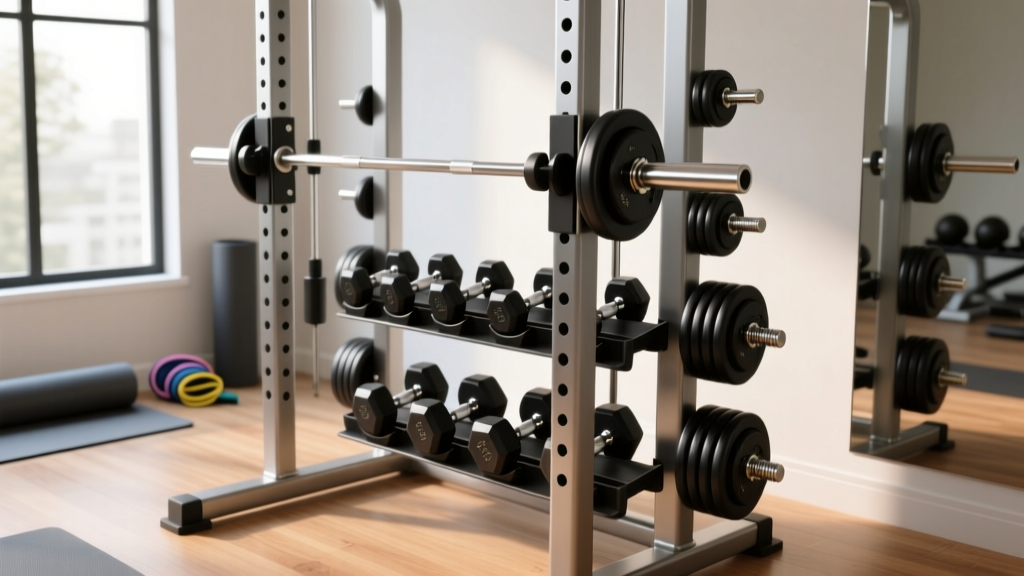
The most popular choice for the home user is the Precor Home 3-Tier Rack. Unlike flat-shelf budget racks, the Precor model features ergonomically angled trays. This 15-degree tilt reduces wrist extension during the initial lift phase, a subtle biomechanical advantage that prevents repetitive strain over years of heavy use. Furthermore, the 11-gauge steel frame (approximately 0.119 inches thick) provides a rigidity that 14-gauge budget racks (0.074 inches thick) simply cannot match when loaded with 50-pound hex dumbbells.
Budgeting the Complete Garage Gym Storage System
To understand the value of a premium Precor dumbbell rack, we must contextualize it within a complete garage gym organization and storage system budget. A common framework recommended by home gym consultants, such as the experts at Garage Gym Reviews, suggests allocating 15% to 20% of your total equipment budget strictly to storage and organization.
Sample $1,500 Storage & Organization Budget Allocation
- Dumbbell Rack (Precor Home 3-Tier): $525 (35%)
- Olympic Weight Plate Tree (A-Frame): $250 (16%)
- Barbell Wall Hangers or Horizontal Holder: $120 (8%)
- Kettlebell / Medicine Ball Shelving: $180 (12%)
- Resistance Band Pegs & Accessory Bins: $90 (6%)
- Heavy-Duty Rubber Floor Matting (Protection): $335 (23%)
As illustrated above, the dumbbell rack commands the largest single slice of the storage pie. This is mathematically justified: it holds the heaviest cumulative weight and occupies the most critical floor space. Skimping here to save $300 forces you to compromise on structural integrity, which defeats the purpose of building a cohesive garage gym organization and storage system.
Value Analysis: When to Buy Precor vs. Budget Brands
Is the Precor dumbbell rack strictly necessary for every home gym? No. The value proposition depends entirely on your usage profile, the type of dumbbells you own, and your long-term facility goals. Let us break down the ROI based on specific user profiles.
The Case for the Precor Investment
If you own premium urethane or virgin rubber hex dumbbells (such as Rogue Urethane or Rep Fitness UR series), pairing them with a budget rack is a depreciating mistake. Budget racks often use hard PVC or low-grade rubber feet that degrade, flatten, and eventually scrape directly against epoxy or interlocking rubber garage floors. Precor utilizes high-density urethane foot caps that absorb micro-vibrations and protect expensive garage floor coatings. Additionally, the powder-coat finish on Precor's official commercial and home fitness lines is electrostatically applied and baked, resisting the chipping and rust that plagues budget racks stored in unclimate-controlled garages.
Edge Cases and Failure Modes in Cheaper Racks
When analyzing the long-term value, we must look at how budget racks fail. Based on years of home gym equipment testing, the most common failure modes for sub-$200 dumbbell racks include:
- Gusset Weld Snapping: Under the dynamic load of a user dropping a 40lb dumbbell onto the tray from a 2-inch height, the spot-welds on 14-gauge steel gussets can fracture. Precor utilizes continuous MIG welds on reinforced gussets.
- Tray Sagging: Over 3 to 5 years, the horizontal shelves on budget racks develop a permanent downward bow, causing round dumbbells to roll and hex dumbbells to sit unevenly, creating a tipping hazard.
- Hardware Loosening: Budget racks rely on standard hex bolts that vibrate loose. Precor models utilize nylon-insert locknuts and heavy-duty carriage bolts that maintain torque integrity over thousands of loading cycles.
Spatial Planning and Safety Clearances
Integrating a Precor dumbbell rack into your garage gym organization and storage system requires precise spatial planning. The NSCA recommends a minimum of 36 inches of clearance on all sides of a free-weight storage unit to allow for safe lifting mechanics and emergency drops.
"Proper facility layout dictates that storage units must not impede the primary movement pathways. A 36-inch clearance zone ensures that a lifter can safely bail from a heavy dumbbell press without striking adjacent equipment."
The Precor Home 3-Tier rack measures 36 inches long and 22 inches deep. To meet safety standards, you must allocate a floor footprint of roughly 108 inches by 94 inches (approx. 70 square feet) purely for the dumbbell station. If your garage gym is under 200 square feet, a wall-mounted dumbbell shelf or a vertical A-frame rack might offer a better spatial ROI, even if it sacrifices the ergonomic angled trays of the Precor floor model.
Final Verdict on Storage ROI
When executing a budget breakdown for your garage gym organization and storage system, the Precor dumbbell rack emerges as a high-value, long-term asset rather than a mere luxury. While the initial capital outlay of $500 to $550 is more than double that of imported budget alternatives, the cost-per-year over a 15-year lifespan makes it exceptionally economical. You are paying for 11-gauge steel rigidity, biomechanically angled trays, floor-safe urethane feet, and a commercial-grade powder coat that survives humid garage environments. For lifters who view their home gym as a permanent, multi-decade investment, the Precor dumbbell rack provides an unmatched blend of safety, organization, and structural reliability that budget brands simply cannot replicate.
More gear to consider
All reviews
Cap Barbell A-Frame Dumbbell Rack vs Kettlebell Racks: 2026 Guide
How To Repair Essentials: A Practical Homegym Storage & Interior Design Guide
Beginner Guide to Power Rack Dumbbell Holders & Storage

Wall Mounted Storage: Nuobell Dumbbell Stand Care & Longevity

Wall Mounted Storage vs FitRx Dumbbell Stand: Gym Layouts
