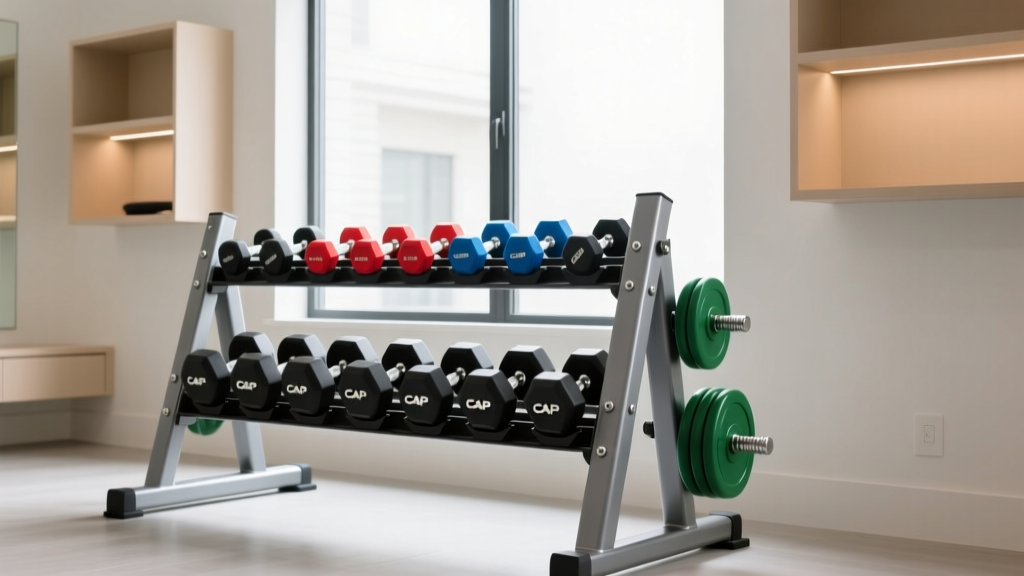
Troubleshooting Weight Plate Trees & Life Fitness Dumbbell Rack Setups
Fix common home gym storage mistakes. Learn how to pair a Life Fitness dumbbell rack with the right weight plate tree to maximize safety and space.

Building a premium home gym often leads to a frustrating storage paradox. You invest heavily in top-tier equipment, only to realize your organization strategy is fundamentally flawed. A classic example is pairing a commercial-grade Life Fitness dumbbell rack with a flimsy, big-box-store weight plate tree. The aesthetic clash is obvious, but the functional and safety hazards are far more concerning. In 2026, as home gym footprints become more optimized and equipment loads increase, understanding the structural and spatial requirements of your storage gear is non-negotiable.
This troubleshooting guide dives deep into the most common mistakes home gym owners make when integrating weight plate storage trees and racks alongside premium dumbbell stations. We will cover structural failure modes, spatial planning errors, and material mismatches, providing actionable frameworks to fix your layout.
The 'Premium Dumbbell, Cheap Plate Tree' Imbalance
The most frequent mistake in high-end home gym design is budget misallocation. An owner might spend $1,650 on a Life Fitness Signature Series 3-Tier Dumbbell Rack (rated for 5-50 lb pairs, featuring heavy-duty steel and ergonomic tiered shelving) and then allocate a mere $70 for a generic 10-peg A-frame plate tree.
Warning: The Asymmetric Load HazardA standard 10-peg tree holds up to 900 lbs of iron if fully loaded. However, cheap trees utilize 1.5mm thick steel tubing and spot-welded pegs. If you load only one side of the tree with three pairs of 45-lb plates (405 lbs), the shifted center of gravity creates massive torsional stress on the weak spot welds, leading to catastrophic tipping or peg snap-offs.
To complement a Life Fitness dumbbell rack, your plate storage must match its structural integrity. Look for trees constructed from 11-gauge or 7-gauge steel with fully gusseted peg welds. Premium options like the Rogue Monster Plate Tree (priced around $175) utilize laser-cut steel and robust base footprints that prevent tipping even under asymmetric loading conditions.
Troubleshooting Weight Plate Tree Failures
When your current plate storage is failing, it usually manifests in three specific ways: bent pegs, base lifting, and sleeve scratching. Below is a comparison matrix of the primary weight plate storage options available in 2026, highlighting their failure points and ideal use cases.
| Storage Type | Max Load Capacity | Footprint | Common Failure Mode | Best Paired With |
|---|---|---|---|---|
| Vertical A-Frame Tree | 800 - 1,200 lbs | 24" x 24" | Tipping under asymmetric loads; peg droop. | Iron plates, fractional plates, collars. |
| Horizontal Rack/Cradle | 1,500+ lbs | 48" x 24" | Takes up excessive lateral floor space. | Urethane and Rubber Bumper plates. |
| Wall-Mounted Saddle | 600 - 1,000 lbs | 0" (Wall space) | Drywall tear-out if not anchored to studs. | Small garages, tight clearances. |
| Rack-Attached Storage | 1,000+ lbs | Integrated | Limits barbell clearance on the main j-cups. | Power racks with dedicated storage pins. |
Fixing Bent Pegs and Base Lift
If your vertical tree's pegs are drooping at a 5-degree angle or greater, the steel has yielded. This happens when users repeatedly drop 45-lb iron plates onto the sleeve from a height of 3-4 inches, creating a dynamic impact force that exceeds the static yield strength of cheap steel. The Fix: Stop dropping plates on the tree. If the pegs are already bent, do not attempt to bend them back, as this introduces micro-fractures in the weld. Replace the unit with an 11-gauge steel tree featuring UHMW plastic sleeve covers to dampen impact noise and protect your plates.
Spatial Planning: Integrating Trees with Premium Racks
A pristine Life Fitness dumbbell rack requires specific spatial allowances to function safely. According to facility design guidelines outlined by the National Strength and Conditioning Association (NSCA), a minimum of 36 inches of clear walkway space must be maintained around all storage and lifting zones to prevent tripping hazards and allow for safe equipment transport.
Here is a step-by-step troubleshooting flow to fix a congested storage layout:
- Map the Dumbbell Rack Footprint: A standard 3-tier commercial dumbbell rack is roughly 48 inches wide and 22 inches deep. Add 36 inches to the front and both sides for your primary 'loading zone'.
- Identify the Choke Points: If your plate tree is placed directly adjacent to the dumbbell rack, the user's path to grab a 50-lb dumbbell will intersect with the path of someone loading a 45-lb plate. This is a severe collision risk.
- Relocate to the 'Dead Zone': Move the plate tree to a wall-facing corner or directly beside your power rack, ensuring the 36-inch buffer around the Life Fitness dumbbell rack remains entirely unobstructed.
- Anchor for Safety: If space forces you to place a tall vertical tree near a high-traffic drop zone, use L-brackets to anchor the tree's base directly into the concrete slab or wood subfloor to eliminate tipping risks entirely.
Bumper Plate vs. Iron Plate Storage Mishaps
One of the most destructive mistakes in home gym storage is treating bumper plates like iron plates. Bumper plates feature a steel center insert surrounded by dense rubber or urethane. When stored vertically on a standard 2-inch diameter plate tree peg, gravity pulls the heavy rubber downward, creating immense shear stress on the steel insert.
"Storing high-durometer competition bumpers on vertical pegs for extended periods will inevitably lead to 'blowout,' where the steel center ring tears through the rubber casing. Always utilize horizontal cradle racks or specialized bumper trees with 3-inch to 4-inch wide saddles to distribute the load across the bottom edge of the plate."
— Equipment Maintenance Guidelines, Rogue Fitness Storage Solutions
Troubleshooting Bumper Storage: If you own a mix of iron and bumper plates, do not force them onto the same vertical tree. Invest in a dual-purpose horizontal storage rack. These racks feature standard 2-inch vertical pegs on the upper tier for iron plates and collars, and a horizontal cradle shelf on the bottom tier specifically designed to stack bumper plates flat, preserving their structural integrity and calibration.
Quick Troubleshooting Checklist for Home Gym Owners
Run through this rapid diagnostic checklist to ensure your weight plate and dumbbell storage ecosystem is optimized for 2026 standards:
- Symptom: Plates scraping against each other on the tree.
Fix: Your tree pegs are too short or lack spacing. Upgrade to a tree with minimum 10-inch peg length and 12-inch vertical spacing between tiers to accommodate thick urethane-coated plates. - Symptom: Dumbbell rack wobbles when removing heavy pairs.
Fix: Check the leveling feet on your Life Fitness dumbbell rack. Uneven garage floors cause a 3-point stance wobble. Adjust the threaded rubber feet until the rack is perfectly plumb, then tighten the locking nuts. - Symptom: Rust forming on plate tree pegs.
Fix: Bare steel pegs react to the humidity and sweat in a garage gym. Sand the pegs lightly and apply a coat of clear polyurethane, or replace them with zinc-plated or black powder-coated aftermarket sleeves. - Symptom: Tripping over tree base legs during deadlifts.
Fix: The A-frame base extends too far into your lifting platform. Swap the A-frame tree for a flat-base 'post' tree that can be bolted directly to the floor, eliminating protruding legs entirely.
Ultimately, a high-end home gym is only as functional as its weakest organizational link. By matching the structural pedigree of your Life Fitness dumbbell rack with appropriately engineered weight plate storage, you eliminate safety hazards, protect your expensive equipment from premature wear, and create a seamless training environment.
More gear to consider
All reviews
Snode Dumbbell Stand vs. Top Small Space Storage Solutions

Kettlebell Storage Solutions vs Wall Mounted Dumbbell Storage

Troubleshooting Weight Plate Trees & Rep Fitness Dumbbell Racks

Heat Care and Maintenance: Protecting Your Home Gym Equipment and Space Through Smart Thermal Management

Horizontal vs Vertical Barbell Racks & DIY Dumbbell Stand Guide