
2026 Home Gym Renovation Cost Breakdown and Budget Guide
Discover the true 2026 home gym renovation cost. Get line-item budget breakdowns for garage and basement builds, plus ROI analysis.

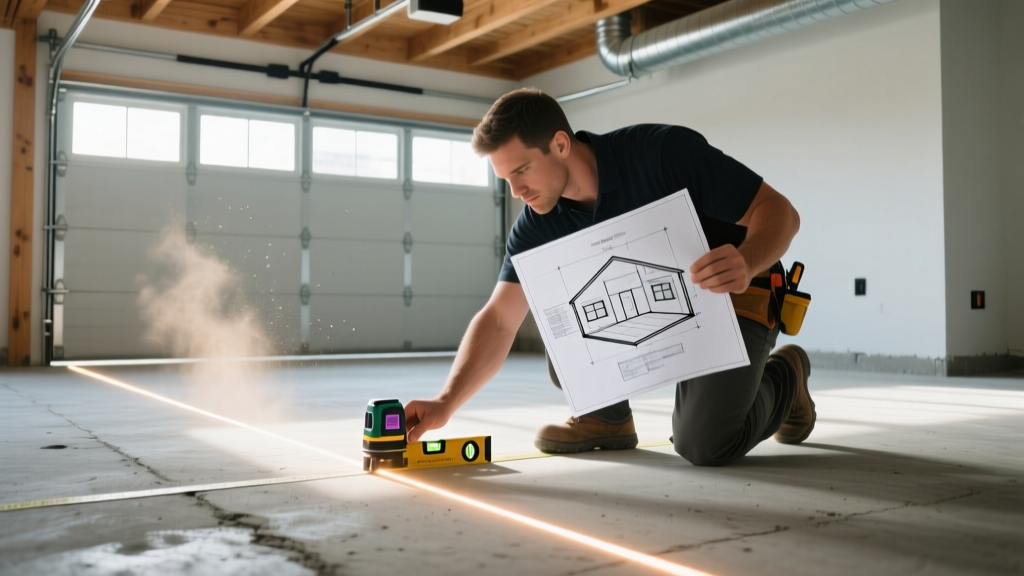
Calculating the true home gym renovation cost requires moving past the price of squat racks and treadmills to evaluate the structural, electrical, and environmental upgrades your space demands. While a basic equipment drop-in might only cost a few hundred dollars in floor mats, a fully converted, climate-controlled, and structurally reinforced training space requires a precise construction budget. In 2026, with fluctuating material prices and specialized labor rates, understanding where your money goes is the only way to prevent a $5,000 project from ballooning into a $15,000 money pit.
This guide dissects the exact line-item expenses for converting garages, basements, and spare rooms into dedicated training facilities, providing the concrete data you need to plan your build.
Breaking Down the Average Home Gym Renovation Cost by Space
The starting point of your budget depends entirely on the existing envelope of the room you are converting. Garages require insulation and floor leveling, basements demand moisture mitigation, and spare rooms need structural load verification. Below is the current national average pricing for a 400-square-foot conversion.
| Space Type | Avg. Renovation Cost | Primary Expense Driver | Hidden Cost Risk |
|---|---|---|---|
| Attached Garage | $4,500 - $9,200 | Insulation & HVAC Mini-Split | Concrete floor leveling / Epoxy prep |
| Unfinished Basement | $6,800 - $14,500 | Framing, Drywall & Moisture Control | Sump pump upgrades & Dehumidification |
| Spare Bedroom | $1,200 - $3,500 | Electrical Upgrades & Soundproofing | Subfloor joist reinforcement |
Line-Item Budget Breakdown: Where Your Money Goes
To keep your home gym renovation cost under control, you must allocate funds to the infrastructure that protects both your equipment and your home's structural integrity.
Flooring and Subfloor Preparation
Do not use interlocking EVA foam tiles for heavy lifting; they compress unevenly under load and degrade within two years. The professional standard is 3/8-inch (8mm) vulcanized rubber flooring.
- Budget Option: 4x6-foot horse stall mats from agricultural suppliers (e.g., Tractor Supply Co.) cost roughly $55 to $75 per mat ($2.30 - $3.10 per square foot). They emit a strong initial odor and have a textured back that can trap debris.
- Premium Option: Commercial-grade rolled rubber (e.g., Rogue Fitness or Regupol) costs $3.50 to $5.00 per square foot. These feature a smooth backing, tighter seams, and significantly lower off-gassing.
Pro Tip: If dropping 400+ lb deadlifts, install a layered subfloor using 3/4-inch plywood topped with a 1/2-inch sound-dampening underlayment before laying the rubber. Add $2.50 per square foot to your budget for this deadlift platform zone.
Electrical and Lighting Upgrades
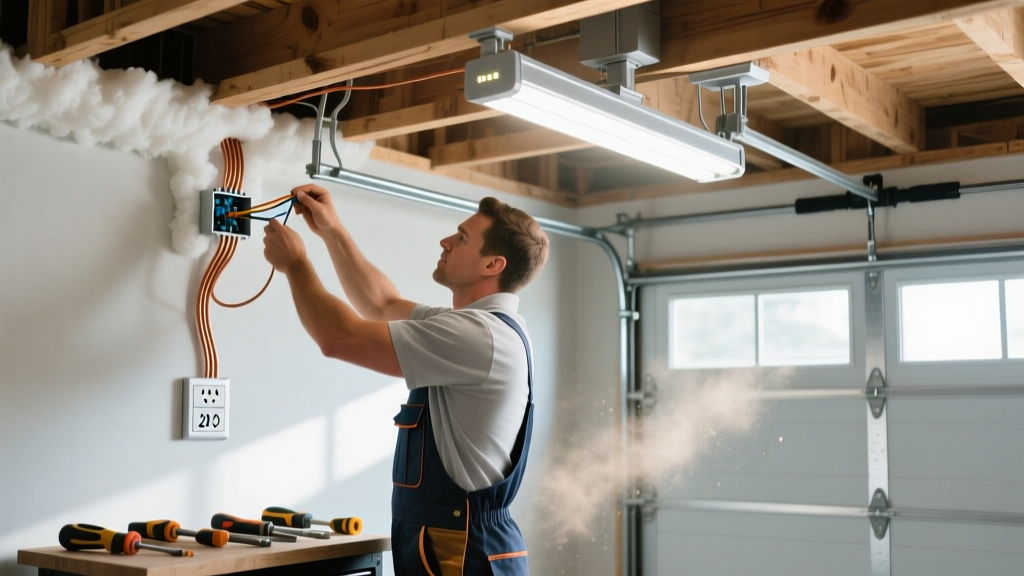
Standard 15-amp household circuits are insufficient for modern cardio equipment. A commercial treadmill (like the Peloton Tread or NordicTrack Commercial 1750) can draw 12 to 15 amps under peak incline load. If your smart TV, fan, and sound system share that circuit, the breaker will trip mid-workout.
HVAC and Ventilation Infrastructure
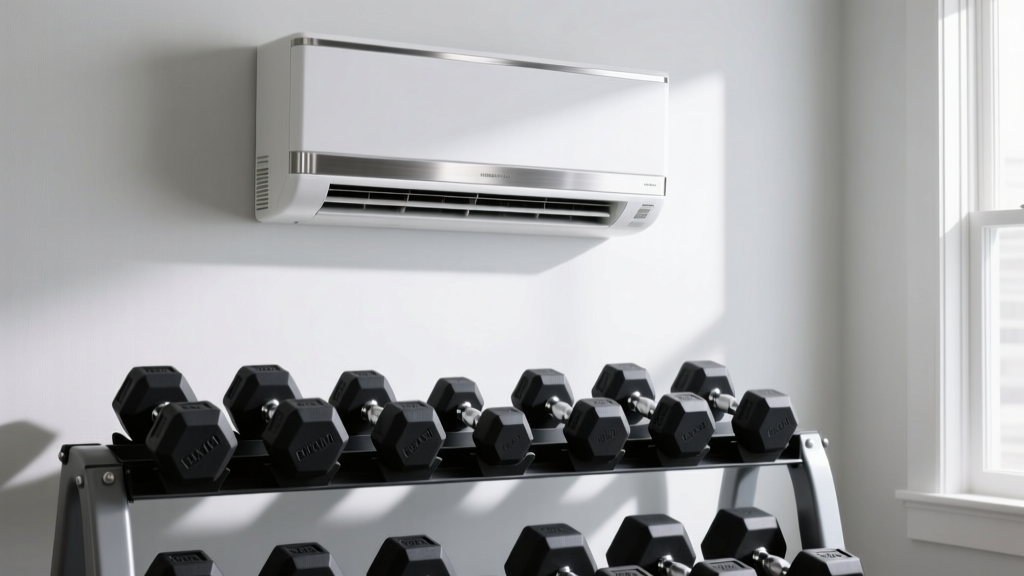
A 400-square-foot gym with two active adults generates massive heat and humidity. Standard home HVAC systems are not zoned to handle the sudden thermal load of a garage or basement gym. According to the U.S. Department of Energy, ductless mini-split heat pumps are the most efficient solution for room additions.
- Sizing: A 400 sq. ft. gym requires a 9,000 to 12,000 BTU mini-split unit.
- Cost: Equipment (e.g., Pioneer or Mitsubishi Mr. Slim) costs $800 to $1,500. Professional installation adds $1,000 to $2,500, bringing the total climate-control budget to roughly $1,800 - $4,000.
- Basement Specifics: If building below grade, budget $1,200 for a commercial-grade standalone dehumidifier (like the AlorAir or Santa Fe models) capable of extracting 70+ pints per day to prevent rust on your barbells and racks.
DIY vs. Contractor: Labor Cost Matrix
Labor typically accounts for 30% to 50% of your total home gym renovation cost. Deciding what to self-perform versus what to outsource is critical for both budget and safety.
| Task | DIY Savings | Risk Level | Recommendation |
|---|---|---|---|
| Demo & Haul Away | $500 - $1,200 | Low | DIY (Rent a dumpster for $350) |
| Rubber Floor Installation | $800 - $1,500 | Low | DIY (Requires utility knife & straight edge) |
| Drywall & Taping | $1,500 - $3,000 | Medium | Hybrid (Hang yourself, hire a pro to tape/mud) |
| Electrical Panel Upgrades | N/A | Critical | Hire Licensed Electrician (Code compliance required) |
| Mini-Split Line Flushing | N/A | High | Hire HVAC Tech (Void warranty if DIY fails) |
ROI Analysis: Renovation vs. Lifetime Memberships
Is the capital expenditure justified? To evaluate the return on investment, we must compare the upfront build costs against long-term commercial gym dues and potential home value appreciation.
The 7-Year Financial Projection
Premium Gym Membership Cost: $180/month (e.g., Equinox or high-tier boutique) = $2,160/year. Over 7 years, adjusting for 3% annual inflation, this totals $17,650.
Average Garage Gym Build: $7,500 (Renovation) + $4,000 (Equipment) = $11,500.
Net Savings at Year 7: $6,150 + the added resale value of a finished, climate-controlled garage space (which recoups roughly 60-70% of renovation costs upon home sale, according to Angi's home improvement data).
Furthermore, a dedicated home gym eliminates the friction of commuting, packing bags, and waiting for equipment, yielding an unquantifiable but massive return on daily time efficiency.
Step-by-Step Budgeting Framework for Your Build
Follow this exact sequence to finalize your budget and prevent mid-project financial surprises.
- Audit the Envelope (Week 1): Check your concrete slab for moisture using a simple plastic sheet taped to the floor for 48 hours. If condensation forms underneath, add a $1,500 epoxy moisture barrier to your budget before laying any flooring.
- Map the Electrical Load (Week 2): List every motorized machine and its amperage rating. Group them to determine how many 20-amp circuits you need. Call an electrician for a rough-in quote based on this exact list.
- Calculate BTU Requirements (Week 3): Measure the cubic volume of your space (Length x Width x Ceiling Height). Multiply by 20 to get the baseline BTU requirement for heating/cooling, then add 10% for every large window or poorly insulated exterior wall.
- Source Equipment Dimensions (Week 4): Do not buy drywall or flooring until you know the exact footprint of your power rack and cable machine. You may need to leave specific wall sections unfinished or reinforced with 3/4-inch plywood backing behind the drywall to mount heavy wall-ball targets or cable pulley systems.
- Allocate a 15% Contingency (Week 5): Construction always uncovers hidden issues—especially in older homes where wiring or plumbing may need rerouting. Never finalize a budget without a 15% cash reserve.
By treating your training space as a specialized construction project rather than a simple room makeover, you ensure the final home gym renovation cost yields a safe, durable, and high-performance environment tailored exactly to your biomechanical and aesthetic standards.
More gear to consider
All reviews
Smart Equipment Alternatives for Beginners: Space-Saving, Budget-Friendly Strength Training Solutions

Best Home Office Gym Ideas for Minimalist Spaces

Home Office Gym Combo Ideas: Speediance vs. Folding Rack (2026)

How To Repair Compression: A Practical Guide for Home Gym Flooring, Foam Rollers, and Resistance Bands
