
Peloton Treadmill Cost vs. Adaptive Weights: Space Layouts
Compare the peloton treadmill cost with space-saving adaptive weight tech. Discover layout strategies to optimize your smart home gym footprint.

The Spatial Economics: Treadmills vs. Wall-Mounted Smart Resistance
Designing a high-performance smart home gym in 2026 requires balancing financial investment with physical footprint. For years, the centerpiece of the connected fitness revolution has been the smart treadmill. However, as urban living spaces shrink and hybrid fitness routines evolve, many homeowners are re-evaluating the spatial and financial footprint of dedicated cardio machines versus all-in-one adaptive weight systems. When mapping out your floor plan, understanding the true spatial economics is just as critical as evaluating the hardware price tags.
Static Dimensions vs. Dynamic Clearance
The most common mistake in home gym layout design is measuring only the static footprint of the equipment. A smart treadmill demands a massive, dedicated rectangular zone. For example, the Peloton Tread+ measures 72 inches long by 33 inches wide, with a 62-inch height. However, safety guidelines dictate a minimum of 24 inches of clearance on each side and at least 78 inches of clearance behind the machine to prevent injury in the event of a fall. This pushes the actual required floor space to roughly 35 square feet of dedicated, unobstructed room.
In stark contrast, wall-mounted adaptive weight systems like the Tonal 2 utilize vertical real estate. The hardware itself protrudes barely 5.25 inches from the wall and spans 21.5 inches wide. While you need a dynamic clearance of about 7x7 feet on the floor to perform functional movements like lunges or cable woodchops, this space remains entirely multi-purpose. When the digital arms are folded away, the room can instantly revert to a home office, guest room, or living area.
Design Rule of Thumb: Always calculate the 'volumetric footprint' of your equipment. Treadmills consume permanent 3D volume, whereas smart resistance trainers consume temporary, dynamic volume that can be collapsed when not in use.Financial Breakdown: Evaluating the Peloton Treadmill Cost Against Adaptive Tech
When buyers begin researching connected fitness, the initial peloton treadmill cost is often the primary anchor point. Depending on the model, the hardware ranges from $3,595 for the standard Tread to $4,295 for the Tread+. However, a comprehensive layout and budget analysis must factor in delivery, installation, flooring requirements, and long-term subscription fees. Adaptive weight technology carries a similar premium upfront but offers entirely different long-term value propositions and spatial efficiencies.
| Feature / Cost Metric | Peloton Tread+ (Smart Cardio) | Tonal 2 (Adaptive Resistance) | Speediance Gym Monster 2 |
|---|---|---|---|
| Base Hardware Cost | $4,295 | $3,995 | $3,199 |
| Mandatory Installation | Included (Standard Delivery) | $250 - $450 (Professional) | $0 (Freestanding) |
| Monthly Subscription | $44 / month | $59 / month | $0 (Optional $19/mo) |
| Required Floor Space | ~35 sq. ft. (Permanent) | ~49 sq. ft. (Dynamic/Foldable) | ~12 sq. ft. (Foldable) |
| Flooring Requirement | PVC Mat (Vibration Dampening) | None (Wall-Mounted) | 3/4" Rubber Mats (Drop Protection) |
As the data illustrates, the long-term peloton treadmill cost over a three-year period—including the $44 monthly All-Access membership—totals roughly $5,879. Comparatively, a freestanding adaptive weight system like the Speediance Gym Monster 2 eliminates the mandatory subscription model entirely, bringing the three-year cost to just the $3,199 hardware fee, freeing up capital that can be redirected toward premium gym flooring or acoustic treatments for your layout.
How Adaptive Weight Technology Shrinks the Home Gym
To understand why smart resistance systems are dominating space-optimized layouts, we must look at the underlying technology. Traditional home gyms require gravity-based mass: iron plates, bulky racks, and cable machines that dictate the architecture of a room. Adaptive weight technology replaces physical mass with electromagnetic resistance.
Electromagnetic Motors and Digital Weight
Devices like Tonal and Vitruvian utilize advanced electromagnetic motors to generate resistance. By manipulating electrical currents through copper coils, the system creates eddy currents that resist the rotation of an internal flywheel. This allows a device weighing less than 150 pounds to generate up to 200 pounds of digital resistance (or more, depending on the model). Because the resistance is generated algorithmically rather than gravitationally, the hardware can be flattened against a wall or folded into a compact tower.
Algorithmic Spotting and Eccentric Overload
Beyond space savings, adaptive technology offers training modalities impossible with free weights. According to comprehensive reviews by Wirecutter's fitness testing team, smart resistance systems excel in real-time load adjustment. If the sensors detect a decrease in your bar speed during a bench press, the 'Smart Spotter' feature instantly reduces the digital weight by 10% to 30%, allowing you to complete the rep safely without a human spotter. Furthermore, these systems can program 'eccentric overload,' increasing the resistance during the lowering phase of a lift to maximize muscle hypertrophy—a feature highly praised by CNET's smart gym analysts for advanced lifters training in confined spaces.
"The shift from spatial mass to digital resistance is the most significant leap in home gym design since the invention of the adjustable dumbbell. You are no longer storing weight; you are storing the capacity to generate it."
Layout Frameworks: Designing Your Smart Gym
Integrating these technologies requires a deliberate approach to interior layout. Here are three proven frameworks based on common residential room dimensions:
- The 10x12 Guest Room (120 Sq. Ft.): In this constrained layout, a treadmill is highly prohibitive. Opt for a wall-mounted adaptive trainer on the longest uninterrupted wall. Place a foldable smart bike (like the Peloton Bike+) in the corner. Use interlocking 3/8" EVA foam tiles to protect the hardwood without permanently altering the room's aesthetic.
- The Converted Garage (400+ Sq. Ft.): Here, spatial constraints are minimal, but environmental factors dominate. You can comfortably fit both a Peloton Tread+ and a freestanding adaptive weight system. However, you must account for temperature fluctuations. Smart treadmills contain sensitive LCDs and motherboards that can fail in sub-freezing or high-humidity environments. Ensure the space is climate-controlled before committing to the hardware.
- The Open-Concept Living Area: If your gym must share space with a living room, visual weight is paramount. Wall-mounted systems with custom mirror finishes or sleek matte-black casings blend into modern decor. Avoid bulky freestanding functional trainers that obstruct sightlines and natural light.
Critical Installation Edge Cases and Failure Modes
Space optimization is useless if the structural integrity of your home cannot support the equipment. When designing your layout, you must account for the following physical failure modes:
- Wall Stud Reinforcement: Wall-mounted adaptive trainers generate up to 200+ lbs of lateral pull. Mounting directly into drywall or metal studs will result in catastrophic failure. You must locate wooden studs (typically 16 inches on center) or install a structural plywood backer board secured into the framing to distribute the sheer force.
- Ceiling Height Constraints: While treadmills require length, functional trainers require height. If you are installing a system with a pull-up bar or high-cable pulley, ensure your ceiling is at least 8.5 feet high. A standard 8-foot ceiling will cause taller users to strike their heads during overhead presses or pull-ups.
- Electrical Circuit Overloads: Smart treadmills draw significant continuous amperage, especially during high-incline sprints. Plugging a Tread+ and an adaptive weight system into the same 15-amp residential circuit can trip the breaker mid-workout. Dedicate a 20-amp circuit specifically for your smart fitness zone.
Ultimately, deciding between a smart treadmill and adaptive weight technology comes down to your primary fitness modality and your spatial reality. While the peloton treadmill cost remains a significant investment for elite connected cardio, the rise of electromagnetic adaptive weights offers a compelling, space-efficient alternative for those prioritizing strength, hypertrophy, and multi-purpose room design. By mapping your dynamic clearances and understanding the hidden installation requirements, you can engineer a 2026 smart home gym that delivers maximum ROI per square foot.
More gear to consider
All reviews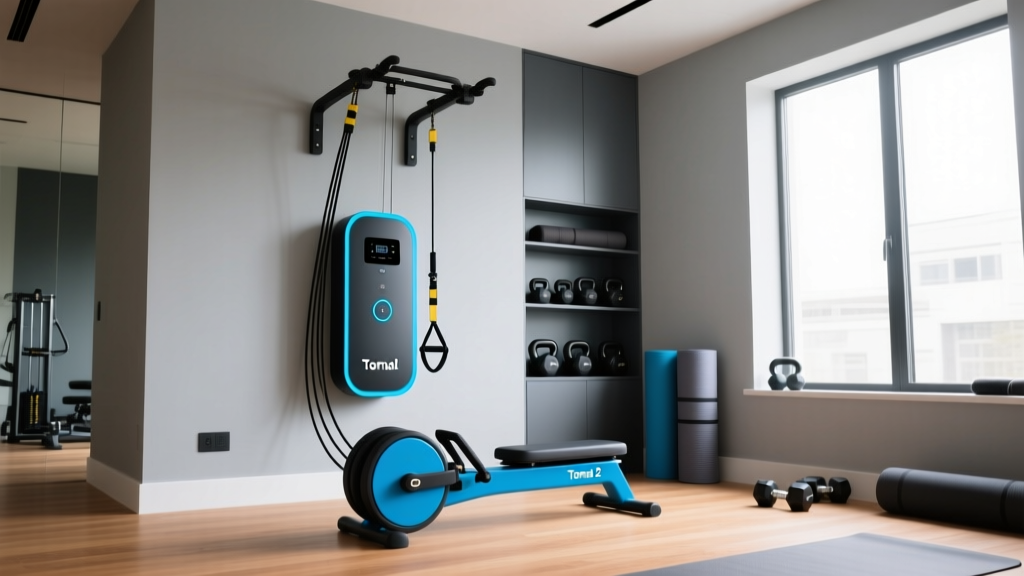
Tonal 2 Home Gym Space Layout & 2026 Subscription Cost Analysis

Rent Peloton Treadmill or Buy AI Smart Treadmills? 2026 Guide

Can I Trade My Peloton Bike for a Treadmill? Tech & Maintenance Guide

Peloton or Treadmill? AI Equipment Maintenance & Longevity Tips

Smart Alternatives to Peloton 25 lb Dumbbells in 2026
