
Peloton Bike or Treadmill? Smart Resistance & Budget Breakdown
Deciding between a Peloton Bike or Treadmill? We break down the 2026 costs, smart resistance tech, and long-term value to maximize your home gym ROI.

The Evolution of Adaptive Load in Connected Fitness
When consumers ask whether they should invest in a Peloton Bike or treadmill, the conversation usually revolves around available floor space and basic cardio preferences. However, as we navigate the 2026 smart home gym landscape, the true differentiator lies beneath the chassis: smart resistance and adaptive load technology. Hardware is no longer just a mechanical frame; it is a software-driven vessel that adjusts to your biometric output in real-time.
Understanding how Peloton’s Auto-Follow magnetic resistance on the Bike+ compares to the adaptive speed and incline algorithms on the Tread is critical for budget-conscious buyers. Furthermore, comparing these cardio-centric adaptive systems to dedicated smart weight technology (like electromagnetic digital weight systems) reveals where your fitness budget delivers the highest long-term ROI. Let us break down the engineering, the hidden costs, and the ultimate value proposition of these connected fitness titans.
Decoding the Tech: Magnetic Brakes vs. Adaptive Incline
Peloton Bike+ and Auto-Follow Resistance
The Peloton Bike+ utilizes a sophisticated 24V DC motor paired with a neodymium magnetic brake system to generate resistance. Unlike friction-based brakes that degrade over time, this magnetic system offers a seamless 1-100 resistance scale. The hallmark feature, Auto-Follow, relies on a hall-effect sensor that tracks the magnet's proximity to the aluminum flywheel. When an instructor calls for a resistance of 45, the software instantly commands the motor to adjust the magnetic field, eliminating the guesswork and ensuring you are hitting the exact target power output (measured in watts).
Peloton Tread and Adaptive Cardio Load
While the Tread does not manipulate "weight" in the traditional strength-training sense, its adaptive load technology serves the same physiological purpose. The Tread’s 3.25 HP continuous-duty motor dynamically adjusts belt speed and the 12.5% maximum incline based on your real-time heart rate zones and historical output data. If your biometric wearable detects you are underperforming in a target Zone 4 threshold, the Tread’s algorithm subtly micro-adjusts the incline to force the necessary cardiovascular adaptation without requiring manual console inputs.
Expert Insight: According to the American College of Sports Medicine (ACSM), progressive overload is the fundamental driver of muscular and cardiovascular adaptation. Smart resistance technology automates progressive overload by removing human error and fatigue-based underperformance from the equation.2026 Budget Breakdown: 3-Year Total Cost of Ownership (TCO)
To accurately evaluate the value of smart resistance technology, we must look beyond the initial hardware price tag. The ecosystem lock-in and subscription requirements drastically alter the financial reality of these machines. Below is a comprehensive 3-Year TCO matrix comparing the Peloton ecosystem against a leading adaptive smart weight competitor to provide context on where your budget is actually going.
| Cost Category | Peloton Bike+ | Peloton Tread | Smart Weight System (e.g., Tonal) |
|---|---|---|---|
| Base Hardware (2026 MSRP) | $2,495 | $3,495 | $3,995 |
| Delivery & Installation | $250 | $250 | $495 (Pro Install) |
| Mandatory Accessories | $150 (Shoes/Weights) | $100 (Mat/HRM) | $200 (Handles/Bench) |
| 3-Year Subscription (All-Access) | $1,584 ($44/mo) | $1,584 ($44/mo) | $2,484 ($69/mo) |
| 3-Year Total Cost of Ownership | $4,479 | $5,429 | $7,174 |
Note: Subscription pricing reflects the standard Peloton All-Access Membership rates as of early 2026. Taxes and optional extended warranties are excluded.
Analyzing the ROI of Auto-Follow
The standard Peloton Bike retails for roughly $1,000 less than the Bike+. From a pure budget perspective, is the Auto-Follow smart resistance motor worth the $1,000 premium? If your primary goal is structured, metric-driven training (like FTP testing or power-zone endurance rides), the Auto-Follow feature ensures you never cheat a recovery interval or underperform on a climb. For casual riders who prefer scenic rides or music-based rhythm riding, the manual resistance knob of the base model offers a better financial ROI, as the smart resistance motor provides zero added value in rhythm-based classes.
Hidden Costs and Hardware Failure Modes
Smart fitness equipment introduces complex points of failure that traditional mechanical gear simply does not have. When budgeting for a Peloton Bike or treadmill, you must account for potential edge cases and maintenance requirements associated with adaptive technology.
- Hall-Effect Sensor Drift (Bike+): The sensor that reads the magnetic brake position is highly sensitive to metallic dust and environmental humidity. Over 18 to 24 months, users may experience "ghost resistance," where the screen displays a resistance of 30, but the physical pedal tension feels like 50. This requires a manual software recalibration via the device settings menu, or in severe cases, a $150 out-of-warranty sensor replacement.
- Incline Motor Heat Dissipation (Tread): The Tread’s adaptive algorithms frequently command rapid incline shifts. The 12.5% incline motor draws significant amperage. If placed in a poorly ventilated room or used for back-to-back marathon training blocks, the incline motor's thermal limiter may trip, forcing a 15-minute cooldown period before the adaptive incline function restores.
- Belt Tension and Calibration: Unlike magnetic resistance which is contactless, the Tread’s belt requires physical tensioning. As the belt stretches under the adaptive load of heavy sprint intervals, slippage can occur, causing the software to misread your actual speed output and inaccurately calculate your power metrics.
Smart Resistance vs. Adaptive Digital Weight
It is vital to distinguish between Peloton’s smart resistance (which modulates cardiovascular and muscular endurance load via friction/magnets and gravity) and true adaptive digital weight systems. Digital weight systems use electromagnetic motors to generate literal pound-for-pound resistance (up to 200 lbs) and feature "eccentric overload" modes that increase the weight during the lowering phase of a lift based on your real-time velocity.
"If your primary fitness objective is hypertrophy and maximal strength gains, the adaptive load on a Peloton Bike or Treadmill will not replace the necessity of a dedicated smart weight system or free weights. However, for cardiovascular conditioning, VO2 max improvement, and muscular endurance, the automated progressive overload provided by Peloton's algorithms is unmatched in its price tier."
Final Verdict: Maximizing Your Smart Fitness Budget
Choosing between a Peloton Bike or treadmill ultimately hinges on how you intend to leverage adaptive technology to meet your specific physiological goals.
- Choose the Peloton Bike+ ($4,479 3-Yr TCO) if: You are a data-driven cyclist focused on power zones, FTP progression, and metric-based endurance. The Auto-Follow smart resistance justifies the hardware premium by ensuring strict adherence to prescribed training loads.
- Choose the Peloton Tread ($5,429 3-Yr TCO) if: You prioritize joint-friendly, adaptive cardiovascular conditioning and have the spatial footprint to accommodate a 68-inch long chassis. The adaptive incline algorithms provide a superior caloric expenditure and lower-body endurance stimulus compared to flat-surface running.
- Pivot to Smart Weight Tech if: Your budget exceeds $7,000 and your primary goal is muscle hypertrophy. In this scenario, the adaptive load technology found in digital weight systems offers a fundamentally different, strength-centric ROI that cardio equipment cannot replicate.
By looking past the marketing gloss and analyzing the 3-year financial commitment alongside the mechanical realities of smart resistance motors, you can confidently allocate your home gym budget toward the technology that will actually drive your long-term fitness adaptations.
More gear to consider
All reviews
Fitness Mirror vs Traditional Gear: Peloton Treadmill Specs Compared
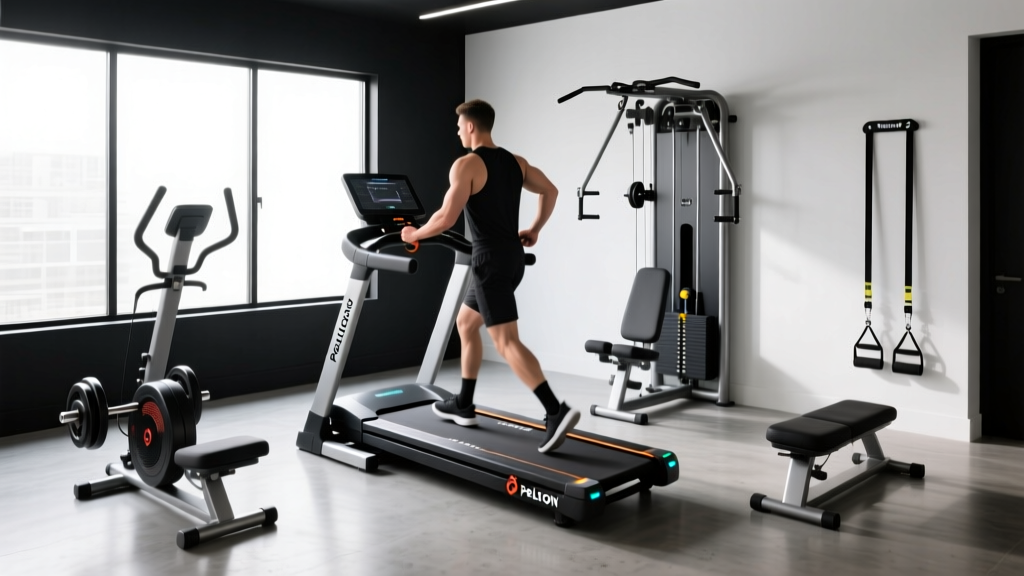
Top Smart Resistance Gear to Elevate Your Peloton Treadmill Workout

Budget Breakdown: Treadmills Compatible With Peloton App in 2026
Peloton Treadmill Moving Costs & Subscription Analysis 2026

How To Start Sports-Specific Training at Home: A Practical, Science-Backed Guide for Athletes and Fitness Enthusiasts
