
Fitness Mirror vs Traditional Gear: Peloton Treadmill Specs Compared
A beginner's step-by-step guide comparing smart fitness mirrors to traditional connected cardio. We break down Peloton treadmill specs, space, and costs.

Step 1: Conduct a Brutally Honest Spatial Audit
Before looking at screens or subscription tiers, you must measure your available floor space. The physical footprint is the most common point of failure for beginner home gym setups. Traditional connected equipment demands significant real estate, while smart mirrors capitalize on vertical, unused wall space.
Traditional Equipment Footprint (The Treadmill Benchmark)
When analyzing standard Peloton treadmill specs, the physical dimensions dictate a permanent spatial commitment. The current Peloton Tread measures 68" L x 33" W x 62" H. However, the raw dimensions are only half the story. According to safety guidelines, you must add a minimum of 24 inches of clearance behind the treadmill and 12 inches on each side to prevent injury in case of a fall. This means a single treadmill effectively consumes a 92" x 57" footprint in your room.
Smart Mirror Footprint (The Wall-Mounted Alternative)
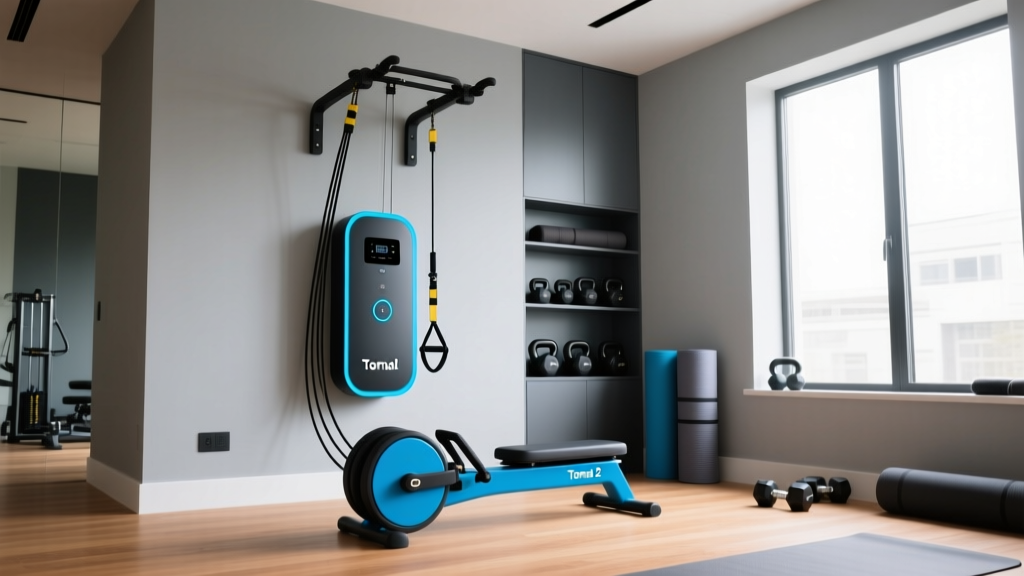
Smart fitness mirrors, like the Tonal 2 or the Echelon Reflect, project outward only 5 to 7 inches from the wall. A standard smart mirror requires roughly 50" H x 22" W of wall space. The floor space required is merely the user's wingspan and stride length (roughly 6x6 feet of open floor directly in front of the mirror), which can be easily folded up or repurposed when the workout is over.
Step 2: Decode the Hardware and Tech Specifications
Understanding the technology driving your workout is crucial. Here is where comparing Peloton treadmill specs against smart mirror hardware reveals two entirely different approaches to connected fitness.
Cardio Tech: The Peloton Tread Architecture
The Peloton Tread is engineered for high-impact, continuous cardiovascular output. Key hardware specifications include:
- Motor: 1.5 HP continuous-duty motor (designed to run for hours without overheating, unlike cheaper 2.0 HP 'peak' motors found on budget treadmills).
- Running Surface: 59" x 20" shock-absorbing slat belt, accommodating runners up to 6'2" comfortably.
- Display: 23.8" 1080p HD touchscreen with a 0-25% motorized incline.
- Audio: Front-facing soundbar with acoustic tuning designed to cut through the noise of footfalls and motor hum.
Strength & Mobility Tech: Smart Mirror Architecture
Smart mirrors prioritize spatial computing, AI form-tracking, and digital resistance. Premium models like the Tonal 2 utilize electromagnetic motors to generate up to 200 lbs of digital resistance without physical weight plates. They feature 24" edge-to-edge glass displays, hidden multi-directional speakers, and integrated 3D depth cameras that track your joint angles in real-time to correct your squat depth or deadlift hinge.
"Beginners often assume a smart mirror is just a TV with a reflective coating. In reality, modern smart mirrors are closed-loop biomechanical feedback systems, whereas connected treadmills are primarily immersive broadcasting terminals." — Home Gym Tech Analysis, 2025
Step 3: Match the Equipment to Your Primary Modality
Your hardware must align with your physiological goals. No amount of software updates can change the biomechanical reality of the machine.
Choose Traditional Cardio If:
- Your primary goal is Zone 2 cardio, marathon prep, or high-intensity interval sprinting.
- You suffer from joint issues that require the specific shock absorption of a calibrated treadmill belt.
- You prefer 'set it and forget it' workouts where you can watch a live instructor while running.
Choose a Smart Mirror If:
- Your goals center on hypertrophy, functional strength, yoga, or Pilates.
- You need real-time form correction and AI-driven rep counting.
- You live in an apartment where the acoustic impact of a treadmill belt would violate noise ordinances.
Step 4: Evaluate Network and Electrical Requirements
This is the most frequently overlooked step by beginners. Connected fitness equipment requires specific home infrastructure to function without latency or tripped breakers.
Electrical Demands
Traditional treadmills draw significant current, especially during startup and heavy incline sprints. The Peloton Tread requires a dedicated 15-amp, 120-volt circuit. Plugging a treadmill into a shared circuit with a space heater or microwave will inevitably trip the breaker mid-run. Smart mirrors, conversely, draw less than 3 amps and can safely share a standard wall outlet with other electronics.
Network Bandwidth
While treadmills primarily download 1080p video streams (requiring about 5-8 Mbps download speed), smart mirrors with active AI form-tracking and live two-way coaching require robust upload speeds. According to Wired's comprehensive smart mirror testing, optimal AI tracking and live-class latency require a minimum of 10 Mbps upload speed and a Wi-Fi 6 router positioned in the same room to prevent camera lag.
Step 5: Calculate the True 2026 Cost of Ownership
The sticker price is just the entry fee. To make a financially sound decision, you must calculate the 3-year total cost of ownership (TCO), including hardware, delivery, and mandatory subscription ecosystems.
| Cost Factor | Peloton Tread (Traditional Cardio) | Premium Smart Mirror (e.g., Tonal 2) |
|---|---|---|
| Base Hardware Price | $2,495 | $3,995 |
| Delivery & Installation | $250 (Standard) | $295 (Professional Wall Mounting) |
| Monthly Subscription | $44/mo (All-Access) | $59/mo (Membership) |
| 3-Year Subscription Cost | $1,584 | $2,124 |
| Estimated 3-Year TCO | $4,329 | $6,414 |
Step 6: Make Your Final Decision
Choosing between a fitness mirror and traditional connected equipment ultimately comes down to your primary fitness modality and spatial constraints.
If your 2026 fitness roadmap is heavily anchored in cardiovascular endurance, running mechanics, and high-calorie expenditure, the physical Peloton treadmill specs and biomechanical advantages of a dedicated running machine are irreplaceable. The spatial footprint is large, but the specific cardio ROI is unmatched.
Conversely, if your goals revolve around progressive overload strength training, mobility work, and you require a machine that disappears into your living room decor when not in use, a smart fitness mirror is the superior technological investment. By following this step-by-step audit of your space, electrical infrastructure, and budget, you can confidently build a smart home gym that serves your lifestyle for years to come.
More gear to consider
All reviews
2026 Peloton Treadmill Deals: Space Layout & Subscription ROI
Tonal 2 Home Gym Space Layout & 2026 Subscription Cost Analysis

How To Start Sports-Specific Training at Home: A Practical, Science-Backed Guide for Athletes and Fitness Enthusiasts

Fitness Mirror vs Traditional Gear: How to Move a Peloton Treadmill

Space Trends 2026: Smart, Sustainable, and Human-Centered Living Environments
