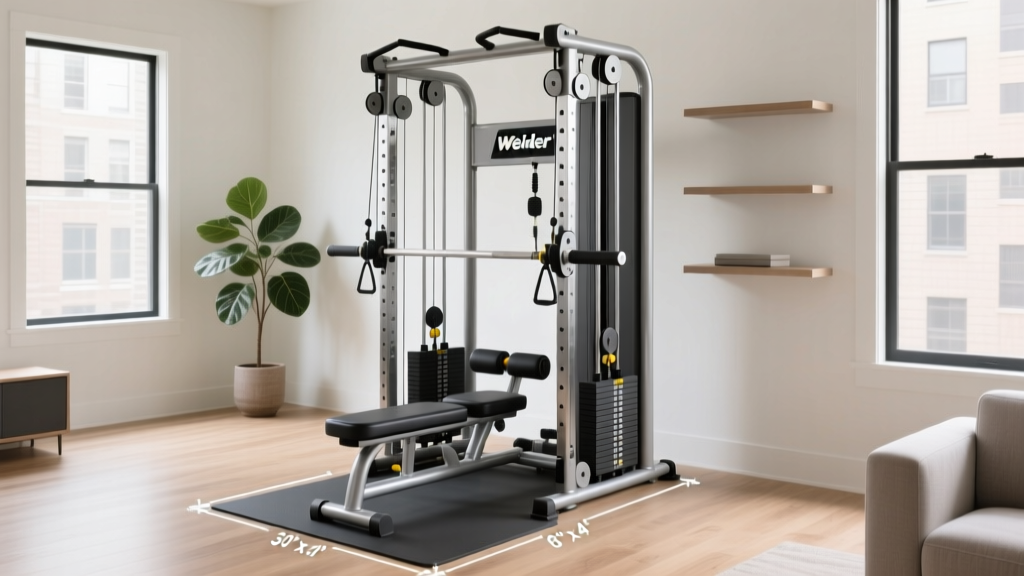
Small At Home Gym Ideas: 2026 Garage Flooring & Ventilation Trends
Discover 2026 market trends for small at home gym ideas in single-car garages, featuring high-density rubber flooring and smart ventilation setups.

The 2026 Micro-Garage Gym Boom: Market Overview
As urban and suburban lot sizes continue to shrink, the fitness industry has witnessed a massive pivot toward high-density, hyper-optimized training spaces. When exploring small at home gym ideas, the single-car garage has emerged as the most valuable, yet frequently mismanaged, real estate in the modern home. According to recent data from Grand View Research, the home fitness equipment market is increasingly driven by space-conscious consumers who are trading sprawling basement setups for compact, modular garage environments.
However, converting a 12x20-foot single-car garage into a functional training facility presents unique structural and environmental challenges. Unlike dedicated interior rooms, garages are subjected to extreme temperature fluctuations, concrete moisture vapor transmission, and dangerous off-gassing. This 2026 trend report breaks down the market's leading solutions for garage flooring and ventilation, providing a data-driven framework for building a safe, high-performance micro-gym.
High-Density Flooring Solutions for Compact Concrete Slabs
The foundation of any garage gym is the floor. In a small footprint, every square inch must serve multiple purposes: absorbing high-impact Olympic drops, providing traction for lateral movements, and protecting the underlying concrete slab from hairline fracturing. The 2026 market has largely moved away from cheap interlocking EVA foam tiles, which compress and degrade under heavy loads, toward premium vulcanized rubber.
Material Comparison & Cost Analysis
Below is a comparative analysis of the top three flooring categories dominating the compact garage gym market this year. Pricing reflects current Q1 2026 averages for high-quality materials.
| Material Type | Thickness | Cost (Per Sq Ft) | Drop Tolerance | Best Use Case |
|---|---|---|---|---|
| Vulcanized Rubber (e.g., Rogue RM-3) | 3/4" (19mm) | $3.20 - $4.50 | Extreme (800+ lbs) | Heavy Olympic lifting, attached garages |
| Crumb Rubber Stall Mats | 3/4" (19mm) | $2.00 - $2.60 | High (500+ lbs) | Detached garages, budget builds |
| Heavy-Duty Nylon Turf | 5/8" (15mm) | $4.00 - $6.50 | Moderate (Sled pulls) | Sprint lanes, functional fitness zones |
The Acoustic Dampening Imperative
For homeowners with attached garages, noise transfer is a critical failure point. Dropping a 300-pound barbell on standard 3/4-inch rubber directly over concrete generates low-frequency acoustic waves that travel through the home's foundation. The leading 2026 solution is the integration of 8mm to 12mm closed-cell foam shock pads beneath the primary rubber layer. This dual-layer system reduces acoustic transfer by up to 45% and increases the lifespan of both the concrete and the rubber matting.
Airflow & VOC Mitigation: The Hidden Garage Gym Crisis
The most overlooked aspect of small garage gym design is indoor air quality (IAQ). Garages are notorious for trapping volatile organic compounds (VOCs) from stored vehicles, paints, and newly installed rubber flooring. The U.S. Environmental Protection Agency (EPA) warns that indoor VOC levels can be up to 10 times higher than outdoor levels, a metric that skyrockets in poorly ventilated spaces during high-exertion workouts where respiratory rates increase by 300% to 500%.
⚠️ 2026 VOC Warning: Non-vulcanized crumb rubber mats can off-gass significant levels of benzene and formaldehyde for the first 60 to 90 days. If you are building a small at home gym in an attached garage, always prioritize vulcanized, low-odor rubber and run continuous exhaust ventilation during the initial curing period.Calculating CFM for a Single-Car Garage
To properly ventilate a standard 12-foot by 20-foot single-car garage with an 8-foot ceiling, you must calculate the required Cubic Feet per Minute (CFM) based on Air Changes per Hour (ACH). High-intensity training spaces require a minimum of 5 to 6 ACH to manage heat loads and CO2 buildup.
- Volume Calculation: 12' x 20' x 8' = 1,920 cubic feet.
- Target ACH: 6 air changes per hour.
- Hourly Requirement: 1,920 x 6 = 11,520 cubic feet per hour.
- Minimum CFM: 11,520 / 60 minutes = 192 CFM.
Accounting for static pressure loss in ducting and the thermal heat load generated by summer sun on a garage door, industry experts recommend oversizing your exhaust capacity by 50%. Therefore, a 300 CFM smart exhaust fan is the baseline requirement for a safe micro-garage gym.
Top Ventilation Configurations for 2026
Market trends show a sharp decline in reliance on simple box fans propped in windows. Today's setups utilize smart, humidity-sensing exhaust systems integrated with passive intake louvers.
- The Smart Exhaust System ($180 - $250): Wall-mounted, humidity-sensing exhaust fans (such as the iLiving ILG8SF16V series) automatically engage when ambient moisture from heavy breathing and sweat exceeds 60%, preventing drywall mold and equipment rust.
- HEPA Air Scrubbers ($400 - $650): Because garages contain fine concrete dust and tire particulate, ceiling-mounted or corner-placed HEPA scrubbers (like the Alen BreatheSmart series) are now standard for filtering PM2.5 particles before they enter the lungs during heavy cardio.
- Passive Intake Louvers ($40 - $80): An exhaust fan is useless without make-up air. Installing a motorized or gravity-fed louver vent on the opposing wall ensures cross-ventilation without creating negative pressure that could pull carbon monoxide from water heaters or furnaces.
Spatial Optimization: Layout Frameworks for Single-Car Bays
When square footage is capped at 240 square feet, traditional 4x4-foot freestanding power racks are often spatially prohibitive. The 2026 equipment market has heavily favored wall-mounted, fold-in squat racks (such as the PRx Performance Profile ONE). These units fold to a mere 4-inch depth against the wall, freeing up the central floor plan for kettlebell flows, sled pushes, or plyometric work when the barbell is not in use.
Furthermore, vertical storage has become a non-negotiable trend. Utilizing the 8-foot to 10-foot ceiling height for overhead slatwall storage systems keeps bulky items like medicine balls, resistance bands, and plyo boxes off the primary training footprint. By combining fold-in rigs with high-density, vulcanized flooring and active smart ventilation, homeowners can achieve commercial-grade training efficacy in spaces previously deemed too small or environmentally hazardous for daily use.
Investment Outlook & ROI
Building a micro-garage gym requires a strategic allocation of capital. While it may be tempting to blow the entire budget on a premium barbell and adjustable dumbbells, the 2026 data clearly indicates that environmental controls and foundation protection yield the highest long-term ROI. Allocating 30% of your total setup budget to 3/4-inch vulcanized rubber flooring, acoustic shock pads, and a 300+ CFM smart ventilation matrix will protect your home's structural integrity, preserve your respiratory health, and ensure your equipment survives the harsh, fluctuating microclimate of the modern garage.
More gear to consider
All reviews
10x10 Home Gym Trends: Zero-Damage Rental Setups in 2026

Outdoor Home Gym Must Haves: A Weatherproof Setup Walkthrough
Must Have Equipment for a Home Gym: Couples Setup Guide

Top Fitness Equipment for Home Gym Layouts & Floor Plans

Powering Your Hoist MI1 Home Gym: Electrical & Safety Trends