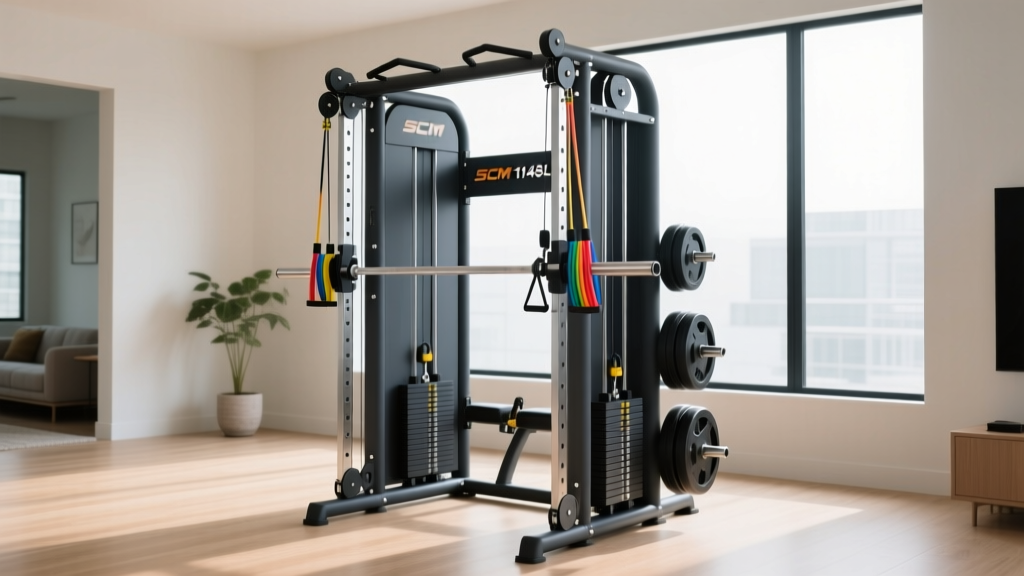
SCM 1148L Home Gym: Strength Configuration & Longevity Tips
Maximize your SCM 1148L home gym lifespan. Learn expert strength training configuration, cable maintenance, and weight stack longevity tips.

The SCM 1148L Multi-Station: Configuring for Serious Strength
When building a dedicated home gym configuration for strength training, the equipment you choose and how you maintain it dictates the success of your long-term fitness journey. The SCM 1148L home gym remains a staple for many lifters due to its versatile multi-station cable routing and compact footprint. However, transforming this machine from a basic garage fixture into a high-performance strength training hub requires precise spatial configuration and a rigorous, proactive maintenance protocol.
Unlike free-weight racks, cable-based multi-gyms rely on a complex network of tensioned wire ropes, nylon pulleys, and linear guide rods. A failure in any single component doesn't just interrupt your workout; it poses a severe safety hazard. According to the U.S. Consumer Product Safety Commission (CPSC), improper maintenance and inadequate spatial clearance are leading causes of home gym equipment injuries. This guide provides an expert-level blueprint for configuring your SCM 1148L for heavy strength training while implementing a longevity-focused care regimen.
SCM 1148L Quick Configuration Specs
- Minimum Footprint: 84" L x 72" W (Machine only)
- Required Operational Clearance: 108" L x 96" W (Includes user movement and lat pulldown range)
- Ceiling Height Requirement: Minimum 84" (to accommodate top pulley housing and user overhead extensions)
- Weight Stack Capacity: Typically 150-200 lbs (Upgradeable with auxiliary pin systems)
Strategic Space Configuration and Structural Anchoring
Proper home gym configuration for strength training goes beyond simply pushing the machine against a wall. The SCM 1148L generates significant lateral and vertical force vectors during heavy lat pulldowns, seated rows, and functional trainer movements. If the unit is not properly anchored, the frame will shift, causing premature wear on the cable guides and creating a tipping hazard.
Floor Anchoring Protocols
Your anchoring method must match your subfloor. Never rely solely on the machine's static weight to keep it grounded.
- Concrete Slabs (Garages/Basements): Use 3/8" x 3" zinc-plated sleeve anchors. Drill a 3/8" hole to a depth of 3.5", vacuum out the concrete dust (crucial for anchor grip), and torque the nuts to 40-50 ft-lbs. Place a 1/2" thick rubber horse stall mat under the entire base to dampen vibration and protect the concrete from micro-fractures.
- Wood Subfloors (Dedicated Rooms): Do not anchor merely into the plywood or OSB subfloor. Use a stud finder to locate the floor joists. Drill pilot holes and secure the base plates using 3/8" x 4" structural lag screws directly into the joists. Use heavy-duty fender washers to distribute the load across the wood.
Ergonomic Flow and Weight Stack Clearance
When configuring the room layout, you must leave a minimum of 18 inches of clearance on the sides and rear of the weight stack. This is not just for user safety; it is a strict maintenance requirement. You need this physical access to inspect the rear cable routing, lubricate the guide rods, and replace the weight stack selector pins without having to unbolt and move the entire 400-pound frame.
The Longevity Protocol: Critical Maintenance Care
The lifespan of your SCM 1148L home gym is directly tied to your maintenance cadence. Cable-based machines operate on a 2:1 or 4:1 mechanical advantage, meaning the cable travels two to four feet for every one foot of weight stack movement. This results in thousands of friction cycles per workout.
Cable and Pulley System Preservation
The original equipment manufacturer (OEM) cables on older multi-gyms are often made from standard galvanized steel. For longevity and safety, any replacement cables should be upgraded to 7x19 strand aircraft cable (typically 7/32" or 1/4" diameter). The 7x19 construction offers superior flexibility and fatigue resistance compared to the stiffer 7x7 strand wire, which is prone to internal snapping when routed through tight 90-degree pulley angles.
Inspection Technique: Run a microfiber cloth along the entire length of the cable while under light tension. If the cloth snags, you have a broken wire or "birdcaging" (where the outer strands separate from the core). According to industry standards referenced by authorities like the American College of Sports Medicine (ACSM), equipment must be immediately taken out of service if any structural compromise is detected. Replace the cable immediately; do not attempt to tape or bind frayed wire rope.
Guide Rod Alignment and Lubrication
The weight stack glides on two vertical steel guide rods. Over time, metal-on-metal friction and airborne dust create a grinding paste that scores the rods and destroys the UHMW (Ultra-High-Molecular-Weight) polyethylene bushings inside the weight plates.
- Deep Clean: Wipe the rods down weekly with a dry microfiber cloth to remove dust and chalk.
- Lubrication: Once a month, apply a PTFE-based dry lubricant (such as WD-40 Specialist Dry Lube or 3-IN-ONE PTFE). Spray it onto a rag and wipe it onto the rods. Never use wet silicone sprays, 3-in-1 household oil, or grease. Wet lubricants act as magnets for dust, creating an abrasive sludge that will ruin your bushings within months.
- Bushing Check: If the weight stack rocks side-to-side by more than 1/8" or makes a clacking sound during eccentric movements, the UHMW bushings are worn. These can be pressed out and replaced for under $30, saving you from having to buy a new weight stack.
Comprehensive Maintenance Schedule Matrix
To ensure your home gym configuration remains safe and operational for decades, adhere to this strict maintenance matrix.
| Interval | Component | Action Required | Estimated Cost |
|---|---|---|---|
| Weekly | Guide Rods & Vinyl Pads | Wipe rods with dry cloth; clean pads with mild soap/water (no alcohol). | $0 |
| Monthly | Cables & Pulleys | Microfiber cloth cable inspection; check pulley bearings for grinding. | $0 |
| Quarterly | Hardware & Frame | Torque all structural bolts to 40-50 ft-lbs; check floor anchors. | $0 |
| Annually | Lubrication & Bushings | Apply PTFE dry lube to guide rods; inspect UHMW bushings for play. | $15 - $40 |
| As Needed | Wire Rope Replacement | Replace with 7x19 aircraft cable if fraying or birdcaging is detected. | $45 - $85 |
Troubleshooting Common SCM 1148L Failure Modes
Even with meticulous care, multi-station gyms experience specific mechanical edge cases. Recognizing these early prevents catastrophic failure.
- Sticking Weight Stacks: If the weight stack fails to return smoothly to the resting position, the issue is rarely the cable. It is almost always a bent guide rod or a worn bushing. Remove the top weight plate and use a machinist's square to check the vertical alignment of the rods. If a rod is bent by even 2 degrees, it must be replaced, as attempting to bend it back will weaken the steel's structural integrity.
- Uneven Cable Tension: If the functional trainer arms feel heavier on one side, the internal cable routing has likely slipped off a floating pulley track. Unload the machine, access the top housing, and ensure the cable is seated deeply in the pulley grooves. If the pulley flanges are chipped, replace them with 3" or 4" glass-filled nylon pulleys (avoid cheap ABS plastic replacements).
- Selector Pin Slippage: If the pin fails to engage the weight plates securely, the internal spring mechanism is clogged with iron oxide (rust) from the plates. Remove the pin, spray the internal spring cavity with an electrical contact cleaner to flush out debris, and apply a single drop of lightweight synthetic oil to the spring.
Environmental Controls for Garage and Basement Setups
The environment in which you configure your home gym plays a silent but deadly role in equipment longevity. Basements and garages are notorious for humidity fluctuations. When the SCM 1148L is exposed to relative humidity levels consistently above 60%, the cast-iron weight plates and untreated steel guide rods will develop surface oxidation (rust) within weeks.
Expert Warning: Never use bleach, ammonia, or alcohol-based gym wipes on the vinyl upholstery of your multi-gym. These harsh solvents strip the plasticizers from the vinyl, causing it to dry out, shrink, and crack along the stitch lines within a single year. Stick to a simple solution of warm water and a few drops of mild dish soap applied with a soft microfiber cloth.
To combat rust, maintain the room's humidity between 40% and 50% using a high-capacity dehumidifier. If your SCM 1148L is stored in an unclimate-controlled garage, consider applying a thin coat of paste wax (like carnauba-based automotive wax) to the cast-iron weight plates. This creates a hydrophobic barrier that repels moisture without leaving the sticky residue associated with aerosol rust-inhibitors.
Final Thoughts on Long-Term Strength Training
Configuring the SCM 1148L home gym for serious strength training is an exercise in precision and foresight. By securing the frame to your subfloor, upgrading to 7x19 aircraft cables, and adhering to a strict PTFE-based lubrication schedule, you transform a standard piece of fitness equipment into a lifelong training partner. True home gym mastery isn't just about the weight you lift; it's about the meticulous care you invest in the tools that make your progress possible.
More gear to consider
All reviews
Bowflex Ultimate Home Gym Mirrors & Lighting: Pro vs Budget Compared

Can You Use HSA for Home Gym Equipment? Build a $500 Setup
Pacific Fitness Del Mar Home Gym vs 2026 Foldable Alternatives

Marcy Home Gym Manual Guide: 2026 Electrical & Safety Trends

Cost-Effective Home Gym Room Ideas: Remodeling Budget Breakdown
