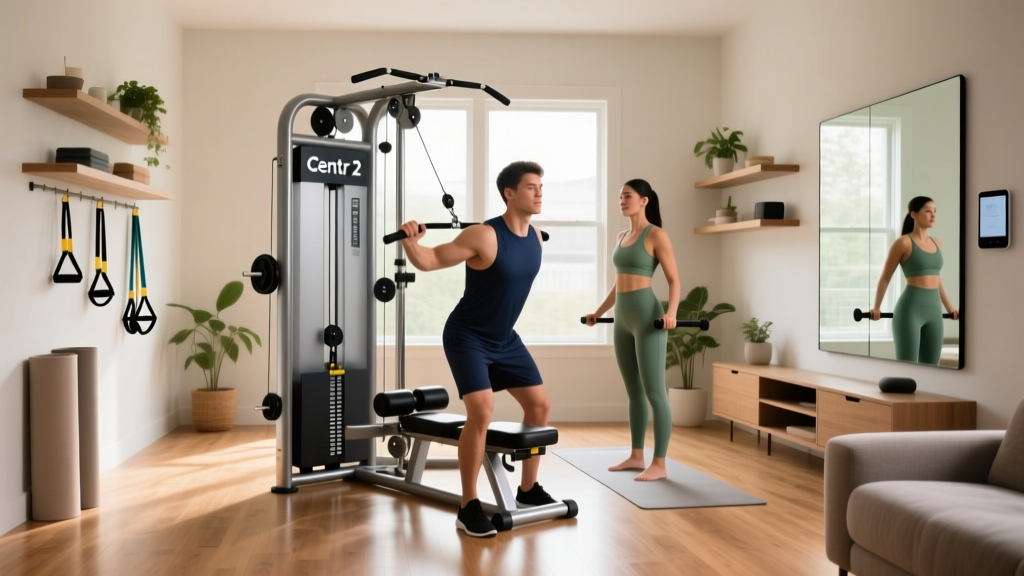
Sam Sulek Home Gym in a Rental: No-Damage Mistakes to Avoid
Learn how to build a Sam Sulek home gym in a rental apartment. Avoid floor damage, noise complaints, and lost deposits with these troubleshooting tips.

Building a high-intensity, bodybuilding-focused training space in a leased apartment is one of the most complex logistical challenges in fitness. When renters search for a Sam Sulek home gym setup, they are usually looking to replicate a high-volume, heavy-resistance hypertrophy environment—think heavy dumbbell presses, extensive cable flyes, and intense mechanical drop-sets. However, attempting to build this style of gym in a multi-family rental without proper troubleshooting leads to catastrophic failures: cracked floor joists, noise complaints, and forfeited security deposits.
In 2026, with rental property management companies utilizing stricter lease clauses regarding structural modifications and noise ordinances, you cannot simply buy commercial gear and drop it in your living room. This guide breaks down the most common mistakes renters make when building an intense home gym and provides exact, actionable troubleshooting protocols to protect your space and your wallet.
The Structural Reality Check: Floor Load Mistakes
The most critical mistake renters make is ignoring live load versus dead load limits. A standard residential floor is designed to support a uniform live load of 40 pounds per square foot (psf), as outlined by the International Residential Code (IRC) Chapter 5.
⚠️ The Point-Load Failure Mode
A loaded power rack (500 lbs), a lifter (200 lbs), and barbell plates (300 lbs) sitting on four 2x2 inch rack feet concentrates 1,000 lbs into roughly 0.11 square feet. This creates a localized point load exceeding 9,000 psf—guaranteeing structural damage to your subfloor and the ceiling of your downstairs neighbor.
Troubleshooting Protocol: Load Distribution
To safely train heavy in an apartment, you must spread the point load across a wider surface area to drop the psf below the 40 lb threshold.
- Base Layer: Purchase a 4x8 foot sheet of 3/4-inch CDX plywood (approx. $60-$80 at Home Depot). This acts as a rigid subfloor to distribute weight.
- Impact Layer: Place 3/8-inch thick vulcanized rubber horse stall mats over the plywood. Do not use cheap EVA foam puzzle mats; they compress and fail to distribute heavy loads.
- Footprint Expansion: If your rack is 4x4 feet, the plywood expands the load-bearing footprint to 32 square feet. 1,000 lbs divided by 32 sq ft equals 31.25 psf—safely under the 40 psf IRC limit.
Troubleshooting Impact Noise and Neighbor Complaints
Emulating a high-volume bodybuilding routine means dealing with dumbbell drops and heavy eccentric negatives. In an apartment, structure-borne impact noise (low-frequency vibrations traveling through floor joists) is your biggest enemy. According to acoustic engineering guidelines from Soundproof Cow, airborne noise (grunting, music) is easily blocked, but impact noise requires mechanical decoupling.
The Decoupling Matrix
| Equipment Source | Noise Type | Amateur Fix (Fails) | Expert Troubleshooting Fix |
|---|---|---|---|
| Adjustable Dumbbells | High-frequency clatter / Impact | Yoga mats | 2-inch high-density acoustic foam under 3/8-inch rubber |
| Power Rack / Barbell | Low-frequency structural vibration | Rubber floor tiles | Sorbothane anti-vibration pads under rack base plates |
| Treadmill / Cardio | Rhythmic harmonic vibration | Carpet padding | Specialized acoustic underlayment (e.g., Impact Barrier QT) |
Pro Tip: Never drop the weights. Even with premium flooring, the kinetic energy of a dropped 50 lb dumbbell will transfer through the joists. Invest in Nuobell 80 or PowerBlock Pro 100 adjustable dumbbells, which are designed for controlled placement, and practice strict eccentric control to mimic the hypertrophy stimulus without the impact.
The Equipment Swap: High Volume, Zero Damage
A true Sam Sulek-style workout relies heavily on cables, isolations, and heavy free weights. Commercial gym equipment requires bolting into concrete. Since drilling into apartment concrete or drywall is a lease violation, you must pivot to freestanding, high-capacity alternatives.
- Mistake: Buying a wall-mounted functional trainer or a lat pulldown that requires lag bolts into drywall studs. Drywall anchors will rip out under 150 lbs of lateral resistance.
- Fix: Use a freestanding All-in-One Trainer like the Force USA G3 or a freestanding REP Fitness FT-5000 functional trainer. These use weight stacks on the back of the unit to counterbalance the pull, requiring zero wall anchors.
- Mistake: Buying a standard flat bench that slides during heavy incline dumbbell presses.
- Fix: Use an adjustable bench with wide, rubberized feet and a heavy frame (e.g., Rep AB-4100, weighing 115 lbs). The mass of the bench itself prevents sliding on rubber mats without needing to bolt it down.
Wall Anchors, Mirrors, and Security Deposit Failures
Gym mirrors are essential for checking form and opening up a small apartment space. However, improper mounting is the number one reason renters lose their security deposits. As detailed in Nolo's Renter Rights Guide, landlords can legally deduct the cost of drywall repair and repainting from your deposit for unauthorized holes.
Troubleshooting Mirror and Rig Installations
✓ The No-Damage Mirror Protocol
Do not use Z-clips or French cleats that require drilling. Instead, use 3M Command Large Picture Hanging Strips.
The Math: A standard 36x60 inch gym mirror weighs roughly 25 lbs. A single set of Large Command Strips holds 16 lbs. You must use a minimum of four sets (64 lb total capacity) to account for the dynamic shear force of an apartment door slamming. Clean the wall with isopropyl alcohol first, wait 24 hours for the adhesive to cure, and mount the mirror.
For pull-up bars and rig attachments, avoid doorway tension bars that crack door trim. Instead, utilize a freestanding pull-up tower or a squat stand with a multi-grip pull-up bar attachment that relies on the weight of loaded barbell sleeves on the rear uprights for stability.
Final Walkthrough: The Renter's Pre-Flight Checklist
Before you bring your heavy equipment through the apartment door, run through this final troubleshooting checklist to ensure your setup is both highly effective for hypertrophy and completely lease-compliant:
- [ ] Subfloor installed: 3/4-inch plywood under all heavy equipment zones to maintain <40 psf live load.
- [ ] Decoupling active: Sorbothane or high-density acoustic foam installed under rack feet and dumbbell zones.
- [ ] Zero wall penetrations: All cable machines are freestanding; mirrors are mounted with high-capacity adhesive strips.
- [ ] Ventilation check: A high-velocity floor fan (e.g., Vornado 630) is positioned to manage humidity and prevent drywall mold from heavy indoor sweating.
Building an intense, bodybuilding-focused home gym in a rental doesn't mean compromising on the workout. By understanding structural load limits, acoustic decoupling, and lease-friendly mounting, you can achieve elite-level training volume without sacrificing your living space or your security deposit.
More gear to consider
All reviews
Strength Training Setups: Protecting Home Gym Wallpaper
Garage Gym Setup: Flooring, Ventilation & Home Gym HSA Eligible

Top Home Gym Device Picks & Setup Under $500 (2026)
Remodeling for the Marcy MWM 988 Multifunction Steel Home Gym

Outdoor Gym Setup: Weather Risks for Bowflex Home Gym Commercial Gear