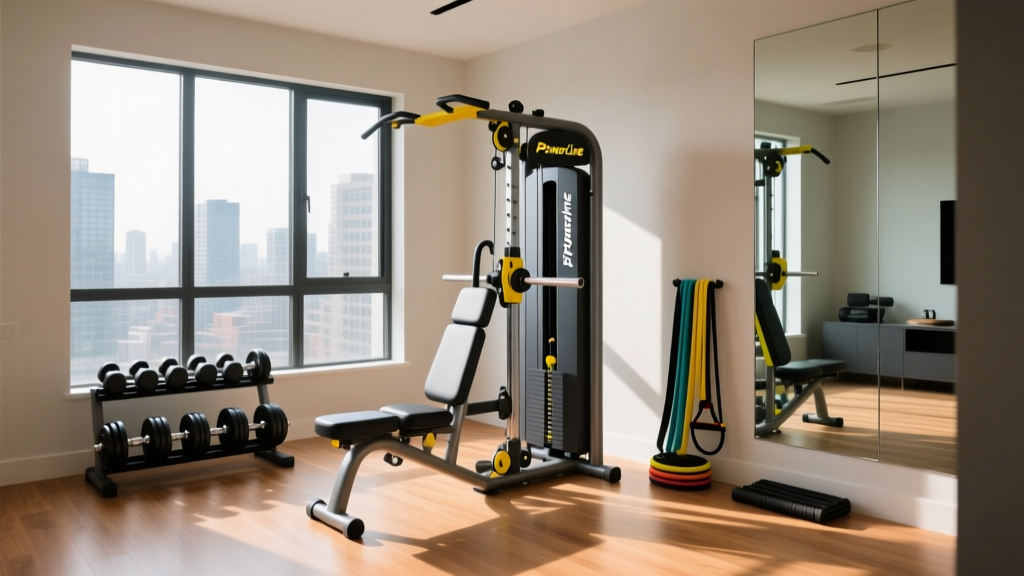
Maximizing Space: Powerline Home Gym P2X & Foldable Gym Layouts
Discover how to integrate the Powerline Home Gym P2X and foldable fitness equipment into small spaces with expert layout and design tips.

As urban living spaces shrink and multi-use rooms become the standard in 2026, the demand for high-performance, low-footprint fitness equipment has never been higher. Designing a home gym in a spare bedroom, garage corner, or studio apartment requires more than just buying the smallest equipment available; it demands a strategic approach to spatial geometry, clearance metrics, and daily workflow. One of the most frequently debated pieces of equipment in the compact fitness space is the Powerline Home Gym P2X by Body-Solid. While often marketed as a space-saver, how does it truly compare to modern foldable and wall-mounted alternatives?
In this comprehensive layout guide, we will break down the exact spatial requirements of the P2X, compare it against true foldable home gym solutions, and provide actionable floor plans for integrating these systems into rooms under 150 square feet.
The Footprint Reality: Analyzing the Powerline Home Gym P2X
The Body-Solid Powerline P2X is a selectorized cable machine that has maintained popularity due to its aggressive price point (typically hovering around $899) and all-in-one design. However, labeling it 'compact' requires context. The physical dimensions of the P2X are approximately 70 inches high, 42 inches wide, and 53 inches deep. This translates to a static floor footprint of roughly 15.5 square feet.
But static footprint is only half the equation in space optimization. You must account for the dynamic operational footprint—the space required for the user to move, load accessories, and allow cable tracking to function without wall friction.
Expert Clearance Rule: For the P2X, you must add a minimum of 24 inches of lateral clearance on both sides for lat pulldown and mid-row cable tracking, plus 36 inches of frontal clearance for the included bench and leg extension mechanics. Your true required room dimension for a P2X setup is roughly 7.5 feet wide by 8.5 feet deep (63.75 square feet of dedicated operational space).The P2X features a 210-pound selectorized weight stack. For beginners and intermediate lifters, this is sufficient. However, advanced lifters focusing on heavy compound movements will quickly max out the 210-pound stack, leading to a common failure mode in compact gym design: attempting to rig supplemental band tension or external plates onto a machine not engineered for it, which compromises structural integrity in tight, multi-use spaces.
True Foldable and Wall-Mounted Alternatives
If your space constraints are so severe that 63 square feet of operational clearance is impossible, you must pivot from 'compact' freestanding units to true foldable or wall-mounted systems. Let's compare the P2X against two dominant space-saving categories in 2026.
| Equipment Type | Static Footprint | Operational Clearance | Avg. Cost (2026) |
|---|---|---|---|
| Powerline P2X (Freestanding Cable) | 15.5 sq ft | ~64 sq ft | $899 |
| Smart Wall-Mounted (e.g., Tonal 2) | 0 sq ft (Wall flush) | ~24 sq ft (Frontal only) | $3,995+ |
| Fold-Away Rack (e.g., PRx Profile ONE) | 2.5 sq ft (Folded) | ~40 sq ft (When deployed) | $550 (Rack only) |
Wall-mounted smart gyms eliminate the floor footprint entirely but require structural stud mounting and carry a premium price tag. Alternatively, fold-away squat stands (readily available from brands featured on Rogue Fitness and PRx Performance) fold to within 3 inches of the wall. When paired with a fold-flat bench, you can reclaim 100% of your floor space post-workout—a feat the freestanding P2X simply cannot achieve.
Layout Design: Integrating Compact Gear into Multi-Use Rooms
Whether you commit to the Powerline P2X or a foldable wall rig, the layout of your room dictates the success of your home gym. In spaces under 150 square feet, you must design for 'The Triangle of Movement'—ensuring clear paths between the equipment, the entryway, and any secondary furniture (like a desk or bed).
- Anchor the Heaviest Element to the Perimeter: Never float the P2X in the center of a small room. Push it into a corner, but maintain the 24-inch lateral clearance from adjacent walls to prevent cable friction and allow for pin adjustments.
- Utilize Vertical Storage for Accessories: The P2X does not come with extensive built-in storage for bands, ropes, and handles. Mount a heavy-duty pegboard directly above or adjacent to the machine. This keeps the floor clear and prevents trip hazards in tight walkways.
- Deploy Collapsible Secondary Furniture: If using the P2X, you will likely supplement with free weights. Invest in a folding bench like the Rep Fitness FB-5000 2.0. It features a 12-inch pad and folds completely flat, allowing you to slide it under a bed or stand it in a closet when the gym is 'closed'.
Flooring, Anchoring, and Acoustic Treatments
In compact, multi-use environments (especially apartments or finished basements), flooring serves three purposes: equipment stability, impact absorption, and acoustic dampening. The P2X weighs roughly 350 pounds with its weight stack. While it is freestanding and does not strictly require bolting to the floor, dynamic movements like heavy lat pulldowns can cause slight shifting on slick surfaces.
'In micro-gyms, sound transmission is the number one cause of equipment abandonment. Dropping a 45-pound dumbbell on EVA foam tiles in a second-story apartment will result in noise complaints. You must use high-density vulcanized rubber.' — Home Gym Acoustic Standards, 2025
Avoid cheap interlocking EVA foam tiles. They compress under the point-loads of the P2X's feet, creating an uneven base that accelerates wear on the machine's guide rods. Instead, use 3/4-inch thick horse stall mats (typically 4x6 feet). Cut them to size using a utility knife and a straight edge. For the ultimate space-optimized layout, lay the mats only in the operational zone and use a transition strip to meet your existing hardwood or carpet, visually separating the 'gym zone' from the 'living zone'.
The 2026 Decision Matrix: Which Route Should You Take?
Choosing between the Powerline Home Gym P2X and a foldable solution comes down to a strict evaluation of your space, budget, and biomechanical needs. Use this framework to make your final purchasing decision:
- Choose the Powerline P2X if: You have a dedicated 8x10 foot corner that does not need to be reclaimed for daily living, your budget is under $1,200, and you prefer the tactile feel of a physical 210lb selectorized stack over digital resistance.
- Choose a Smart Wall-Mount if: You have zero floor space to sacrifice, your budget exceeds $3,500, and you want guided programming that eliminates the need for a spotter in a solo apartment setting.
- Choose a Fold-Away Rack if: You prioritize heavy barbell compound lifts (squats, bench press) over cable isolation work, and you require the room to function as a home office or guest room during the day. (Always verify structural stud spacing—typically 16 or 24 inches on center—before buying wall-mounted foldable rigs, as detailed in safety guidelines from the American Council on Exercise regarding home equipment installation).
Space optimization is not just about buying small equipment; it is about respecting the geometry of your room and the biomechanics of your workout. By accurately measuring your dynamic clearance and pairing your primary machine with collapsible secondary gear, you can build a highly effective training environment in even the most restrictive architectural footprints.
More gear to consider
All reviews
Powering Your Hoist MI1 Home Gym: Electrical & Safety Trends

Life Fitness Home Gym Equipment: 2026 Garage Setup & Market Trends

Universal Home Gyms for Small Spaces: Apartment Setup Guide

Basement Home Gym Installation: Mirror & Lighting Budget Guide

What Thickness Rubber Flooring for Home Gym in Small Spaces
