
Outdoor CBUM Home Gym: Weatherproofing & Maintenance Tips
Learn how to build and maintain an outdoor CBUM home gym. Expert tips on weatherproofing commercial gear, preventing rust, and UV protection.

The ‘CBUM Home Gym’ Dream vs. Outdoor Reality
Chris Bumstead’s legendary home gym is a masterpiece of commercial-grade iron. It features custom power racks, Prime Fitness plate-loaded machines, and Arsenal Strength cable systems. Naturally, thousands of lifters want to replicate this exact ‘CBUM home gym’ aesthetic and functionality. But what happens when your only available space is an outdoor patio, an exposed carport, or a barn with open-air ventilation?
Replicating a high-end commercial setup outdoors requires a radical shift in how you approach equipment selection, environmental controls, and maintenance. Standard indoor commercial machines will rapidly deteriorate when exposed to the elements. As of 2026, with the cost of premium fitness equipment higher than ever, protecting your investment is non-negotiable. This guide breaks down the exact weather considerations, material science, and maintenance protocols required to keep an outdoor, CBUM-inspired gym functioning flawlessly.
Environmental Threat Matrix: What Destroys Commercial Gear?
Before buying a $4,500 Prime Fitness Hack Squat for your covered patio, you must understand how outdoor elements attack gym equipment. According to material science data from Corrosionpedia, galvanic corrosion and micro-pitting can destroy precision machine components in a matter of weeks if left untreated.
| Environmental Threat | Primary Targets | Specific Failure Mode | Time to Failure (Unprotected) |
|---|---|---|---|
| High Humidity (>60%) | Guide rods, knurling, weight stacks | Micro-pitting on linear bearings causing seized machine carriages. | 3–6 Months |
| UV Radiation | Urethane bumpers, machine belts, plastics | Polymer chain breakdown resulting in dry rot, cracking, and belt snapping. | 12–18 Months |
| Direct Precipitation | Selectorized pins, pivot joints, cables | Internal rust and catastrophic friction inside cable housings. | 1–4 Weeks |
| Temperature Swings | Condensation inside hollow tubes | Internal rusting of rack uprights from the inside out. | 1–2 Years |
Strategic Equipment Selection for Exposed Environments
If you are building an outdoor gym, you cannot simply buy the exact same gear CBUM uses in his climate-controlled garage. You must pivot to materials engineered for harsh environments.
Racks and Rigs: The Cerakote Advantage
Standard zinc or powder-coated finishes will chalk and rust when exposed to outdoor moisture. Instead, opt for ceramic-based coatings. Rogue Fitness utilizes Cerakote on their premium outdoor and garage gym lines. Cerakote is a polymer-ceramic composite that withstands up to 1,000 hours of salt-spray testing, vastly outperforming traditional black oxide or standard zinc. A Rogue Monster Lite Rack with a Cerakote finish (typically ranging from $1,800 to $2,500 depending on configuration) is an absolute necessity for an outdoor rig.
Barbells and Free Weights
Never leave a standard steel or black oxide barbell outside. The knurling will trap moisture and rust overnight. Invest in a Stainless Steel Olympic bar (such as the Rogue Stainless Steel Ohio Bar, approx. $395) or a high-quality Cerakote shaft with a stainless steel sleeve. For dumbbells and bumpers, avoid cheap recycled rubber, which off-gasses and degrades in UV light. Urethane-coated dumbbells are highly UV-resistant and will not crack or fade under direct sunlight.
⚠️ The Cable Machine Warning: Selectorized cable machines (like lat pulldowns or functional trainers) are the most vulnerable pieces of equipment in an outdoor setup. The internal aircraft cables and nylon pulleys are highly susceptible to humidity and UV degradation. If your outdoor space is not fully enclosed and climate-controlled, avoid selectorized machines entirely. Opt for plate-loaded lever arms or resistance bands instead.The Ultimate Outdoor Maintenance Protocol
Maintenance in an outdoor or semi-outdoor environment shifts from a ‘monthly chore’ to a ‘weekly necessity’. Here is the exact protocol to keep heavy-duty iron operational.
Weekly: Guide Rods and Knurling
- Wipe Down: Use a dry microfiber cloth to wipe all exposed guide rods on plate-loaded machines (e.g., leg presses, hack squats).
- Lubricate: Apply a light coat of 3-IN-ONE Silicone Spray or Super Lube Multi-Purpose Synthetic Oil.
- The WD-40 Trap: Never use standard WD-40 on guide rods. It leaves a sticky residue that binds with outdoor dust, pollen, and sand, creating an abrasive paste that will destroy your linear bearings within weeks.
- Barbell Care: Brush the knurling with a nylon bristle brush to remove dead skin and outdoor debris, then wipe with a lightly oiled rag.
Monthly: Cable and Pulley Inspection
If you have any cable systems, inspect the wire ropes for ‘bird-caging’—a condition where the outer wire strands separate from the core due to tension loss or internal corrosion. Check the nylon pulleys for flat spots or cracking. Replace any cable showing signs of fraying immediately; a snapped cable under load can cause severe injury.
Seasonal: Deep Corrosion Inhibition
Before the humid summer months or the wet winter season, apply a marine-grade protectant like Boeshield T-9 to all exposed cast-iron weight plates and unpainted metal joints. Originally developed by Boeing for aviation use, T-9 dissolves light rust and leaves a waxy, waterproof film that lasts for months.
Flooring, Covers, and Micro-Climate Control
Your equipment is only as protected as the floor it sits on and the covers you use.
Elevated Flooring Systems
Do not place rubber mats directly on an outdoor concrete slab. Concrete is porous and wicks moisture from the ground, which will trap water under your mats, leading to mold and the notorious ‘rotten egg’ smell of degrading anaerobic bacteria. Instead, use 3/4-inch vulcanized horse stall mats (approx. $55 each from agricultural suppliers) and elevate them on a gravel base or interlocking plastic drainage tiles. This allows water to pass through and air to circulate.
Heavy-Duty UV Covers
Standard plastic tarps will bake in the sun and shatter within a single summer. Invest in custom-fitted, UV-rated canvas covers or heavy-duty marine-grade boat covers for your racks and benches. Ensure the covers have breathable mesh vents to prevent condensation buildup underneath.
‘The biggest mistake home gym owners make in exposed spaces is thinking a roof is enough. Ambient humidity and blown-in rain will destroy a $4,000 leg press just as fast as a direct rainstorm if you aren’t actively managing the micro-climate and lubricating the pivot points.’ — Commercial Gym Maintenance Technician
Cost Analysis: Weatherproofing vs. Replacement
Is the extra effort and cost of weatherproofing worth it? Let us look at the 2026 pricing reality of maintaining an outdoor setup versus replacing ruined gear.
- Annual Weatherproofing Supplies: $85 (Silicone sprays, Boeshield T-9, nylon brushes, microfiber cloths).
- Premium Coating Upgrades (Cerakote/Stainless): +$250 to $400 upfront per major item.
- Cost of Replacing a Seized Linear Bearing Assembly: $150 - $300 in parts, plus hours of downtime.
- Cost of Replacing a Rusted Commercial Rack: $1,500+.
The Verdict: Spending an extra $400 upfront on marine-grade coatings and 15 minutes a week on maintenance will yield a 10x ROI over a 5-year period in an outdoor environment.
Frequently Asked Questions
Can I keep a CBUM-style gym in an uninsulated garage?
Yes, but an uninsulated garage is subject to massive temperature swings, which causes condensation to form on cold steel (sweating). You must run a high-capacity dehumidifier (rated for at least 1,500 sq ft) during humid months and maintain the weekly lubrication protocol on all guide rods and knurling.
Will UV rays destroy my resistance bands?
Absolutely. Natural latex bands will dry rot, snap, and lose their elasticity within weeks if exposed to direct sunlight. Store all bands, belts, and grips in an opaque, sealed storage bin when not in use.
What is the best rust remover for neglected outdoor weights?
For surface rust on cast iron plates, use a 50/50 mix of white vinegar and water, scrub with a brass wire brush, neutralize with baking soda, and immediately seal with a coat of Rust-Oleum Matte Clear Enamel or Boeshield T-9 to prevent flash rusting.
More gear to consider
All reviews
2026 Electrical & Safety Requirements for a Home Gym in Garage

Marcy Home Gym Manual Guide: 2026 Electrical & Safety Trends

Marcy Cage Home Gym vs. Foldable Rigs: 2026 Space Guide
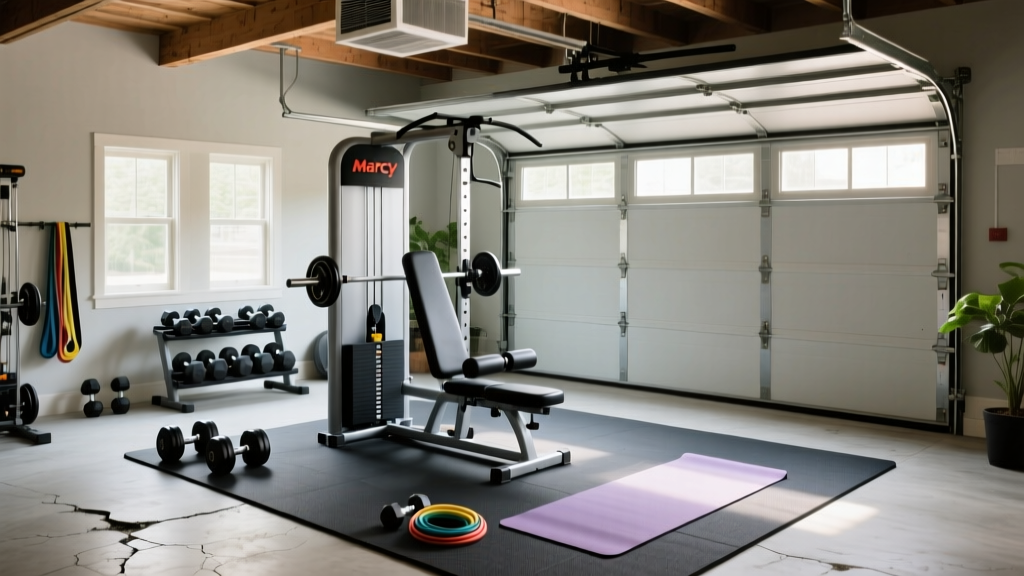
Marcy Home Gym MWM-989 Garage Setup: Flooring & Ventilation Mistakes
Ultra Fuego Home Gym: Essential Starter Kit & Layout
