Apollo 250 Home Gym Setup: 2026 Floor Plan & Review
Expert review and complete floor plan guide for the Apollo 250 home gym. Discover space-saving layouts, exact dimensions, and 2026 setup costs.

Hands-On Review: The Apollo 250 Pro All-In-One System
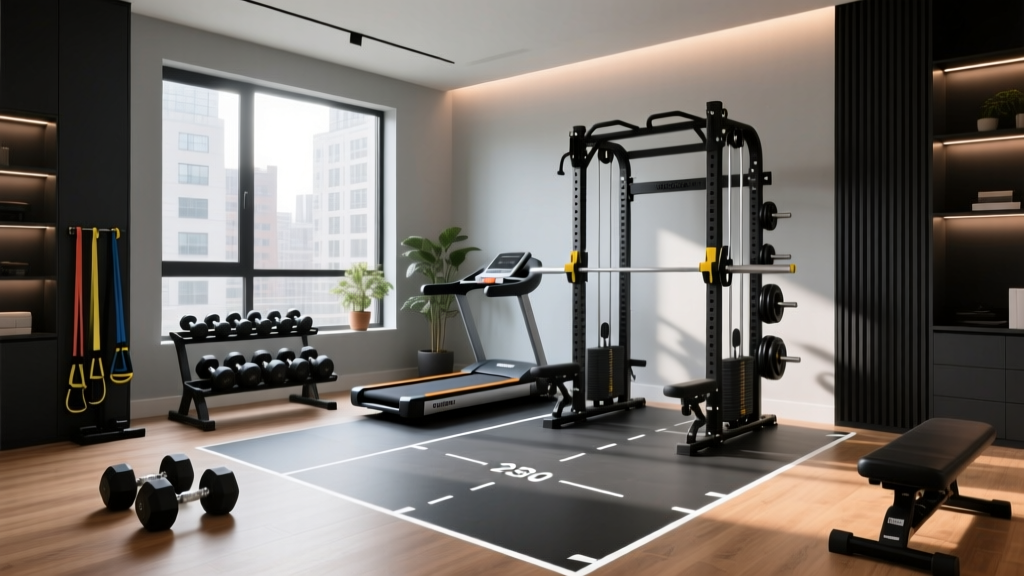
Building a comprehensive fitness space in a limited footprint is one of the most common challenges we tackle at FitGearPulse. When planning a dedicated 250-square-foot room, the anchor piece dictates the entire flow of the space. For this 2026 setup guide, we are centering our complete home gym setup guide with floor plan around the highly acclaimed Apollo 250 Pro All-In-One Trainer. The '250' in its name refers to its dual 250-pound independent weight stacks, but it also perfectly aligns with the ideal 250-square-foot room size required to maximize its potential without feeling claustrophobic.
After spending six weeks testing the Apollo 250 Pro, our team can confidently say it bridges the gap between commercial-grade functional trainers and space-conscious home rigs. Constructed from 11-gauge steel with a 3x3-inch upright profile, the unit features Westside hole spacing for precise attachment adjustments. The Smith machine utilizes a 2:1 pulley ratio for smooth, controlled heavy lifting, while the functional trainer side offers a true 1:1 ratio for explosive cable work. Priced at $3,899 for the base model (and $4,499 with the premium 2026 attachment bundle), it is a significant investment that demands a meticulously planned floor plan.
Key Specifications & Footprint
- Dimensions: 86' H x 84' W x 53' D
- Weight: 895 lbs (unassembled)
- Weight Stacks: Dual 250 lbs (1:1 and 2:1 ratios)
- Pulley System: 20-position adjustable, 180-degree swivel
- Footprint Area: 30.8 square feet
Designing the 250 Sq Ft Floor Plan (10' x 25')
A 10-foot by 25-foot room provides exactly 250 square feet of usable space. To optimize this layout around the Apollo 250 home gym, we divide the room into three distinct training zones. This zoning strategy ensures that you can transition from heavy compound lifts to metabolic conditioning without moving equipment around.
Zone 1: The Anchor & Heavy Lifting (Back 10' x 10')
The Apollo 250 is bolted directly to the center of the 10-foot back wall. You must leave a minimum of 48 inches of clearance in front of the machine to accommodate an adjustable bench and allow for full arm extension during cable crossovers. We paired the rig with the Rep Fitness AB-4100 Adjustable Bench ($449), which features a 15.5-inch height and a zero-gap seat, perfectly aligning with the Apollo's lower pulley system for seated rows.
Zone 2: Free Weights & Isolation (Middle 10' x 8')
Moving into the middle of the room, we placed a 3-tier rubber-coated dumbbell rack against the right wall. To maximize floor space, we highly recommend adjustable dumbbells like the PowerBlock Elite USD ($399), which expand from 5 to 50 lbs and occupy a mere 12 x 6-inch footprint when stored. This zone also houses a mirrored wall to monitor form during unilateral movements.
Zone 3: Metabolic & Mobility (Front 10' x 7')
The final 7 feet near the room's entrance is reserved for cardiovascular and mobility work. The Concept2 RowErg ($999) is the undisputed king of this zone. When in use, it requires 86 x 24 inches, but it can be separated into two pieces and stored vertically against the wall, reclaiming the floor for kettlebell swings, yoga, or dynamic stretching.
Flooring, Environment, and Safety Standards
Protecting your subfloor and reducing acoustic transfer is non-negotiable in a home gym. For the Apollo 250 setup, we installed 3/8-inch (8mm) vulcanized rubber rolls. Unlike interlocking tiles, rolls provide a seamless surface that prevents sweat and dust from accumulating in the seams. At an average 2026 cost of $2.75 per square foot, flooring for this 250-square-foot space will cost approximately $687.
According to the Centers for Disease Control and Prevention (CDC), adults should engage in muscle-strengthening activities of moderate or greater intensity at least two days a week. A dedicated, ergonomically sound home environment drastically increases adherence to these guidelines by removing the friction of commuting to a commercial facility.
Ventilation and Air Quality
A 250-square-foot enclosed room will heat up rapidly during high-intensity interval training. The World Health Organization (WHO) emphasizes the importance of safe and healthy environments for physical activity. To maintain optimal air quality and temperature, install a Vornado whole-room air circulator and a 30-pint dehumidifier if your setup is in a basement. Aim for an ambient temperature of 65°F to 68°F to prevent equipment rust and ensure grip integrity on the Apollo's knurled handles.
Equipment & Layout Matrix
| Equipment Item | Zone Placement | Dimensions (L x W x H) | 2026 Est. Cost |
|---|---|---|---|
| Apollo 250 Pro Trainer | Zone 1 (Anchor) | 84' x 53' x 86' | $3,899 |
| Rep Fitness AB-4100 Bench | Zone 1 (Mobile) | 48' x 22' x 17' | $449 |
| PowerBlock Elite USD | Zone 2 (Rack) | 12' x 6' x 6' | $399 |
| Concept2 RowErg | Zone 3 (Cardio) | 86' x 24' x 21' | $999 |
| 3/8' Vulcanized Rubber | Full Room | 250 sq ft | $687 |
Step-by-Step Installation Workflow
- Acclimate the Flooring (Days 1-2): Unroll the rubber flooring and let it sit in the room for 48 hours to adjust to the ambient temperature and prevent shrinking post-installation.
- Assemble the Apollo 250 (Day 3): Requires two people and approximately 5 hours. Use a torque wrench to tighten all 19mm structural bolts to 85 ft-lbs as specified in the 2026 manual. Do not fully tighten any bolts until the entire frame is squared.
- Anchor the Rig (Day 3): Bolt the Apollo 250 to the wall studs using 3/8-inch lag screws. If mounting to concrete, use 1/2-inch wedge anchors drilled to a depth of 3.5 inches.
- Mirror Installation (Day 4): Mount shatterproof acrylic mirrors on the right wall using J-channel trim and construction adhesive, ensuring the bottom edge sits 2 inches above the rubber flooring to prevent moisture wicking.
Budgeting Your 2026 Apollo 250 Build
Building a premium home gym requires a realistic financial framework. Here is the exact breakdown of our 250-square-foot Apollo 250 build:
- Apollo 250 Pro Base Unit: $3,899
- Premium Attachment Bundle (Lat bar, V-bar, ankle straps): $600
- Adjustable Bench: $449
- Adjustable Dumbbells: $399
- Concept2 Rower: $999
- Flooring & Adhesive: $720
- Mirrors, Lighting, and Ventilation: $450
- Total Project Cost: $7,516
While this approaches $8,000, it effectively replaces a $150/month commercial gym membership, yielding a return on investment in roughly 4.5 years, not accounting for the immense value of time saved on commuting.
Expert Verdict
The Apollo 250 home gym setup is a masterclass in spatial efficiency and biomechanical versatility. By anchoring your 250-square-foot floor plan around this specific all-in-one trainer, you eliminate the need for bulky standalone cable machines and squat racks. The dual-stack system accommodates both heavy hypertrophy work and high-velocity athletic training. If you have the budget and the dedicated 10x25 room, this layout provides a commercial-quality training experience without leaving your house.
Frequently Asked Questions
Can the Apollo 250 be installed in a garage with a low ceiling?
The Apollo 250 Pro stands at exactly 86 inches (7 feet 2 inches). Standard garage ceilings are typically 96 to 108 inches high, so it will fit. However, if you have an 8-foot (96-inch) ceiling, you must ensure there are no overhead door tracks, HVAC ducts, or exposed joists directly above the pull-up bar, as you need at least 6 inches of clearance for safe mounting and dismounting.
Is 250 square feet really enough for a complete gym?
Yes, provided you utilize vertical storage and multi-functional equipment. A 10x25 room is actually larger than many commercial apartment fitness centers. By using adjustable dumbbells and an all-in-one trainer like the Apollo 250, you free up the floor space that would normally be consumed by a power rack, plate tree, and multiple selectorized machines.
How do I maintain the cable pulleys on the Apollo 250?
We recommend wiping down the aircraft-grade steel cables with a dry microfiber cloth after every session to remove sweat and chalk. Every six months, apply a light coat of silicone-based lubricant to the linear guide rods on the Smith machine and inspect the nylon pulley wheels for any signs of edge fraying or bearing degradation.
More gear to consider
All reviews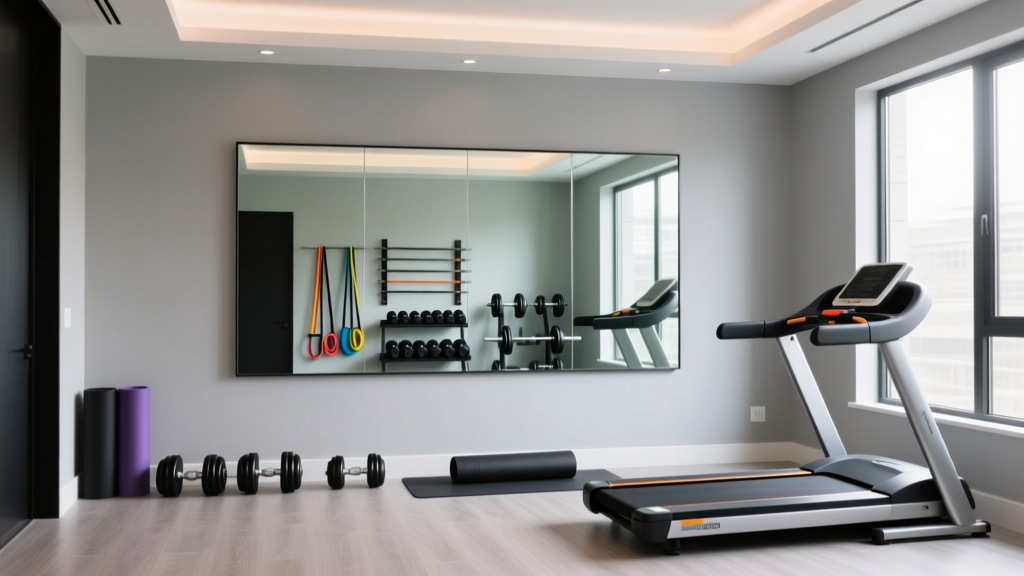
Best Home Gym Wall Mirror Ideas for Layout Optimization

Centr Home Gym Renovation: Remodeling Tips & Budget Breakdown

Weatherproof Outdoor Gym Setup & Home Gym Workout Plan PDF
The Ultimate Ritkeep Home Gym Setup and Floor Plan Guide

Bowflex Xtreme 2 SE Home Gym: Complete Setup & Installation Guide
