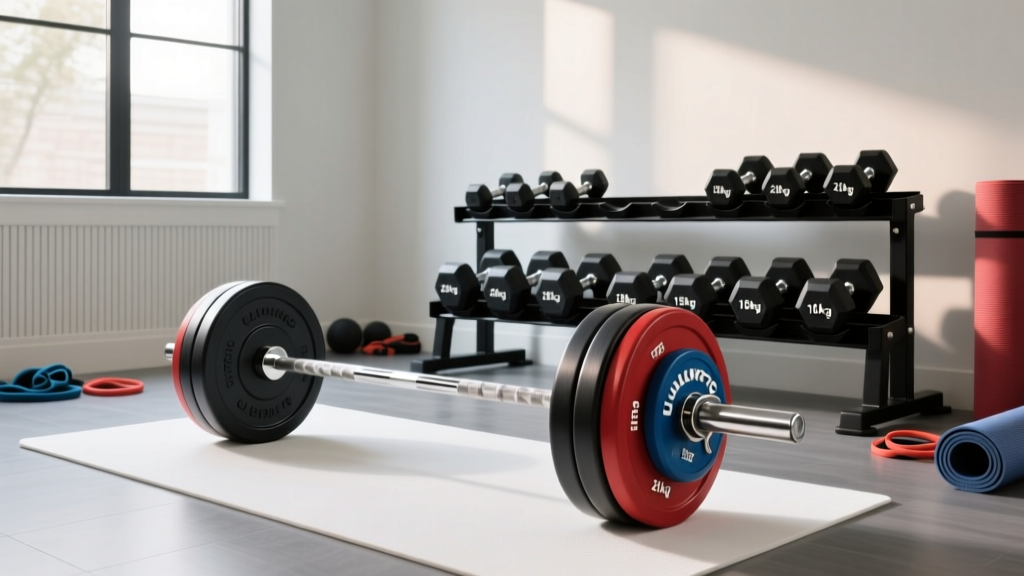
Barbell Buying Mistakes After Weight Training Exercises With Dumbbells
Avoid costly barbell buying mistakes when transitioning from dumbbells. Troubleshoot knurling, weight, and whip to match your lifting style.

The Biomechanical Shift: Why Your Dumbbell Experience Misleads You
Transitioning from isolated or unilateral movements to heavy compound barbell lifts is a major milestone in any lifter's journey. When athletes spend years performing weight training exercises with dumbbells, they develop specific grip adaptations, stabilization patterns, and rotational mechanics that do not always translate seamlessly to a 7-foot Olympic barbell. Dumbbell handles typically measure between 32mm and 35mm in diameter, forcing a wider, more grip-intensive hold. In contrast, standard Olympic barbells feature a 28mm or 25mm shaft, fundamentally altering your center of gravity and grip mechanics.
According to biomechanical analyses published by ExRx.net, the fixed trajectory of a barbell removes the independent stabilization required by dumbbells, allowing for heavier absolute loads. However, this massive jump in systemic loading exposes lifters to equipment variables they never had to consider with fixed-weight dumbbells: barbell whip, tensile strength, sleeve rotation, and knurling aggressiveness. Buying your first Olympic barbell based on your dumbbell training habits is a fast track to torn calluses, wrist impingements, and wasted money. This guide troubleshoots the most common purchasing mistakes lifters make during this transition.
Mistake #1: Misjudging Knurling Aggressiveness (The 'Cheese Grater' Effect)
The most frequent troubleshooting issue we see at FitGearPulse involves lifters tearing their hands to shreds during high-volume hypertrophy blocks. When you are used to the smooth, rubber-coated handles of neoprene or urethane dumbbells, your skin is not conditioned for aggressive steel knurling. Many beginners mistakenly purchase a 'power bar' with deep, sharp knurling, assuming 'more grip is always better.' This is a critical error if your programming still includes high-rep accessory work reminiscent of your dumbbell days.
Understanding Knurling Profiles
Barbell knurling is generally categorized into three distinct geometric profiles. Choosing the wrong one for your specific training style will lead to chronic grip fatigue and skin tearing.
| Knurl Profile | Geometry & Depth | Best Use Case | Common Example (2026 Market) |
|---|---|---|---|
| Hill | Shallow, rounded peaks. Passive grip. | High-rep hypertrophy, beginners, wrist-sensitive lifters. | Budget multipurpose bars ($180-$220) |
| Volcano | Peaks with a small crater in the center. Grippy but not sharp. | Olympic weightlifting, dynamic movements, mixed training. | Eleiko Sport Training, Rogue Cerakote Ohio |
| Mountain | Deep, sharp, pointed peaks. Highly aggressive. | Heavy 1-5 rep max powerlifting, deadlifts. | Rogue Ohio Power Bar, REP Deep Dish |
Mistake #2: Ignoring Shaft Diameter and Grip Adaptation
As mentioned, standard dumbbell handles are thick. When you transition to a women's Olympic barbell (15kg) with a 25mm shaft, or even a men's bar (20kg) with a 28mm shaft, the narrower grip can actually cause wrist extension issues during pressing movements. The National Strength and Conditioning Association (NSCA) emphasizes that grip width and bar diameter directly influence wrist joint alignment during the bench press and overhead press.
The Fix: If you are transitioning from heavy hex dumbbell presses to barbell benching and experiencing wrist pain, do not immediately blame your form. Check your barbell diameter. A 25mm shaft may feel too thin, causing the bar to roll in your palm and hyperextend the wrist. Consider purchasing a 28.5mm or 29mm power bar for pressing days to mimic the thicker handle feel you are accustomed to, while saving a 25mm bar for Olympic lifts and deadlifts.
Mistake #3: Misunderstanding Tensile Strength and 'Whip'
Dumbbells are rigid. A 50lb dumbbell does not bend when you press it. Barbells, however, are designed to flex under load—a property known as 'whip.' This flex is determined by the steel's tensile strength, measured in PSI (pounds per square inch). Lifters moving from dumbbells often buy the cheapest barbell they can find, unaware that low PSI ratings result in permanent deformation or excessive, dangerous whip during heavy squats.
- 165,000 - 180,000 PSI: Entry-level bars. Prone to permanent bending if dropped with heavy loads. Avoid these entirely.
- 190,000 PSI: Standard multipurpose bars. Good for general fitness, but will exhibit noticeable whip on squats over 315 lbs.
- 200,000 - 215,000 PSI: Premium power and weightlifting bars. Highly resistant to bending, providing the rigid stability required for heavy, low-rep work.
'When moving from the fixed stability of dumbbells to the dynamic load of a barbell, the lifter must account for the oscillation of the bar. A bar with too much whip during a heavy back squat can throw off the lifter's center of gravity during the concentric drive.' — Biomechanics in Strength Training Literature.
Mistake #4: Bushings vs. Bearings for Rotational Control
When performing weight training exercises with dumbbells, your wrists rotate freely to accommodate the natural arc of a press or curl. A barbell's sleeves also rotate, but the mechanism matters immensely depending on your training goals. The sleeve construction dictates how smoothly the weight plates spin independently of the shaft.
Sleeve Construction Diagnostic Matrix
Bronze Bushings: These provide a slower, more controlled sleeve rotation. They are ideal for powerlifting (squat, bench, deadlift) where you want the bar to feel stable and not spin wildly in your hands during a heavy bench press. If you are buying a bar primarily to replace your heavy dumbbell pressing and squatting, choose bushings.
Needle Bearings: These allow for rapid, frictionless sleeve rotation. They are mandatory for Olympic weightlifting (snatches, cleans) where the bar must spin rapidly as you transition under the weight. If you buy a bearing bar for slow, heavy powerlifting, the excessive spin can cause wrist torque and grip instability.
Troubleshooting Your Current Setup: A Diagnostic Checklist
Already bought a barbell and experiencing issues? Use this troubleshooting checklist to diagnose your equipment mismatch:
- Symptom: Calluses tearing on high-rep rows or RDLs.
Diagnosis: Knurling is too sharp (Mountain profile).
Solution: Use lifting straps for accessory work or chalk heavily; consider a volcano-knurl bar for your next purchase. - Symptom: Bar feels unstable and 'bouncy' at the top of a heavy squat.
Diagnosis: Tensile strength is too low (under 190k PSI) or the bar is a dedicated weightlifting bar with high whip.
Solution: Upgrade to a 205k+ PSI power bar with a stiffer shaft. - Symptom: Wrist pain during barbell bench press.
Diagnosis: Shaft diameter (25mm) is too thin compared to your dumbbell history, causing the bar to roll.
Solution: Adjust grip to stack the bar directly over the radius bone, or switch to a 28.5mm+ shaft bar. - Symptom: The barbell lacks center knurling, making low-bar squat setup difficult.
Diagnosis: You bought a multi-purpose or weightlifting bar instead of a power bar.
Solution: Rely on the smooth ring marks (which are exactly 910mm apart, per International Weightlifting Federation standards) to manually center the bar on your traps.
Frequently Asked Questions (FAQ)
Can I use the same barbell for Olympic lifts and heavy powerlifting?
While 'multipurpose' bars exist (usually 190k PSI with a 28.5mm shaft and dual knurl marks), they are a compromise. If you are serious about both, you will eventually need two bars: a 25mm needle-bearing bar for Olympic lifts and a 29mm bushing bar for powerlifting. As of 2026, expect to spend around $350 for a high-quality dedicated bar in either category.
Does the weight of the barbell include the collars?
Yes. A certified men's Olympic barbell weighs exactly 20kg (44 lbs) including the sleeves and collars. A women's bar weighs exactly 15kg (33 lbs). Never assume a barbell is 45 lbs unless it is a cheap, non-calibrated commercial gym bar; calibrated competition bars are strictly 20kg/44lbs.
Why do my dumbbell presses feel stronger than my barbell bench?
This is rare, but it happens when lifters have severe shoulder mobility restrictions or asymmetries. Dumbbells allow you to tuck your elbows and rotate your wrists to avoid impingement. A barbell locks your hands into a fixed position. If your barbell bench is significantly weaker, troubleshoot your shoulder mobility and wrist alignment before blaming the equipment.
More gear to consider
All reviews
EZ vs Straight Bar Care: Longevity and the Dumbbell Isometric Hold

How to Choose Adjustable Dumbbells for a Triceps Workout at Home (2026)

Power Rack vs Squat Rack: Chest Exercises With Dumbbells Standing
Beyond the Dumbbell Thruster Workout: Olympic Barbell Knurling Guide

Barbell Collars Compared: Beyond Seated Good Mornings with Dumbbells