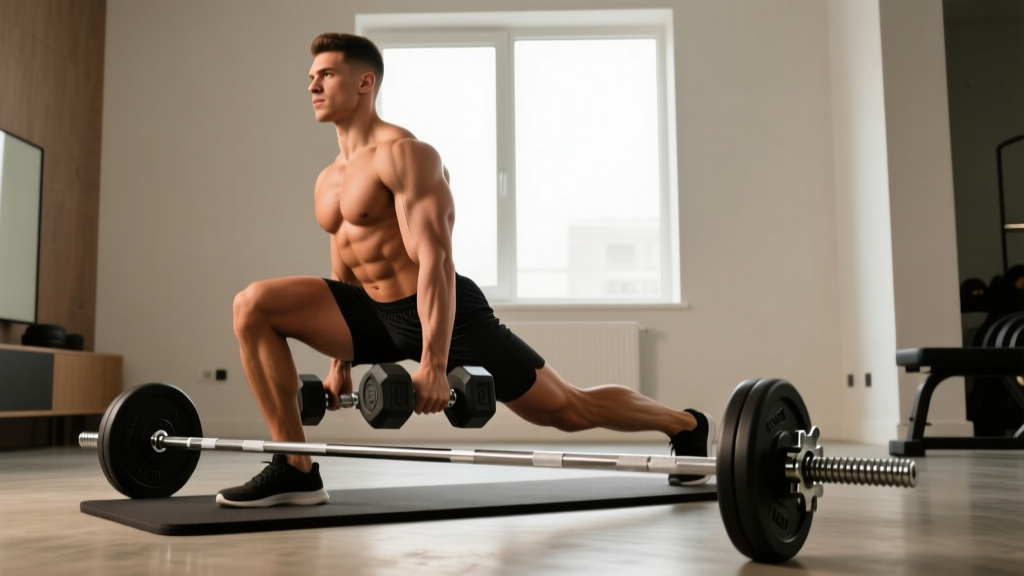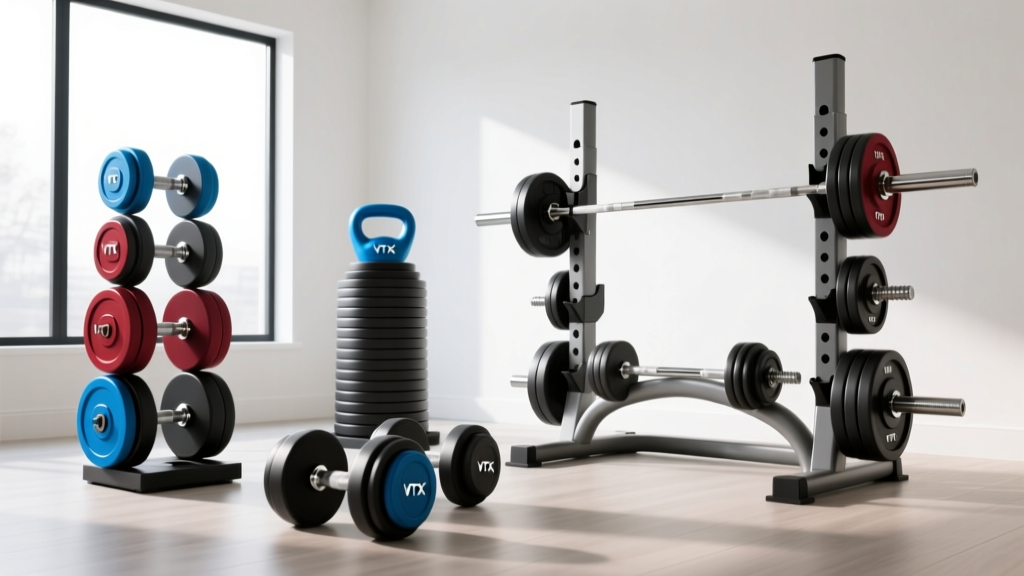
Space-Saving VTX Dumbbell Set Layouts & Loadable Plates
Optimize your home gym footprint with our expert guide to VTX dumbbell set layouts, loadable plates, and space-saving workflow designs.

The modern home gym faces a severe spatial constraint. As fitness enthusiasts progress beyond beginner routines, the demand for heavier free weights inevitably collides with the physical limits of spare bedrooms, garages, and apartments. While fixed rubber hex dumbbells offer convenience, a full 5-to-50-pound set requires a massive 44-inch tiered rack, consuming up to 25 square feet of usable floor space when factoring in necessary clearance. For those prioritizing space optimization and layout design, transitioning to a loadable dumbbell with interchangeable plates is the most mathematically efficient solution available.
Specifically, the VTX dumbbell set—comprising their Olympic-grade loadable handles and compatible iron or bumper plates—has emerged as a premier choice for compact gym architectures. By decoupling the grip from the resistance, you can store 200 pounds of weight vertically on a single tree footprint while utilizing handles that tuck away into a drawer. This guide breaks down exactly how to design a high-efficiency layout around the VTX ecosystem, complete with precise measurements, workflow zoning, and edge-case troubleshooting.
Spatial Footprint Data: Fixed vs. Loadable
- Fixed Hex Rack (5-50 lbs, 10 pairs): ~7.5 sq ft (rack only) / ~25 sq ft (with 3-foot access clearance)
- Adjustable Dumbbells (e.g., Nuobell 80lb): ~2.5 sq ft (cradle footprint) / ~12 sq ft (with clearance)
- VTX Loadable Setup (Handles + 200lb Vertical Tree): ~4 sq ft (tree footprint) / ~14 sq ft (with dedicated loading zone clearance)
Note: While adjustable dumbbells save the most raw space, the VTX loadable setup offers a vastly superior weight ceiling, durability, and biomechanical feel for a comparable spatial footprint.
The Anatomy of the VTX Dumbbell Set for Compact Spaces
To design an effective layout, you must first understand the physical constraints of your equipment. VTX manufactures two primary Olympic dumbbell handles that dictate how your storage and loading zones must be configured. According to Garage Gym Reviews' comprehensive testing on loadable handles, sleeve length and grip diameter are the primary variables that impact both plate compatibility and spatial workflow.
VTX 14-Inch Olympic Handle (Model: VTX-ODH-14)
Retailing between $42 and $48 per handle, the 14-inch model is the cornerstone of ultra-compact layouts. It features a 5.5-inch loadable sleeve and a 35mm grip diameter. The shorter overall length minimizes the 'swing arc' during lateral raises or chest flies, preventing the dumbbells from colliding at the top of the movement. However, the 5.5-inch sleeve limits you to approximately 45 pounds of plates per side if using standard-thickness cast iron, and significantly less if using thick rubber bumper plates.
VTX 18-Inch Olympic Handle (Model: VTX-ODH-18)
Priced around $65 to $72 per handle, the 18-inch variant offers a 7.5-inch loadable sleeve. This is mandatory for lifters who plan to utilize standard 45-pound Olympic bumper plates. From a layout perspective, the 18-inch handles require a slightly wider 'Drop Zone' on your gym floor to accommodate the extended length during exercises like dumbbell floor presses or renegade rows.
Architecting the 'Triangle Workflow' Layout
When utilizing interchangeable plates, the primary friction point is the time and space required to change weights. To eliminate clutter and streamline your workout, implement a 'Triangle Workflow' layout. This ergonomic principle, supported by facility design guidelines from the National Strength and Conditioning Association (NSCA), ensures that storage, loading, and execution zones form a tight, efficient triangle, minimizing steps and keeping plates off the floor.
Zone 1: Vertical Plate Storage (The Anchor)
Place a vertical Olympic plate tree in the corner of your gym. A standard 10-post vertical tree occupies a 24x24-inch footprint. Optimization Tip: Store your plates in descending order from the bottom up (45s and 25s on the bottom pegs, 10s, 5s, and 2.5s on the top). This keeps the center of gravity low and positions the smaller, frequently changed fractional plates exactly at eye and hand level, reducing bending and floor clutter.
Zone 2: The Loading Station (The Pivot)
Position a small, waist-high utility table or a dedicated dumbbell rack shelf exactly 36 inches away from the plate tree. This is your Loading Station. Never load VTX handles on the floor; it damages the knurling and wastes time. Rest the handles on this elevated surface, slide the plates on, and secure your collars. This 36-inch gap allows you to pivot smoothly from the tree to the table without stepping over scattered weights.
Zone 3: The Drop Zone (The Execution Area)
Your workout mat or lifting platform should begin 48 inches away from the Loading Station. This ensures that when you pick up the loaded VTX dumbbells and walk backward into your working area, you have ample clearance to drop the weights safely without striking the plate tree or the loading table. For 18-inch VTX handles, ensure your drop zone is at least 6 feet wide to accommodate wide-stance movements like goblet squats or sumo deadlifts.
Comparative Matrix: Space vs. Performance
How does the VTX loadable layout compare to other popular space-saving alternatives? The table below breaks down the real-world trade-offs for a 2026 home gym setup.
| Metric | VTX Loadable Setup | Adjustable (e.g., Bowflex 1090) | Fixed Hex Rack (5-100 lbs) |
|---|---|---|---|
| Max Weight per DB | 100+ lbs (18" handle) | 90 lbs | 100 lbs |
| Total Floor Footprint | ~14 sq ft (with clearance) | ~12 sq ft (with clearance) | ~45 sq ft (with clearance) |
| Weight Change Time | 45-60 seconds | 3-5 seconds | 2 seconds |
| Drop Durability | Excellent (Solid Steel) | Poor (Plastic mechanisms) | Good (Rubber/PU coating) |
| Approx. Cost (Pair + Weights) | $450 - $600 | $700 - $850 | $1,200 - $1,800 |
Edge Cases: Sleeve Limits and Collar Slippage
Designing a layout around loadable dumbbells requires anticipating mechanical failure modes that do not exist with fixed weights. The most common spatial and safety issue with the VTX dumbbell set is collar slippage due to sleeve overcrowding.
"The greatest mistake home gym owners make with loadable handles is utilizing thick rubber bumper plates for heavy dumbbell work. A 25lb bumper plate is often 2.5 inches thick. Two of them on a 14-inch VTX handle leaves only half an inch of sleeve for the collar, creating a severe slipping hazard during overhead presses."
The Solution: Thin Iron and Urethane
To maximize the spatial efficiency of your VTX handles without compromising safety, you must curate your plate collection. Avoid standard bumper plates for dumbbell loading. Instead, invest in cast iron grip plates or thin urethane competition plates. A 10lb cast iron plate is typically less than 1.2 inches thick, allowing you to stack significantly more weight onto the 5.5-inch sleeve of the VTX-ODH-14 while leaving a full 1.5 inches for a heavy-duty spring collar or clamp.
The Collar Constraint
Standard barbell spring collars require about 1.5 inches of sleeve space and can loosen under the high-frequency vibrations of dumbbell walking lunges. For the VTX dumbbell set, we strongly recommend utilizing spin-lock collars (if the VTX handles are threaded) or micro-clamp collars (like the PROloc or Lock-Jaw) which require less than 0.5 inches of sleeve space. This micro-optimization allows you to squeeze an extra 5lb plate onto each side of the handle, directly impacting your progressive overload capabilities without expanding your gym's physical footprint.
Advanced Space Optimization Tactics
Once your Triangle Workflow is established, implement these advanced layout tactics to keep your VTX ecosystem pristine and your floor space maximized:
- The 'Pre-Load' Strategy: If you frequently alternate between two specific weights (e.g., 35 lbs for lateral raises and 70 lbs for floor presses), purchase a second pair of VTX 14-inch handles. Pre-load them and store them on a small wall-mounted shelf. This eliminates the loading bottleneck during supersets while only adding 12 inches of wall storage.
- Under-Bench Storage: The VTX 14-inch handles are exactly 14 inches long. Most standard adjustable weight benches have a clearance of 15 to 18 inches between the floor and the bottom of the seat pad. Slide your unloaded VTX handles directly under the bench when not in use, entirely eliminating the need for a dedicated handle storage rack.
- Fractional Plate Magnets: Store 0.5lb and 1lb fractional plates on the side of your metal plate tree using magnetic hooks. This keeps tiny plates from getting lost in floor clutter and ensures they are immediately accessible for micro-loading your VTX dumbbells during isolation movements.
Final Thoughts on Gym Architecture
Transitioning to a loadable dumbbell with interchangeable plates is not merely a purchasing decision; it is an architectural one. The VTX dumbbell set provides an unmatched intersection of commercial-grade durability, Olympic compatibility, and spatial efficiency. By respecting the physical dimensions of the 14-inch and 18-inch handles, curating a thin-plate inventory, and strictly enforcing a Triangle Workflow layout, you can build a 200-pound dumbbell gym in less than 15 square feet of floor space. In the modern era of home fitness, mastering your layout is just as critical as mastering your programming.
More gear to consider
All reviews
Neoprene Coated Dumbbells for Home Use: Fixed vs. Dumbbell Clamps

Top Dumbbell Racks for Your Dumbbell Deadlift for Weight Loss

Best Adjustable Dumbbells for Dumbbell Workouts That Build Muscle (2026)
Best Adjustable Dumbbells for Dumbbell W Raise Setup

Neoprene Dumbbells & T-2 Series Dumbbell Weight Bar Holders