
Upper Body Dumbbell Workout Men: Hex vs Urethane Gym Layout Guide
Optimize your home gym layout for an upper body dumbbell workout. Men's guide to space-saving rack designs, rubber hex vs urethane footprint, and storage.

The Spatial Dilemma: Designing for Compact Hypertrophy
When square footage is at a premium, every inch of your home gym must serve a distinct biomechanical or organizational purpose. To build an effective upper body dumbbell workout men can rely on for sustained hypertrophy without sacrificing their living space, you must evaluate how iron geometry dictates floor plans. The debate between rubber hex dumbbells and premium urethane dumbbells is rarely just about aesthetics or odor; it is fundamentally a question of spatial efficiency, rack compatibility, and exercise flow in confined environments.
As of 2026, supply chain stabilizations have shifted the pricing landscape, making urethane more accessible, yet the physical footprint of these two materials demands entirely different layout strategies. According to equipment durability analyses by Garage Gym Reviews, the choice of coating directly impacts drop tolerances and storage snags, which in turn dictates how closely you can place your rack to walls, doors, and adjacent furniture.
2026 Market Snapshot: The Space-to-Cost RatioA standard 5-50 lb set (10 pairs, 450 total lbs) of Rogue Rubber Hex Dumbbells costs approximately $832 ($1.85/lb). A comparable set of Rep Fitness 12-Sided Urethane dumbbells runs roughly $1,552 ($3.45/lb). However, the hidden cost lies in the rack footprint and spatial clearance required to safely execute compound movements.
Rubber Hex vs. Urethane: The Footprint and Flow Matrix
Understanding the physical geometry of the dumbbell head is the first step in optimizing your layout. Hexagonal heads are designed for anti-roll stability, but their sharp corners create 'dead space' on standard cradle racks. Urethane dumbbells, typically round or 12-sided (dodecagonal), offer a sleeker profile that maximizes rack density but introduces floor-rolling hazards in tight rooms.
| Feature | Rubber Hex Dumbbells | 12-Sided Urethane Dumbbells |
|---|---|---|
| Shape Profile | Hexagonal (Sharp Corners) | Dodecagonal / Round |
| Rack Snag Factor | High (Corners catch on cradles) | Low (Slides seamlessly into trays) |
| Floor Roll Risk | Zero (Ideal for floor work) | Moderate (Requires mat boundaries) |
| Drop Tolerance | Low (Corners shear/tear on concrete) | High (Absorbs impact, protects floors) |
| Linear Rack Space | Requires ~42' width for 5-50lb set | Fits comfortably in ~38' width |
Rack Geometry: Horizontal 3-Tier vs. A-Frame
Your choice of dumbbell dictates your rack selection, which ultimately defines your gym's traffic flow. If you opt for rubber hex dumbbells, the sharp corners frequently snag on the lips of standard horizontal 3-tier racks. This forces you to allocate an extra 4 to 6 inches of lateral clearance to maneuver the weights out safely. Conversely, 12-sided urethane dumbbells glide into horizontal trays, allowing you to push a 3-tier rack flush against a wall, saving precious floor depth.
For apartments or tight garages, an A-frame rack is a popular spatial solution. It reduces the linear wall footprint from 42 inches down to roughly 28 inches. However, A-frames protrude 28 inches into the room. If your upper body workout zone is narrow, an A-frame loaded with bulky hex dumbbells will severely restrict your lateral raises and dumbbell fly mechanics.
Exercise Ergonomics in Tight Spaces
When programming an upper body dumbbell workout men often cycle through heavy floor presses, renegade rows, and chest-supported movements. The geometry of your iron directly impacts how safely you can perform these in a confined 6x8 foot layout.
- Renegade Rows & Deficit Push-Ups: Hex dumbbells are mandatory here. Attempting a renegade row with round urethane dumbbells on a hardwood or low-pile carpet floor is a severe wrist injury hazard. If your layout forces you to do floor work near walls or furniture, hex provides the necessary anchor.
- Heavy Floor Presses: Urethane (specifically round or 12-sided) is vastly superior for wrist ergonomics. The smooth edges allow you to roll heavy 70+ lb dumbbells from your thighs into the pressing position without the sharp rubber corners of hex dumbbells digging into your forearms or tearing your calluses. Space Tip: Use a 6x6 foot high-density EVA foam mat to create a 'corral' that prevents round urethane bells from rolling under low-clearance sofas or beds.
- Seated Lateral Raises & Shoulder Press: In a tight corner layout, you need to bring the bench to the rack, press, and re-rack without stepping back. Urethane's slimmer profile and superior chrome knurling on the handles reduce grip fatigue and make one-handed re-racking in tight spatial pockets significantly easier.
Failure Modes: Edge Cases in Compact Gyms
Space optimization isn't just about storing the weights; it's about anticipating how equipment fails when spatial margins are razor-thin. According to guidelines from the National Strength and Conditioning Association (NSCA), proper equipment maintenance and spatial awareness are critical for injury prevention in non-commercial environments.
- The Hex Corner Shear: When executing heavy drop sets on an adjustable bench set to a 15-degree incline, the drop height to a concrete floor is roughly 18 inches. Rubber hex corners will eventually shear off upon impact. Once a corner is missing, the dumbbell loses its anti-roll properties and becomes a spatial hazard, potentially rolling into your designated walking path.
- The Urethane Roll-Away: In a multi-purpose room (like a bedroom or living room gym), a dropped round urethane dumbbell will seek the lowest point of the floor. If your floor is slightly unlevel, the dumbbell will roll under dressers or bed frames. Retrieving a 50 lb dumbbell from under a low-clearance bed frame requires a specialized reaching tool or moving heavy furniture, disrupting your workout density and rest periods.
- Rubber Degradation in Climate-Controlled Spaces: If your compact gym is in a spare bedroom or finished basement, rubber hex dumbbells will off-gas volatile organic compounds (VOCs) for months. In a small, poorly ventilated 10x10 room, this odor becomes unbearable, whereas premium urethane remains entirely odorless.
The Layout Blueprint: Fitting a 5-50lb Set in a 24-Square-Foot Zone
If you are dedicating a 4x6 foot corner to your upper body dumbbell workout, here is the optimal layout strategy based on your material choice:
Scenario A: The Rubber Hex Layout
Use a vertical wall-mounted rack or a compact 2-tier horizontal stand. Because hex bells require more maneuvering room to un-rack, place the rack on the side of your dominant hand. Leave a minimum of 30 inches of clearance in front of the rack. Use an adjustable FID (Flat/Incline/Decline) bench on wheels so you can roll it out of the way when transitioning from seated presses to standing lateral raises.
Scenario B: The Urethane Layout
Invest in a 3-tier horizontal rack and push it flush into the corner. Because urethane slides easily into trays, you only need 18 inches of frontal clearance to un-rack. Lay down a 4x6 foot horse-stall mat. The heavy rubber matting provides enough friction to stop 12-sided urethane bells from rolling away if dropped during a heavy set of floor presses, effectively solving the primary spatial hazard of round weights.
'In micro-gym design, the friction coefficient of your flooring must be matched to the geometry of your iron. Urethane demands high-friction boundaries; hex demands spatial clearance for its awkward corners.' — Home Gym Layout Principles, 2026
Expert Verdict: Which Should Anchor Your Compact Gym?
If your space optimization strategy relies on floor-based upper body movements (renegade rows, floor presses, push-up variations) and you cannot accommodate a heavy matting corral, rubber hex dumbbells remain the pragmatic, budget-friendly choice. They lock into place, allowing you to maximize your usable floor area without worrying about rolling hazards.
However, if you are designing a premium, flush-to-wall layout prioritizing bench work, heavy pressing, and ergonomic re-racking in tight quarters, 12-sided urethane dumbbells are the undisputed champion. Their higher upfront cost is offset by their superior rack density, zero off-gassing in small rooms, and seamless spatial flow, making them the ultimate investment for the dedicated home lifter in 2026.
More gear to consider
All reviews
After Dumbbell Exercises for Shoulder Pain: Barbell Collar Comparison

Protect Dumbbell Bench Press Form: Rack Maintenance
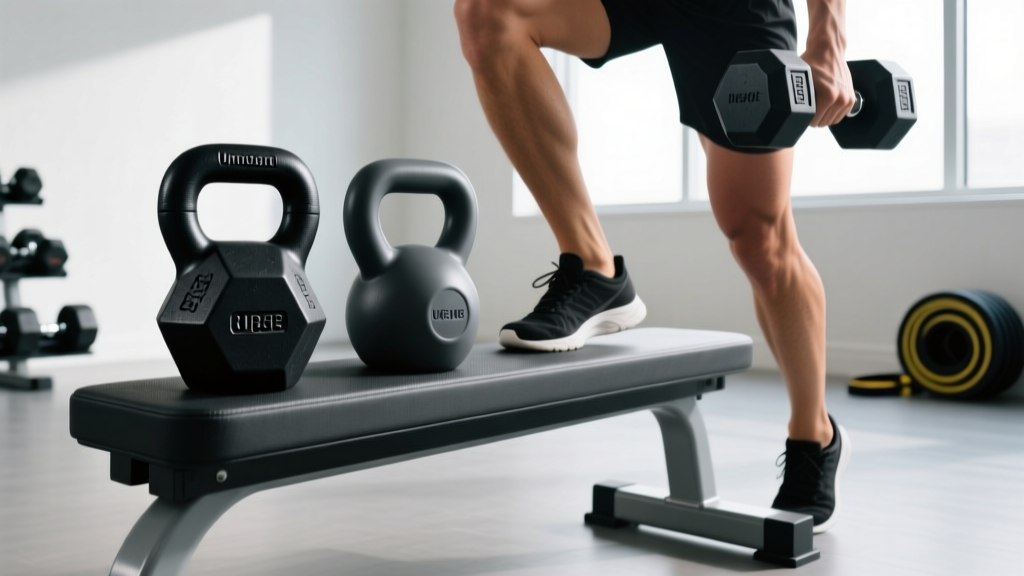
Rubber Hex vs Urethane: Best Gear for Dumbbell Step Ups on Bench
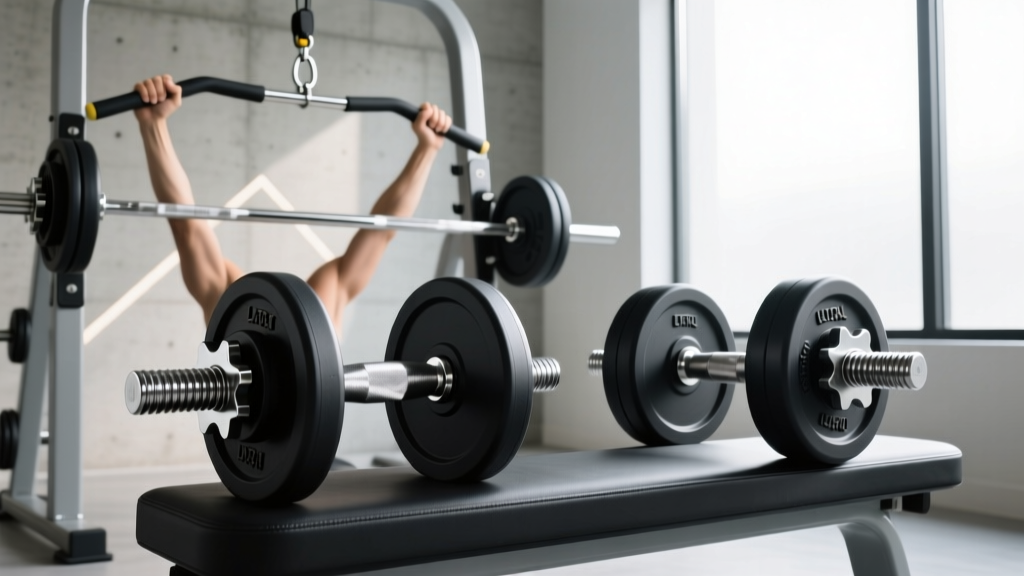
Barbell Collar Comparison: Setup for Lateral Pulldown Dumbbells

Setup Guide: Neoprene Gear for High Intensity Dumbbell Workouts
