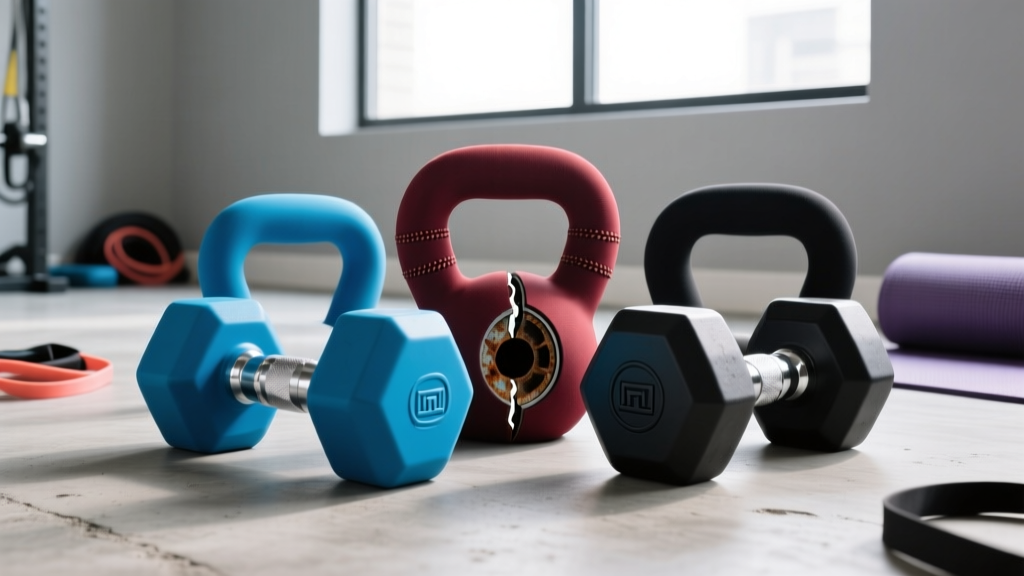
Troubleshooting the Dumbbell Heart: Neoprene Coated Weight Mistakes
Learn how to troubleshoot the dumbbell heart in neoprene coated weights. Avoid common home gym mistakes, internal rust, and core casting failures.

When outfitting a home gym in 2026, neoprene coated dumbbells remain a dominant choice for their floor-friendly drop tolerance, tactile grip, and color-coded weight organization. However, beneath the vibrant chloroprene rubber exterior lies the most critical component of the weight: the dumbbell heart. In fitness equipment manufacturing and structural biomechanics, the 'dumbbell heart' refers to the internal cast-iron or steel core and the central handle junction. It is the literal center of mass and the primary determinant of the dumbbell's lifespan.
Many lifters focus exclusively on the exterior coating, ignoring the core's metallurgical quality until catastrophic failure occurs. Whether you are performing high-repetition goblet squats or heavy floor presses, a compromised dumbbell heart can lead to dangerous imbalances, handle snaps, or toxic rust exposure. This guide explores the most common mistakes home gym owners make with neoprene dumbbells and provides a comprehensive troubleshooting matrix to diagnose and fix core-related failures.
Definition: The Dumbbell HeartThe internal structural core of a dumbbell, encompassing the cast-iron or steel heads, the central handle shaft, and the weld or single-pour junction where they meet. A healthy dumbbell heart ensures perfect weight distribution, structural rigidity, and resistance to internal oxidation.
3 Common Mistakes When Selecting Neoprene Dumbbells
1. Ignoring the Core Metallurgy (Gray Iron vs. Steel)
The most frequent purchasing mistake is assuming all neoprene dumbbells share the same internal anatomy. Budget-friendly options (typically priced between $1.20 and $1.60 per pound in 2026) often utilize a single-pour casting of ASTM A48 Class 20 gray cast iron. While gray iron is excellent for compressive strength, it is highly brittle. If a 40-pound gray iron dumbbell is dropped on a hard surface, the shockwave travels directly to the 'neck' of the dumbbell heart, frequently causing micro-fractures that eventually snap the handle. Mid-tier and premium brands utilize a ductile iron core or a Q235 carbon steel handle welded to cast iron heads, providing the tensile strength necessary to survive repeated drops.
2. Overlooking the Neoprene Dipping Process
Neoprene (chloroprene rubber) is applied via a liquid dipping process. If the manufacturing quality control is poor, micro-bubbles form between the iron heart and the rubber shell. These microscopic air pockets trap ambient moisture during shipping or in humid home gyms. Because the iron heart is completely hidden, oxidation begins silently. According to materials science data, iron oxide (rust) occupies up to six times the volume of the original iron. This internal expansion creates immense pressure, eventually causing the neoprene to bubble, split, and flake off from the inside out.
3. Assuming Neoprene is 100% Waterproof
While neoprene is highly water-resistant, it is not entirely impermeable over long periods, especially when exposed to the acidic pH of human sweat (which typically ranges from 4.5 to 7.0). Wiping down the handle is standard practice, but failing to clean the deep crevices where the handle meets the dumbbell head allows saline sweat to seep into the dumbbell heart's junction, accelerating galvanic corrosion.
Troubleshooting Matrix: Diagnosing a Failing Dumbbell Heart
If you suspect your neoprene weights are degrading, use the following troubleshooting table to identify the root cause within the dumbbell heart and apply the correct intervention.
| Symptom | Root Cause (The Heart) | Troubleshooting Fix |
|---|---|---|
| Audible rattling during lifts | Internal core fracture or detached handle weld. | Stop using immediately. The structural integrity is compromised; replace the weight. |
| Off-center balance / pulling to one side | Asymmetric casting voids or uneven neoprene pooling at the core base. | Test on a digital scale. If weight is accurate but balance is off, return to manufacturer under warranty. |
| Hard bubbles under the neoprene coating | Internal iron oxidation (rust) expanding against the rubber shell. | Puncture the bubble to release pressure, but plan to replace. The core is actively decaying. |
| Handle feels loose or twists slightly | Weld failure at the junction of the steel shaft and iron head. | Discard immediately. A twisting handle during a heavy press poses a severe wrist and face injury risk. |
The 2026 Neoprene Dumbbell Market: Pricing and Core Quality
Understanding the correlation between price and the quality of the dumbbell heart is crucial for long-term home gym investments. Here is how the current market breaks down:
- Budget Tier ($1.20 - $1.60 / lb): Brands like Tone Fitness or generic Amazon imports. These feature single-pour gray iron cores with 3mm neoprene coatings. The handles are often unknurled or feature shallow, machine-pressed grooves. Best for light rehabilitation or low-impact aerobic work.
- Mid-Tier ($1.80 - $2.60 / lb): The CAP Barbell HND-005 Neoprene series dominates this space. They utilize a higher-grade cast iron with a more rigorous vulcanization process, ensuring a tighter bond between the core and the 4mm neoprene shell. Handles feature moderate knurling for secure gripping.
- Premium Tier ($3.50 - $4.50+ / lb): Brands like Rep Fitness and Rogue offer neoprene-coated options with machined steel cores and thick 5mm chloroprene. The dumbbell heart in these models is virtually indestructible under normal home gym conditions, featuring deep diamond knurling and precision-calibrated weight tolerances of +/- 2%.
Safety Note: The U.S. Consumer Product Safety Commission (CPSC) regularly monitors home gym equipment for structural failures. Always inspect the handle junction of your dumbbells monthly, as sudden handle snaps during overhead movements are a leading cause of home gym impact injuries.
Step-by-Step Maintenance: Protecting the Core
To maximize the lifespan of your neoprene dumbbells and protect the internal core from environmental degradation, implement this bi-weekly maintenance routine:
- Saline Neutralization: After heavy sweating sessions, wipe the dumbbells down with a microfiber cloth dampened with a 50/50 mix of distilled water and white vinegar. This neutralizes the acidic salts from sweat that eat away at the handle junction.
- Moisture Extraction: Never store neoprene dumbbells directly on cold concrete garage floors. The temperature differential causes condensation to form between the floor and the dumbbell head, which slowly wicks into the neoprene. Use a rubber mat or a dedicated steel rack.
- UV Protection: Keep your weights out of direct sunlight. UV radiation degrades the molecular bonds in chloroprene rubber, causing it to chalk, crack, and expose the dumbbell heart to ambient humidity.
For a deeper dive into preserving your entire home gym setup, BarBend's Home Gym Equipment Maintenance Guide offers excellent supplementary protocols for rack and barbell care, which pair well with neoprene dumbbell upkeep.
Biomechanical Considerations for Home Lifters
When troubleshooting your equipment, also consider your own biomechanics. The Mayo Clinic's Strength Training Guidelines emphasize that improper grip alignment on poorly knurled handles can lead to compensatory wrist strain. If your dumbbell heart is intact but the handle is too smooth, consider using lifting chalk or investing in mid-tier weights with deeper knurling to ensure safe force transfer.
Frequently Asked Questions
Can I repair a split neoprene coating myself?
While you can use marine-grade silicone sealant to patch a small tear in the neoprene exterior, you cannot repair the dumbbell heart underneath. If the tear was caused by internal rust expansion, the structural decay is ongoing, and the patch will eventually fail. Replacement is the only safe option.
Why do my neoprene dumbbells smell like chemicals?
A strong chemical odor usually indicates low-quality chloroprene that was not properly cured during the vulcanization process. While this is an exterior issue, it often correlates with poor overall manufacturing standards, meaning the internal casting of the dumbbell heart may also suffer from voids and impurities. Air them out in a well-ventilated garage for 14 days; if the smell persists, return them.
Are hex-shaped neoprene dumbbells better for the core?
Hexagonal heads prevent rolling, which is a safety feature for home gyms. However, the sharp corners of the hex shape are more prone to chipping if dropped, which can breach the neoprene and expose the iron heart to moisture faster than a round-headed dumbbell. If you buy hex shapes, ensure you are dropping them on thick rubber horse-stall mats.
More gear to consider
All reviews
Spotting Dumbbell Bench Press: Best Adjustable Dumbbells Compared
Power Rack vs Squat Stand: Oblique Exercises with Dumbbells Mistakes
Best Trap Exercises With Dumbbells: Top Loadable Picks 2026
Cast Iron vs Competition Kettlebells & Dumbbell Shoulder Press Muscles

Setup Guide: Neoprene Dumbbell for Arms Exercise at Home
