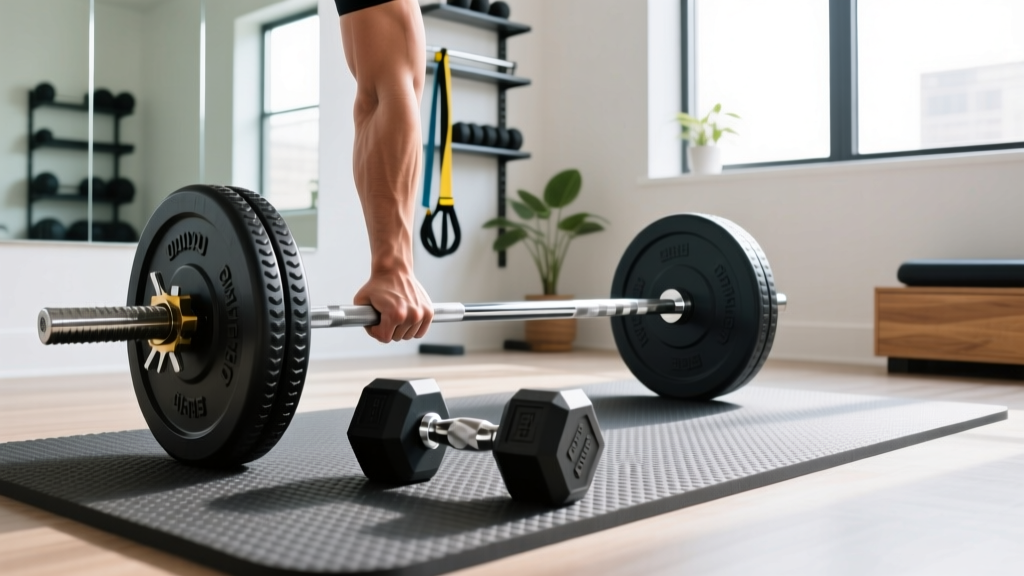
Troubleshooting Grip: Dumbbell Alternate Bicep Curl & Barbell Knurling
Fix grip fatigue and pulling mechanics. Our guide covers dumbbell alternate bicep curl mistakes and the ultimate Olympic barbell knurling buying guide.

The Biomechanical Link: Isolation Diagnostics for Heavy Pulls
When lifters experience grip failure or bar slip during heavy Olympic pulls, the immediate instinct is to chalk up or buy lifting straps. However, as a senior equipment reviewer at FitGearPulse, I often trace these macro-level pulling failures back to micro-level isolation weaknesses. The most effective diagnostic tool for wrist supination strength, brachioradialis endurance, and grip stability is the dumbbell alternate bicep curl. If you cannot control the eccentric phase of a strict curl while maintaining a neutral-to-supinated wrist, your central nervous system will instinctively limit your grip force on a loaded barbell to protect the joint.
This 2026 troubleshooting guide bridges the gap between isolation mechanics and heavy equipment selection. We will dissect common mistakes in the dumbbell alternate bicep curl and transition into a comprehensive Olympic barbell buying guide focused on weight distribution, shaft whip, and knurling profiles to ensure your equipment matches your biomechanical output.
Troubleshooting the Dumbbell Alternate Bicep Curl
Before selecting the right barbell, we must audit your grip and supination mechanics. The dumbbell alternate bicep curl is frequently botched, leading to premature forearm fatigue that ruins heavy deadlifts and cleans. Here are the three most common mistakes and how to fix them:
Mistake 1: Premature Elbow Flexion Before Supination
Lifters often bend the elbow while the dumbbell is still in a neutral (hammer) position, delaying supination until the top of the movement. This shifts the load entirely to the brachioradialis and wrist extensors, causing rapid grip burnout. The Fix: Initiate supination simultaneously with elbow flexion. The palm should face the ceiling by the time the dumbbell passes 90 degrees of flexion.
Mistake 2: Ignoring Eccentric Wrist Control
Dropping the weight quickly on the eccentric phase causes micro-trauma to the wrist flexors. When these muscles are fatigued, your ability to crush a 28mm or 29mm barbell shaft diminishes significantly. The Fix: Implement a strict 3-second eccentric tempo, maintaining a rigid, neutral wrist alignment until the arm is fully extended.
Mistake 3: Using Inappropriate Dumbbell Profiles
Using heavily worn, rusted hex dumbbells with uneven weight distribution forces the grip to overcompensate. According to BarBend's extensive equipment testing archives, uneven center-of-gravity in cheap cast-iron dumbbells can reduce grip endurance by up to 15% during alternating isolation work. Upgrade to urethane-coated or precision-milled steel dumbbells for accurate load feedback.
Olympic Barbell Buying Guide: Weight, Shaft Diameter, and Whip
Once your isolation diagnostics are sound, you must select an Olympic barbell that complements your grip strength and pulling style. The weight and physical dimensions of the bar dictate how force transfers from your hands to the plates.
| Bar Type | Standard Weight | Shaft Diameter | Tensile Strength | Primary Use Case |
|---|---|---|---|---|
| Men's Olympic WL | 20 kg (44 lbs) | 28 mm | 190k - 215k PSI | Snatch, Clean & Jerk |
| Women's Olympic WL | 15 kg (33 lbs) | 25 mm | 190k+ PSI | Female competitors, youth |
| Powerlifting Bar | 20 kg (44 lbs) | 29 mm | 205k - 215k PSI | Squat, Bench, Deadlift |
| Multi-Purpose | 20 kg (44 lbs) | 28.5 mm | 190k PSI | General fitness, CrossFit |
The 28mm shaft of a dedicated weightlifting bar allows the fingers to wrap completely around the steel, maximizing the surface area for the knurling to bite into the skin. Conversely, a 29mm power bar requires immense crush grip strength. If your dumbbell alternate bicep curl stalls at the 40 lb mark due to forearm fatigue, a 29mm shaft will feel like holding a tree trunk during heavy deadlifts.
Understanding Bar Whip and Tensile Strength
Whip refers to the bar's elastic deformation under load. A bar with high whip (typically 190,000 PSI tensile strength) will bend and snap back, aiding the lifter in the transition phase of a clean. A stiff bar (215,000 PSI) provides immediate force transfer, which is crucial for heavy squats and slow, grinding deadlifts. USA Weightlifting's official equipment guidelines mandate specific whip tolerances for sanctioned competition, ensuring the bar's oscillation does not compromise the lifter's wrist stability during the catch phase.
Decoding Knurling Profiles: The 2026 Standard
Knurling is the cross-hatched pattern machined into the barbell shaft. In 2026, manufacturing precision has reached new heights, and understanding the geometry of the knurl is more critical than ever. The depth and shape of the knurl dictate how aggressively the bar grips your calluses.
- Volcano Knurl: Characterized by a sharp, raised rim with a hollowed-out center. This profile provides maximum surface area for grip without acting like a cheese grater on your hands. It is the gold standard for modern power bars.
- Mountain Knurl: Features sharp, aggressive peaks. While it offers an unyielding grip, it is notorious for tearing calluses during high-volume work. Often found on older or budget-friendly barbell models.
- Hill Knurl: The peaks are flattened or rounded off. This passive knurl is comfortable for high-rep Olympic lifting and front rack positions but can feel slippery during heavy, low-rep deadlifts if the lifter lacks raw crush grip strength.
2026 Coating Warning: Cerakote vs. Stainless Steel
When browsing Rogue Fitness and other premium manufacturers, pay close attention to the finish. Cerakote (a ceramic polymer coating) is incredibly thin (0.001 inches) and preserves the original feel of the knurl while preventing rust. However, black zinc or chrome coatings fill in the valleys of the knurl, effectively turning a sharp 'Volcano' into a slippery 'Hill'. For the truest knurl feel, invest in bare Stainless Steel.
Equipment Matchups: Matching Knurl to Your Grip Style
Based on current market pricing and performance testing, here is how to match your equipment to your troubleshooting profile:
- The Supination-Dominant Lifter (Aggressive Grip): If your dumbbell alternate bicep curl is strong and your wrist flexors are highly developed, you can handle a 29mm shaft with deep volcano knurling. Recommendation: Rep Fitness Excalibur or Rogue Ohio Power Bar (Stainless). Expect to invest between $350 and $450.
- The Speed-Oriented Olympic Lifter (Dynamic Grip): If you rely on the hook grip and rapid bar turnover, avoid aggressive mountain knurls that will tear your thumbs. Recommendation: Eleiko Olympic Weightlifting Competition Bar. Features a refined, medium-depth knurl with dual ring marks. Pricing sits at the premium end, typically over $1,100.
- The High-Volume Generalist (Endurance Grip): For lifters mixing heavy pulls with high-rep WODs, a medium volcano knurl on a 28.5mm shaft prevents hand tearing while maintaining security. Recommendation: Rogue Chan Bar or Bella Bar (for smaller hands).
Troubleshooting Matrix: Symptom to Solution
| Symptom During Pull | Isolation Diagnostic Failure | Equipment / Form Solution |
|---|---|---|
| Bar slips at lockout | Weak eccentric wrist control on curls | Switch to Stainless Steel volcano knurl; slow down curl eccentrics |
| Thumb tearing (Hook Grip) | N/A (Equipment mismatch) | Downgrade from Mountain to Hill/Medium Volcano knurl |
| Forearm pump on deadlifts | Brachioradialis overuse (late supination) | Use 28mm WL bar; fix dumbbell curl supination timing |
| Bar oscillates too much | N/A (Whip mismatch) | Upgrade to 215k PSI Power Bar (stiffer whip) |
FAQ: Grip and Equipment Troubleshooting
Can I use a power bar for Olympic weightlifting?
While physically possible, it is highly discouraged. Power bars feature a 29mm shaft and center knurling, which will choke you during front squats and cleans. Furthermore, the stiff whip (215k PSI) prevents the bar from absorbing the shock of dropping from overhead, transferring dangerous kinetic energy directly into your wrists and shoulders.
How often should I clean my barbell knurling?
In a commercial or busy home gym environment, chalk and dead skin will pack into the knurl valleys within weeks, turning a sharp volcano profile into a smooth hill. Use a stiff nylon brush and a light application of 3-in-One oil or specialized barbell cleaner every two weeks to maintain the original bite of the steel.
Why does my grip fail on barbell rows but not dumbbell curls?
The dumbbell alternate bicep curl allows for natural wrist rotation and independent arm tracking, reducing systemic central nervous system (CNS) fatigue. Barbell rows lock your wrists into a fixed, pronated position while demanding immense isometric core stabilization. If your grip fails here, focus on static holds and ensure your barbell has an adequately aggressive knurl pattern.
More gear to consider
All reviews
Space-Saving Gym Layouts: Bent-Over Dumbbell Rows, EZ vs Straight Bar

Bumper Plate vs Iron Plate: Pairing Lifetime Fitness Dumbbells
Power Rack vs Squat Rack: Proper Way to Do Dumbbell Curls Safely
EZ Curl Bar vs Straight Bar: Arm Strength for the Dumbbell Get Up

Best Loadable Dumbbells for the Dumbbell Low to High Chest Fly
