
Troubleshooting Arm Exercises with Dumbbells: Neoprene Grip Errors
Fix common form and grip mistakes during arm exercises with dumbbells. Our troubleshooting guide covers neoprene coated weights for optimal home gym results.

The Hidden Trap of Neoprene: Why Grip Thickness Ruins Arm Isolation
Neoprene-coated dumbbells are the undisputed kings of the home gym floor. Brands like CAP Barbell and Yes4All dominate the market, offering these vibrant, floor-friendly weights at an accessible price point of $1.20 to $1.80 per pound. They are quiet, they protect hardwood floors, and they look great on a rack. However, when it comes to executing precise arm exercises with dumbbells, this synthetic rubber coating introduces unique biomechanical and maintenance challenges that most lifters completely overlook.
As a domain expert reviewing hundreds of home gym setups, I see the same recurring issue: lifters hitting premature plateaus on bicep curls and tricep extensions, blaming their programming when the real culprit is their equipment's material science. Neoprene (polychloroprene) is an excellent protective layer, but it fundamentally alters the handle geometry and surface friction of the dumbbell. If you are struggling with wrist pain, forearm fatigue, or slippery grips during your arm day, this troubleshooting guide will diagnose and fix your neoprene-related errors.
⚠️ Safety Alert: The Overhead Slip HazardNeoprene provides a high-friction, tactile grip when completely dry. However, polychloroprene is hydrophobic. Once introduced to sweat, the surface tension changes dramatically, turning the handle into a slip hazard. Performing overhead tricep extensions with heavy, sweaty neoprene dumbbells is a leading cause of home-gym facial and wrist impacts. Always use a secondary grip aid for overhead isolation work.
The Biomechanical Mismatch: Handle Diameter and Forearm Fatigue
To understand why your arm exercises with dumbbells might feel 'off', we have to look at handle thickness. A standard Olympic barbell measures 28mm to 29mm in diameter, which is ergonomically optimized for the human hand to wrap around securely while maximizing force transfer.
When manufacturers coat a cast-iron dumbbell core in neoprene, the handle diameter frequently pushes into the 33mm to 35mm range. According to kinesiology principles outlined by the National Strength and Conditioning Association (NSCA), an increase in grip diameter forces the forearm flexors—specifically the flexor digitorum superficialis and flexor carpi radialis—to work at a mechanical disadvantage.
The 'False Failure' Phenomenon
When you perform strict bicep curls with 35mm neoprene handles, your forearm muscles fatigue up to 30% faster than they would on a bare steel 28mm handle. You reach muscular failure in your grip before you reach true mechanical failure in your biceps brachii. You aren't failing because your arms are weak; you are failing because the neoprene thickness is turning an isolation exercise into an inadvertent grip-strength test.
Troubleshooting the 3 Most Common Neoprene Arm Mistakes
Let's break down the specific form breakdowns caused by neoprene equipment and how to troubleshoot them in real-time.
Mistake 1: Wrist Deviation During Hammer Curls
- The Error: Because the neoprene handle is thick, lifters often fail to close their hand completely. To compensate, they bend their wrist outward (ulnar deviation) at the top of the hammer curl.
- The Fix: Switch to a neutral, thumbless 'suicide' grip for hammer curls on thick neoprene handles. This aligns the radius and ulna bones directly under the load, bypassing the need for a full finger wrap and saving your wrist joints.
Mistake 2: Using Bleach to Clean Sticky Handles
- The Error: Over 18 to 24 months, neoprene can become sticky or start flaking. Many home gym owners wipe them down with bleach or ammonia-based cleaners, which destroys the chemical bonds of the polychloroprene, accelerating degradation.
- The Fix: Clean your dumbbells using a 1:4 ratio of white vinegar to distilled water. The mild acidity breaks down salt crystallization from sweat without eating through the synthetic rubber.
Mistake 3: Ignoring the 'Squeeze' on Tricep Kickbacks
- The Error: Lifters rely on the matte friction of dry neoprene to hold the dumbbell during kickbacks, keeping a loose grip. As the set progresses and sweat builds, the dumbbell shifts, altering the lever arm and reducing tricep engagement.
- The Fix: Actively squeeze the handle 20% harder than you think necessary, and apply liquid chalk before the set begins.
Material Comparison Matrix: Is Neoprene Right for Your Arm Day?
Not all dumbbells are created equal. If you are serious about arm hypertrophy, you need to understand how your equipment's coating affects performance. Below is a comparison of common home gym dumbbell materials specifically for arm isolation work.
| Material | Handle Diameter | Sweat Resistance | Cost per lb (Avg) | Verdict for Arm Work |
|---|---|---|---|---|
| Neoprene | 33mm - 35mm | Poor (Slippery when wet) | $1.20 - $1.80 | Good for light rehab; poor for heavy hypertrophy. |
| Urethane | 28mm - 30mm | Excellent | $3.50 - $5.00 | The gold standard for strict arm isolation. |
| Bare Cast Iron | 28mm - 32mm | Moderate (Requires chalk) | $0.90 - $1.30 | Excellent grip if knurled; high maintenance. |
| Hex Rubber | 30mm - 34mm | Good | $1.50 - $2.20 | Solid middle-ground; handles usually feature chrome knurling. |
Step-by-Step Protocol: Fixing the 'Sweat Slip' During High-Rep Curls
If you are committed to your current set of neoprene dumbbells and refuse to upgrade to urethane, you must implement a strict grip-management protocol. The Mayo Clinic's guidelines on strength training emphasize that maintaining joint stability and secure grip is paramount to preventing tendon strain during repetitive isolation movements. Follow this 4-step protocol to secure your grip:
- Pre-Set Wipe Down: Use a microfiber cloth lightly dampened with isopropyl alcohol (70%) to strip any residual skin oils from the neoprene handle 60 seconds before your set. Allow it to flash-dry completely.
- Apply Liquid Chalk: Avoid loose magnesium carbonate chalk in a home gym, as it will ruin your floors and embed into the porous neoprene, turning it white and crusty. Instead, use a liquid chalk (like Spider Chalk or GymGrip). The alcohol base evaporates, leaving a microscopic layer of grip-enhancing resin that bonds to the rubber.
- Implement the 'Hook' Grip Modification: For exercises like dumbbell shrugs or heavy static holds, wrap your thumb over your index and middle fingers. This locks the thick neoprene handle into the crease of your hand, preventing it from rolling toward your fingertips.
- Post-Set Salt Removal: Sweat leaves behind sodium chloride crystals. If left on neoprene, these micro-crystals act like sandpaper, slowly wearing away the coating and creating a permanently smooth, slippery patch on the handle. Wipe with a damp cloth immediately after your workout.
When to Abandon Neoprene for Arm Work
Neoprene is fantastic for full-body circuits, light metabolic conditioning, and protecting your living room floor. But as your strength progresses, the limitations of the material become glaringly obvious.
'If your bicep curl weight exceeds 35 pounds per hand, the handle thickness and friction coefficient of neoprene will actively work against your hypertrophy goals. At this load, the forearm flexor fatigue outpaces bicep stimulation. It is time to invest in bare steel or urethane.'
According to resistance training guidelines published by the American College of Sports Medicine (ACSM), maximizing the tension on the target muscle group requires eliminating secondary points of failure. By recognizing the physical limitations of your neoprene coated dumbbells, adjusting your grip mechanics, and maintaining the material properly, you can salvage your equipment and get back to building serious arm mass without compromising your joints or your home gym floors.
Quick Troubleshooting Checklist
- Forearms burning before biceps? Your neoprene handle is too thick. Use lifting straps for heavy pulls or switch to thinner urethane for curls.
- Wrist pain on extensions? You are experiencing ulnar deviation due to grip width. Switch to a thumbless grip or use an EZ-curl bar.
- Dumbbells slipping mid-set? Stop using dry hands on synthetic rubber. Implement the liquid chalk protocol detailed above.
- Handles turning white and crusty? You are using harsh chemicals or leaving sweat salts. Switch to a vinegar/water cleaning solution.
More gear to consider
All reviews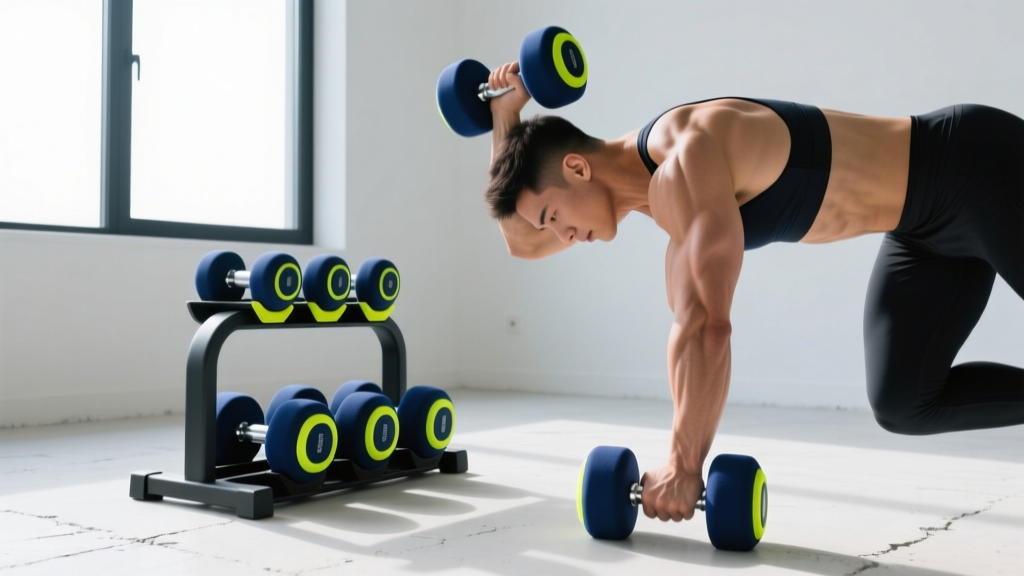
Neoprene Dumbbell Station Setup: What Does One Arm Dumbbell Row Work?
Loadable Dumbbells: The 2026 Lat Pulldown Dumbbell Alternative
Barbell Bench vs Dumbbell: How Barbell Collar & Clamp Types Compare

Standard vs Olympic Plates for Flat Dumbbell Bench Setups

Beyond Holding a Dumbbell: 2026 Loadable Plate Market Trends
