How to Spot Dumbbell Chest Press & Choose Olympic vs Standard Plates
Master your home gym setup with our Olympic vs standard plate guide and learn exactly how to spot dumbbell chest press for maximum safety.

The Foundation: Olympic vs. Standard Plate Ecosystems
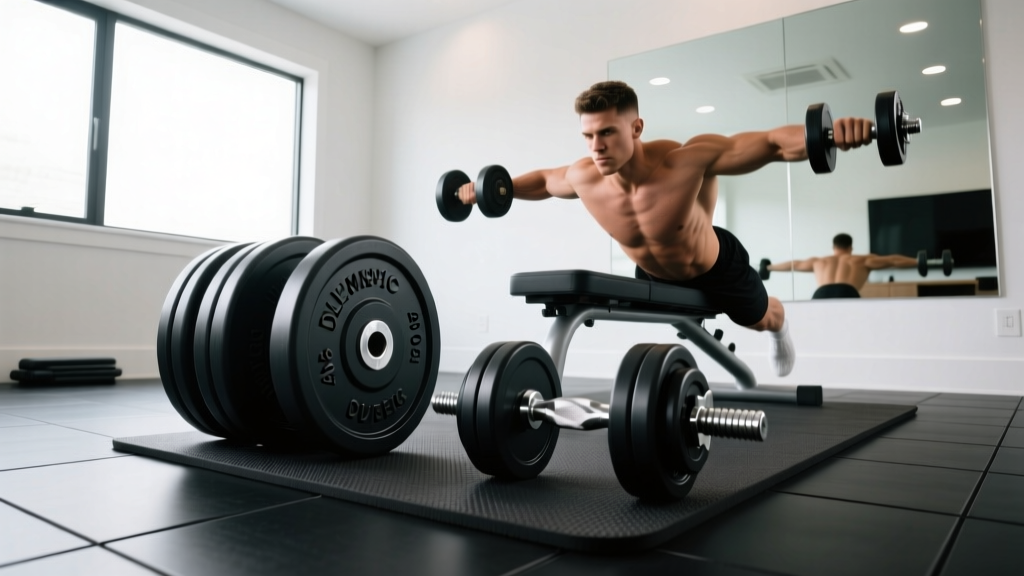
Designing a functional, safe home gym in 2026 requires making a definitive choice about your weight ecosystem early in the installation process. The most critical fork in the road is choosing between Olympic and standard weight plates. This decision dictates not only the barbells you buy but also the weight storage trees, rack attachments, and plate-loaded dumbbell handles you will install in your space.
Quick Definition: The primary difference lies in the center hole diameter. Olympic plates feature a 2-inch (50.8mm) center hole designed to fit heavy-duty, high-tensile strength steel bars. Standard plates feature a 1-inch (25.4mm) hole, typically paired with lighter-duty, economy-tier equipment.Technical Comparison Matrix
| Feature | Olympic Plates | Standard Plates |
|---|---|---|
| Center Hole | 2 inches (50.8mm) | 1 inch (25.4mm) |
| Weight Distribution | Consistent 17.7" outer diameter (45lb plates) | Variable diameter; shrinks as weight decreases |
| Max Load Capacity | 500 to 1,500+ lbs (rack dependent) | 200 to 300 lbs (bar bending occurs) |
| Avg. Cost Per Pound | $1.50 - $3.50 (Cast Iron to Urethane) | $0.80 - $1.50 (Vinyl or Basic Cast Iron) |
| Storage Integration | Heavy-duty 2" pegs on power racks | Freestanding 1" A-frame trees |
For any serious lifter, Olympic plates are the undisputed standard. According to engineering specifications published by industry leaders like Rogue Fitness, Olympic-grade equipment is machined to tighter tolerances, ensuring the 45-pound plates sit flush against the rack uprights and storage pegs without wobbling. Standard plates, while budget-friendly for beginners, introduce severe safety risks when loaded heavily due to the lower yield strength of 1-inch arbors.
Complete Weight Station Installation Walkthrough
Once you have selected your plate ecosystem, the physical installation of your weight station begins. A proper setup ensures your equipment remains anchored during heavy eccentrics and provides the necessary clearance for dumbbell movements.
- Subfloor Preparation: Do not place heavy racks directly on drywall or bare concrete. Lay down 3/4-inch thick vulcanized horse stall mats (typically 4x6 feet, costing around $50-$70 per mat). This absorbs kinetic energy from dropped Olympic plates and prevents moisture transfer from concrete to your steel rack.
- Rack and Tree Anchoring: If your power rack or weight tree features mounting feet, anchor them using 3/8-inch wedge anchors drilled 3 inches into the concrete slab. Use a torque wrench to tighten structural bolts to the manufacturer's specification (usually 80-100 ft-lbs for heavy-duty uprights).
- Peg Installation for Olympic Storage: Install your 2-inch storage pegs on the rack uprights. Pro-Tip: Place the heaviest plate pegs (45lb/25kg) at the bottom, closest to the floor, to lower the center of gravity and prevent the rack from tipping during plate loading.
- Bench Positioning and Clearance: Position your adjustable FID (Flat/Incline/Decline) bench inside the rack. For dumbbell pressing, you must measure a minimum of 36 inches of lateral clearance on both sides of the bench to accommodate the full arc of a dumbbell fly or deep chest press without striking the uprights.
Crucial Safety: How to Spot Dumbbell Chest Press
With your rack bolted down, plates organized, and bench positioned, you are ready for heavy pressing. However, unlike barbell benching where the bar can be caught on J-hooks or safety straps, dumbbells operate on independent planes of motion. Knowing exactly how to spot dumbbell chest press movements is a non-negotiable safety skill that prevents catastrophic shoulder injuries and facial trauma.
WARNING: The Elbow-Spotting FallacyThe most common and dangerous mistake spotters make is grabbing the lifter's elbows. Pushing up on the elbows creates a valgus force, driving the dumbbells inward toward the lifter's face and compromising the anterior shoulder capsule. Never spot at the elbows during a dumbbell press.
The Biomechanics of Proper Wrist Spotting
Guidelines established by the National Strength and Conditioning Association (NSCA) emphasize that force application during dumbbell spotting must occur as close to the implement as possible. For the dumbbell chest press, this means the spotter must assist at the lifter's wrists or distal forearms.
Step-by-Step Spotting Execution
- The Lifter's Setup: The lifter should kick the dumbbells up to the starting position using their thighs, establishing a stable scapular retraction on the bench. The wrists must remain stacked directly over the elbows, neutral and locked out.
- The Spotter's Stance: The spotter stands at the head of the bench, leaning slightly forward with a braced core and staggered stance (one foot slightly behind the other for balance).
- Hand Placement: The spotter reaches under the lifter's wrists, wrapping their hands in a 'C' grip around the distal forearm, just below the wrist joint. Do not touch the actual dumbbell handles, as this can alter the lifter's grip tension.
- The Lift-Off (Optional): If the lifter requests a lift-off, the spotter guides the dumbbells into position over the chest, then slowly releases tension, keeping hands hovering exactly one inch below the lifter's wrists.
- Assisting the Rep: If the lifter stalls, the spotter applies upward force strictly in a vertical path, matching the speed of the lifter's concentric drive. Because you are spotting at the wrists, the lifter maintains full control over the medial/lateral stabilization of the weights.
"Effective spotting is about augmenting the lifter's force, not taking over the movement. By anchoring your assistance at the wrists, you preserve the lifter's neuromuscular control while providing a mechanical failsafe against gravity."
— Biomechanics principles referenced via ExRx.net kinesiology databases.
Equipment Spotlight: Matching Your Plates to Your Rack
When transitioning from the bench to the rack for accessory work, the type of plates you installed matters. If you opted for Olympic bumper plates (like those with a durometer rating of 85-90 for deadlifts), be aware that their 17.7-inch diameter provides a consistent starting height for floor presses. Conversely, if you are using standard 1-inch cast iron plates, the smaller diameter of the 25lb and 10lb plates will alter your range of motion if you attempt floor-based pressing variations.
Furthermore, storing your Olympic plates properly on a dedicated weight tree or rack pegs prevents the 'clatter and roll' hazard. Standard plates, often lacking precision-machined edges, tend to wobble when placed on pegs, creating a pinching hazard when loading and unloading the barbell.
Frequently Asked Questions
Can I mix Olympic and Standard plates in my gym?
While you physically can own both, it is highly discouraged. They require entirely different storage solutions, barbells, and dumbbell handles. Mixing them leads to cluttered spaces and the constant frustration of grabbing a 1-inch collar for a 2-inch bar. Commit to the Olympic ecosystem for longevity and safety.
What if I don't have a spotter for heavy dumbbell presses?
If training alone, you must utilize a power rack with adjustable safety spotter arms. Set the spotter arms exactly one to two inches below your chest's peak height at the bottom of the pressing range of motion. This allows you to flatten your chest and escape the weights safely if you fail a rep, letting the dumbbells drop onto the steel safety arms rather than your torso.
Do I need a specific bench for dumbbell pressing?
Yes. Ensure your bench has a firm, high-density foam pad (at least 2.5 inches thick) that doesn't compress excessively, which would destabilize your shoulder blades. The bench height should ideally be between 17 and 18 inches from the floor to allow your feet to plant firmly, creating the necessary leg drive for heavy presses.
More gear to consider
All reviews
EZ Curl Bar vs Straight Bar & Lying Dumbbell Triceps Extensions
Mastering the Hip Hinge With Dumbbells: Step-by-Step Guide & Adjustable Set Reviews

Adjustable Dumbbell Setup & Best 20 Lb Dumbbell Exercises 2026

Best Adjustable Dumbbells for Dumbbell Shoulder Exercises (2026)

Upgrading Your Squat Workout With Dumbbells: Barbell Collar Guide