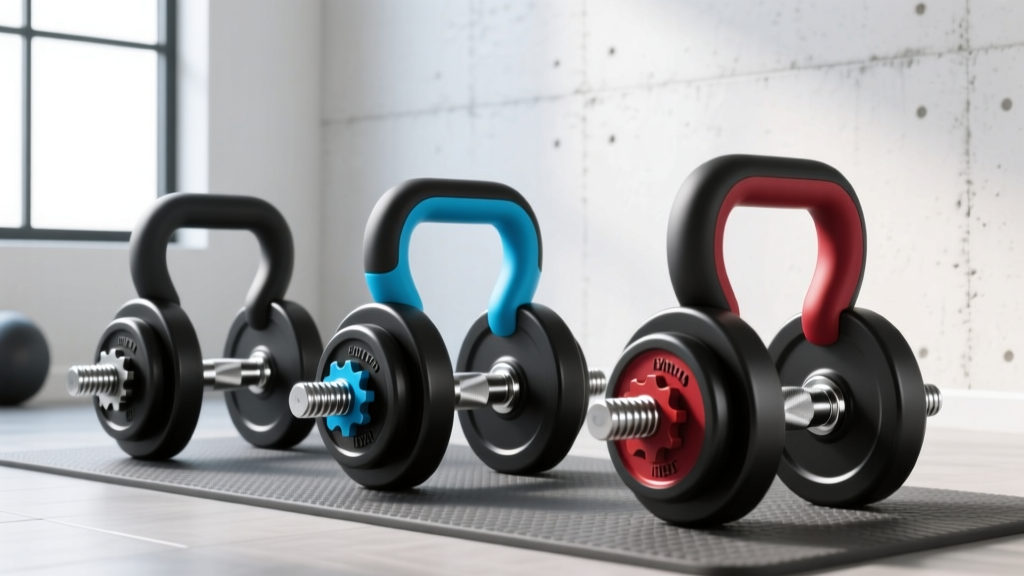
Optimizing Gym Space: Bumper vs Iron Plates & Push Up Rows Dumbbells
Compare bumper vs iron plates for compact home gym layouts. Discover space-saving storage tips and how push up rows dumbbells eliminate bulky benches.

The Spatial Geometry of Home Gym Design in 2026
The spatial geometry of a home gym is dictated by its largest, most awkward components. As urban living spaces shrink and garage conversions become more sophisticated in 2026, the debate between bumper plates and cast iron plates is no longer just about dropping weights—it is a critical factor in spatial optimization, storage footprint, and layout design. Furthermore, minimizing bulky furniture like adjustable benches by integrating multi-functional tools like push up rows dumbbells can reclaim up to 8 square feet of prime floor space. This guide breaks down the exact dimensional differences, storage requirements, and layout blueprints for building a high-performance, space-efficient free weight zone.
Bumper Plates vs. Iron Plates: A Dimensional & Storage Analysis
The most glaring difference between bumper and iron plates is their physical footprint. According to comprehensive equipment testing by Garage Gym Reviews, a standard 45-pound crumb rubber bumper plate measures 17.7 inches in diameter and roughly 3.2 inches in thickness. In stark contrast, a 45-pound deep-dish cast iron plate (such as the Rogue Deep Dish Iron Plates) measures just 14.5 inches in diameter and 1.3 inches in thickness.
| Specification | 45lb Bumper Plate (Standard) | 45lb Cast Iron Plate (Deep Dish) | Spatial Impact |
|---|---|---|---|
| Diameter | 17.7 inches | 14.5 inches | Iron saves 3.2 inches vertical clearance on floor presses |
| Thickness | ~3.2 inches | ~1.3 inches | Iron allows 2.5x more weight per sleeve or storage peg |
| Weight per Sq Ft (Storage) | Low | High | Iron requires much smaller plate trees |
| Cost per Pound (2026 Avg) | $2.50 - $4.00 | $1.20 - $1.80 | Iron frees up budget for space-saving racks |
Clearance and Wall Proximity Constraints
When designing a layout where your power rack or squat stand is positioned near a wall, plate diameter dictates your deadlift and barbell row clearance. If you use bumper plates, the 17.7-inch diameter means the barbell sits 8.85 inches off the floor. If your rack is placed 10 inches from a wall, loading and unloading 45-pound bumpers becomes a knuckle-scraping nightmare. Iron plates, sitting at a 7.25-inch radius, offer an extra 1.6 inches of critical wall clearance, allowing you to push your rack closer to the perimeter and open up the center of the room for dynamic movements.
Sleeve Capacity and Barbell Real Estate
When loading a standard Olympic barbell with 51.5 inches of usable sleeve space, plate thickness becomes a mathematical bottleneck. A pair of 45lb iron plates takes up 2.6 inches of total sleeve space. In contrast, low-density crumb rubber bumper plates can take up to 3.5 inches per 45lb plate. If your training involves heavy partials, shrugs, or accommodating resistance with bands, you will physically run out of barbell sleeve space using thick bumpers long before you max out your strength. Iron plates allow you to load 500+ lbs on a standard bar, whereas cheaper, thicker bumpers might cap out at 405 lbs due to sleeve overflow.
Eliminating the Bench: The Role of Push Up Rows Dumbbells
In a space-optimized layout, every piece of equipment must earn its footprint. A standard adjustable FID (Flat/Incline/Decline) bench requires a storage footprint of roughly 4 feet by 2 feet and costs upwards of $300. For athletes focused on hypertrophy and functional fitness in compact environments, substituting the bench with specialized push up rows dumbbells is a masterclass in spatial efficiency.
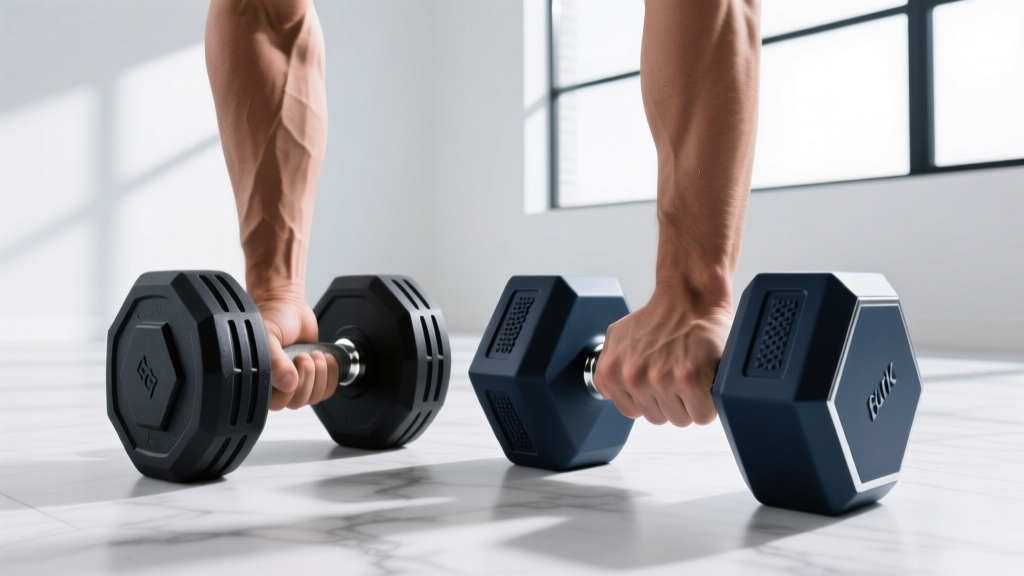
Push up rows dumbbells—typically featuring wide, flat, anti-slip bases—are engineered to support body weight during renegade rows, push-ups, and floor presses. By utilizing these on the floor, you completely eliminate the need for a bench in your primary workout zone.
Transitioning to floor-based pressing and rowing with stable, flat-top dumbbells not only saves 8 square feet of floor space but also increases core activation during unilateral movements due to the lack of back support.
Recommended Models for Compact Layouts
- Yes4All Adjustable Push-Up Dumbbells: These feature a specialized wide-grip push-up handle base that locks into the adjustable dumbbell core. They store vertically in a 10x10 inch corner footprint.
- CAP Barbell Hex Dumbbells (Flat-Top): While not exclusively marketed as push-up tools, the rubber-coated flat tops provide a stable, non-roll base for renegade rows. A pair of 35lb hex dumbbells costs around $70 and can be slid directly under the crossmembers of a power rack when not in use.
- Nuobell Adjustable Dumbbells: Their uniquely flat, blocky top surface makes them exceptional for floor-based push-up rows, eliminating the awkward wrist angles associated with rounded adjustable dumbbells like the Bowflex 552s.
The 10x10 Foot Optimization Blueprint
To visualize how bumper vs. iron plates and push up rows dumbbells interact in a real-world scenario, consider this exact layout for a standard 10x10 foot spare bedroom or garage corner:
- The Perimeter Rack (0-24 inches from wall): Mount a wall-foldable squat rack or place a compact 49-inch deep power rack flush against the wall. Crucial: Use iron plates here to ensure you have the 1.6-inch clearance needed to load the barbell without hitting the drywall.
- Vertical Storage Zone (Corner): Place a 10-peg vertical plate tree in the corner. Because iron plates are 1.3 inches thick, a standard 24-inch wide tree can hold up to 400 pounds without the plates overhanging and creating a tripping hazard.
- The Floor-Work Matrix (Center): Lay down four 4x6 foot horse stall mats. This 8x12 foot (trimmed to fit) zone is your dedicated area for push up rows dumbbells, kettlebell swings, and mobility work. By keeping this zone free of benches and bulky storage, you maintain an open multi-purpose matrix.
- Under-Rack Dumbbell Storage: Slide your push up rows dumbbells directly under the rack front crossmember. This utilizes dead space that is otherwise wasted.
Flooring and Acoustic Considerations
Your plate choice directly dictates your flooring requirements, which in turn affects your room vertical space and acoustic dampening. Dropping cast iron plates requires high-density, 3/4-inch vulcanized rubber mats (costing roughly $2.50 to $3.50 per square foot) to prevent subfloor cracking. This adds nearly an inch of height to your floor, which can be problematic in rooms with low ceiling clearance or doors that swing inward.
Pro-Tip for Apartment Lifters: If you are building a gym in a second-story room or an apartment, you must use bumper plates paired with 3/8-inch thick horse stall mats and a layer of acoustic underlayment. While bumpers take up more horizontal storage space, their dead-bounce properties are non-negotiable for structural safety and noise mitigation in shared buildings.Final Verdict: Tailoring Your Layout to Your Space
The choice between bumper and iron plates is fundamentally a spatial puzzle. If your layout prioritizes maximum weight capacity in a tight corner, requires close wall-proximity for the barbell, and demands high-density storage, cast iron plates are the undisputed champions of space optimization. Pair them with flat-top push up rows dumbbells to eliminate the bench, and you will unlock a highly functional, uncluttered training environment.
Conversely, if your space optimization is constrained by vertical clearances, noise ordinances, or the need to drop weights from overhead, you must accept the larger horizontal footprint of bumper plates and compensate by utilizing wall-mounted horizontal plate racks rather than floor-standing trees to keep your walking paths clear.
More gear to consider
All reviews
Olympic vs Standard Plates for Lower Pec Exercises Dumbbells
Space-Saving Loadable Dumbbells for Dumbbell Circuit Training
Top Loadable Dumbbells for Home Dumbbell Exercises (2026)
Urethane vs Rubber Hex Dumbbells: Care for Pronated Dumbbell Curls
Home Gym Setup: Plate Types and Dumbbell Exercises for Beginners