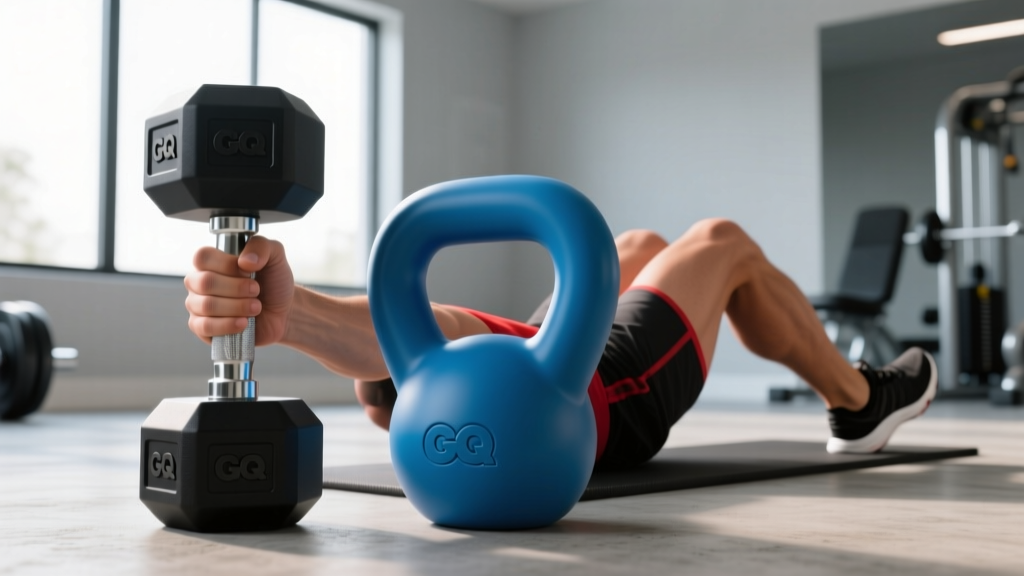
Rubber Hex vs Urethane Dumbbells for Dumbbell Reverse Crunches
We test rubber hex vs urethane dumbbells for dumbbell reverse crunches, comparing edge comfort, foot grip, durability, and cost for your 2026 home gym.

The Intersection of Core Training and Equipment Geometry
When building a comprehensive home gym, most lifters obsess over barbell whip, power rack steel gauge, and bench pad firmness. Yet, when it comes to targeted core work—specifically dumbbell reverse crunches—the physical geometry and material composition of your dumbbells dictate both the safety and efficacy of the movement. Holding a free weight between your feet introduces unique biomechanical variables that standard upper-body exercises simply do not encounter.
In this expert hands-on review, we are pitting the ubiquitous rubber hex dumbbell against the premium urethane dumbbell. We will analyze how each material and shape performs specifically during dumbbell reverse crunches, evaluating edge comfort, foot grip, drop-durability, and long-term cost efficiency for your 2026 training setup.
Biomechanics of the Dumbbell Reverse Crunch
Before evaluating the equipment, we must understand the mechanical demands of the exercise. According to the exercise directories maintained by ExRx.net, the reverse crunch primarily targets the lower rectus abdominis and the hip flexors (iliopsoas). By placing a dumbbell between the feet, you extend the lever arm and add a distal load, exponentially increasing the torque required by the abdominal wall to initiate posterior pelvic tilt and spinal flexion.
Expert Insight: The distal placement of the weight means the dumbbell relies entirely on the friction between your skin (or socks) and the dumbbell's outer casing. If the casing is too slick, or if the shape creates painful pressure points on the instep, your neural drive will shift from core contraction to pain avoidance, severely limiting muscle hypertrophy.Rubber Hex Dumbbells: The Budget-Friendly Workhorse
Rubber hex dumbbells, such as the widely available CAP Barbell Cast Iron Rubber Hex series, are the default choice for commercial and home gyms on a budget. Typically priced between $1.20 and $1.80 per pound, they offer undeniable economic value. However, their design presents distinct challenges for floor-based core movements.
The Hexagonal Edge Problem
The primary advantage of the hex shape is its anti-roll property. When you set the dumbbell down between sets of dumbbell reverse crunches, it stays put. Unfortunately, this same geometry is a liability when the dumbbell is in use. The 90-degree vertices of the hexagon create concentrated pressure points. When clamped between the medial malleolus (inner ankle bone) and the instep, these sharp corners can cause severe discomfort, bruising, and skin abrasion, especially as you progress to heavier loads (e.g., 30 lbs to 50 lbs).
Material Degradation and Off-Gassing
Standard vulcanized rubber used in budget models has a lower durometer (hardness) rating and is prone to tearing. If you fail a rep and drop the dumbbell onto a hard surface, the rubber casing frequently splits away from the internal iron core. Furthermore, cheap rubber emits volatile organic compounds (VOCs), resulting in a lingering 'tire shop' odor that can make deep breathing during intense core sets highly unpleasant.
Urethane Dumbbells: The Premium Standard for Core Work
Urethane dumbbells, specifically those utilizing Cast Polyurethane (CPU) like the models offered by Rogue Fitness and Rep Fitness, represent the gold standard in modern free weights. Priced between $3.50 and $5.00 per pound, they are a significant investment, but they solve nearly every issue associated with rubber hex models during core training.
Chamfered Edges and Foot Comfort
High-quality urethane dumbbells feature heavily chamfered (rounded) edges. Even if the overall silhouette is hexagonal or multi-sided to prevent rolling, the vertices are smoothed out. When performing dumbbell reverse crunches, this rounded profile distributes the clamping force evenly across the foot, eliminating the sharp pressure points that plague rubber hex models. You can confidently squeeze a 40lb urethane dumbbell between your feet without compromising your form due to pain.
Superior Grip Texture and Durability
Urethane is virtually indestructible in a home or commercial gym environment. It does not chip, tear, or degrade from UV exposure. More importantly for reverse crunches, the surface texture of premium urethane provides a micro-grip that adheres to skin and cotton socks far better than the slick, polished surface of cheap rubber. This prevents the dumbbell from slipping out of your feet at the apex of the hip flexion movement.
"Switching from rubber hex to urethane completely changed my core training. I no longer have to wrap a towel around the dumbbell just to protect my ankles during weighted reverse crunches." — Marcus T., Competitive Natural Bodybuilder
Head-to-Head Comparison Matrix
To visualize the differences specifically through the lens of core and floor-based exercises, review the data matrix below:
| Feature | Rubber Hex (e.g., CAP Barbell) | Urethane (e.g., Rogue / Rep) |
|---|---|---|
| Edge Profile | Sharp 90-degree vertices | Chamfered / Rounded edges |
| Foot Comfort (Clamping) | Poor (Causes pressure points) | Excellent (Even force distribution) |
| Surface Grip on Skin/Socks | Low (Often slick or sticky) | High (Micro-textured finish) |
| Drop Durability | Moderate (Rubber tears/chips) | Exceptional (CPU resists impact) |
| Odor / Off-Gassing | High (Strong rubber smell) | None (Odorless) |
| Average Cost (Per Pound) | $1.20 - $1.80 | $3.50 - $5.00 |
Real-World Failure Modes and Safety Protocols
When training to muscular failure on dumbbell reverse crunches, the weight will eventually slip from your feet. How the dumbbell reacts upon impact with your floor is a critical safety and financial consideration.
- The Rubber Hex Failure: When a 40lb rubber hex dumbbell drops from a height of 3 feet onto a concrete floor (even with 3/8-inch horse stall mats), the rigid iron core transfers the shockwave directly to the rubber casing. Over time, this causes the rubber to split at the seams. Once the casing splits, the exposed iron will rust and stain your flooring.
- The Urethane Failure: Cast polyurethane acts as a mild shock absorber. It has a slight 'bounce' or rebound effect that dissipates kinetic energy. While you should never intentionally drop dumbbells, an accidental slip during a reverse crunch will not compromise the structural integrity of a urethane casing.
Handle Knurling: A Secondary Consideration
While the head of the dumbbell interacts with your feet, the handle interacts with your hands when picking it up or performing standing variations. Budget rubber hex dumbbells often feature shallow, poorly machined knurling that becomes slippery when your hands are sweaty. Premium urethane dumbbells typically feature deep, volcano-pattern knurling with a 32mm to 34mm shaft diameter, ensuring a secure grip when lifting the weight from the floor to your starting position.
Expert Verdict: Which Should You Buy?
The decision between rubber hex and urethane dumbbells for dumbbell reverse crunches ultimately comes down to your budget and your tolerance for physical discomfort.
Choose Rubber Hex If:
You are outfitting a garage gym on a strict sub-$500 budget and primarily use the dumbbells for upper-body hypertrophy. If you insist on using them for reverse crunches, we highly recommend wearing thick neoprene socks or wrapping the dumbbell head in a microfiber towel to mitigate the sharp hex edges.
Choose Urethane If:
You are a serious lifter, physical therapist, or commercial gym owner who prioritizes longevity, hygiene, and biomechanical comfort. The chamfered edges and superior surface grip of urethane dumbbells make them the undisputed champion for weighted core work. The higher upfront cost is amortized over a lifetime of use, as urethane will easily outlast the rubber alternatives by a decade or more.
Investing in premium equipment removes friction from your training. When you no longer have to mentally prepare for the pain of a sharp iron edge digging into your ankle, you can focus entirely on the mind-muscle connection, driving deeper contractions and superior core development.
More gear to consider
All reviews
Barbell Collar Types: Dumbbell Shoulder Press vs Barbell Shoulder Press
Power Rack vs Squat Rack vs Stand: Dumbbell Oblique Crunch Setup

EZ Curl Bar vs Straight Bar: Budget & Dumbbell Single Leg Step Up

2026 Bumper Plate vs Iron Plate Trends & Core Workouts with Dumbbells

Rack Guide: Power vs Squat Stand & How to Build Chest with Dumbbells
