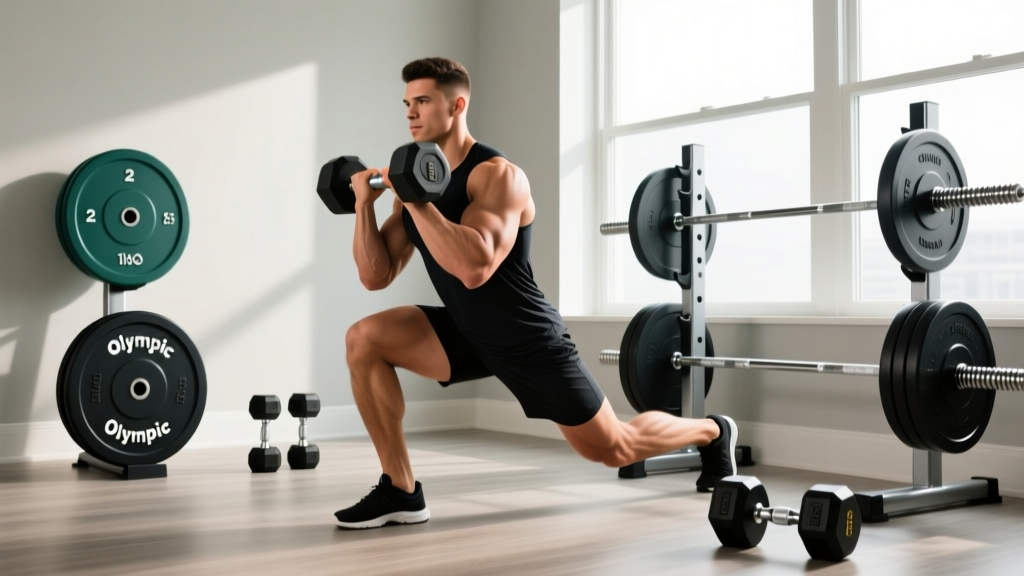
Rubber Hex vs Urethane: 2026 Trends & Best Dumbbell Exercise for Triceps
Analyze the 2026 market shift from rubber hex to urethane dumbbells, using the best dumbbell exercise for triceps as a biomechanical stress test.

The commercial and elite home gym equipment market is undergoing a definitive material revolution in 2026. For the past decade, the rubber hex dumbbell has been the undisputed workhorse of free weight zones. However, recent supply chain optimizations and a growing demand for premium, low-odor home gyms have accelerated the market share of urethane dumbbells. According to Club Industry's recent fitness equipment market analyses, urethane now accounts for over 65% of new premium free-weight installations, slowly cannibalizing the traditional rubber hex segment.
But how do these two materials actually perform under the specific biomechanical demands of isolation training? To evaluate grip security, handle torque, and drop-resistance, we are stress-testing both dumbbell types using what is widely considered the best dumbbell exercise for triceps: the seated single-arm overhead triceps extension, alongside the lying skull crusher. By analyzing the gear through the lens of this specific movement, we can uncover the hidden failure modes and ROI realities of the 2026 free-weight market.
The 2026 Free Weight Market Landscape
The transition from rubber to urethane is not merely an aesthetic upgrade; it is a response to the physical limitations of vulcanized rubber in high-volume environments. In 2026, the pricing gap has narrowed slightly due to improved polyurethane injection molding processes, though a distinct premium remains.
2026 Average Market Pricing (Per Pound)
- Standard Rubber Hex: $1.45 - $1.85 / lb (e.g., Rogue Rubber Hex)
- Virgin Urethane: $2.60 - $3.20 / lb (e.g., Rep Fitness UR-500 Series)
- Premium Competition Urethane: $4.00+ / lb (e.g., Eleiko)
Material Science: Urethane vs. Rubber Hex
Understanding the molecular differences between these materials explains why gym owners are shifting their capital expenditures. Rubber hex dumbbells are typically made from recycled or virgin rubber vulcanized onto a steel core. Urethane, conversely, is a highly engineered polymer that offers superior resistance to abrasion, UV degradation, and chemical breakdown from sweat and cleaning agents.
| Feature | Rubber Hex Dumbbell | Urethane Dumbbell |
|---|---|---|
| Durometer (Hardness) | 65-75 Shore A (Softer) | 85-90 Shore A (Denser) |
| Odor / Off-Gassing | High (Requires weeks to air out) | Virtually Zero |
| Edge Chipping | Prone to tearing at hex points | Highly resistant to gouging |
| Estimated Lifespan | 3-5 Years (Heavy Commercial) | 10+ Years |
The Biomechanical Stress Test: Triceps Isolation
Why use triceps isolation to evaluate dumbbell quality? Compound movements like dumbbell bench presses distribute force across the chest, shoulders, and triceps, masking minor ergonomic flaws in the equipment. Isolation movements, however, place 100% of the load on a single joint and demand extreme grip stability. When consulting ExRx.net's biomechanical exercise directories, the overhead triceps extension requires a secure neutral grip and places high shear stress on the dumbbell handle weld, making it the ultimate diagnostic tool for free-weight engineering.
1. The Overhead Extension (Neutral Grip Torque Analysis)
The seated single-arm overhead extension is arguably the best dumbbell exercise for triceps long-head development. The lifter grasps the dumbbell vertically by the top head or the handle, lowering it behind the neck.
- The Rubber Hex Flaw: Most economy rubber hex dumbbells (like the standard York or CAP Barbell lines) feature unknurled, smooth chrome handles or shallow, poorly machined knurling. When sweat accumulates during a high-rep overhead extension, the neutral grip slips, forcing the lifter to over-grip and prematurely fatigue the forearm flexors before the triceps reach failure.
- The Urethane Advantage: Premium urethane lines (such as the Rep Fitness UR-500 or Eleiko dumbbells) pair their dense polymer heads with medium-deep, aggressively knurled 34mm chrome handles. This deeper knurl bite locks the hand in place, allowing the lifter to focus entirely on the eccentric stretch of the triceps tendon without micro-adjusting the grip at the bottom of the movement.
2. Lying Skull Crushers (Pronated Grip & Drop Safety)
The lying dumbbell skull crusher requires a pronated (overhand) grip. The lifter must kick the dumbbells back from the thighs and stabilize them at arm's length.
- Hex Shape Utility: The primary advantage of the rubber hex shape is that it will not roll away when placed on the floor or resting on the lifter's thighs before the set begins. However, the sharp 120-degree corners of the hex are prime targets for chipping when dropped on hard rubber gym flooring.
- Urethane Shock Absorption: While many urethane dumbbells feature a round or 12-sided (dodecagonal) profile that slightly increases rolling risk, the 85 Shore A durometer of urethane acts as a superior shock absorber. When a lifter fails a heavy skull crusher and must drop the weights to the floor, urethane dissipates the kinetic energy efficiently, protecting both the internal steel core and the gym flooring from structural damage.
Purchasing Framework for 2026: Which Should You Buy?
The decision between rubber hex and urethane ultimately depends on your deployment environment, budget, and tolerance for maintenance.
Choose Rubber Hex If:
- You are outfitting a budget commercial facility or garage gym where capital expenditure is strictly capped below $1.50/lb.
- You prioritize anti-roll geometry for floor-based exercises like renegade rows or heavy plank pull-throughs, where the flat hex edges provide essential stability.
- Ventilation is not an issue. If your gym has industrial HVAC or is located in an outdoor/garage setting, the initial off-gassing odor of vulcanized rubber will not disrupt the user experience.
Choose Urethane If:
- You operate a premium boutique studio or high-end home gym. The zero-odor profile of urethane is non-negotiable for enclosed, climate-controlled spaces.
- You perform heavy isolation movements. If your programming heavily features the best dumbbell exercise for triceps, biceps, and lateral deltoids, the superior knurling and handle integrity of urethane-backed models will directly improve your hypertrophy outcomes by reducing grip fatigue.
- You want a 10-year asset lifespan. While the upfront cost is 60% to 80% higher, urethane's resistance to UV fading, sweat corrosion, and edge chipping means you will not be replacing your 40-60 lb pairs in three years due to aesthetic degradation.
Final Verdict
The 2026 market data is clear: while the rubber hex dumbbell remains a viable, cost-effective entry point, urethane has firmly established itself as the gold standard for serious lifters and commercial operators. By stress-testing these materials against the rigorous demands of triceps isolation movements, the superior handle ergonomics, weld integrity, and drop-dampening properties of urethane justify the premium price tag. For those dedicated to maximizing their arm development and protecting their long-term equipment investment, upgrading to a virgin urethane set is the most logical equipment acquisition of the year.
More gear to consider
All reviews
Beyond the Women's Upper Body Dumbbell Workout: Barbell Collars Guide

Maintaining Beginner Dumbbells for Women: Rubber Hex vs Urethane
Olympic vs Standard Plates: 3 Day a Week Dumbbell Workout Setup

Single-Arm Dumbbell Rows: Adjustable Dumbbell Mistakes & Top Picks

Kettlebell Buying Guide: Cast Iron vs Competition & Walmart Dumbbells