Power Rack vs Squat Rack vs Stand: Best for Lower Chest Dumbbell Work
Compare power racks, squat racks, and stands for your home gym. Discover the best setup for heavy lifting and the perfect dumbbell exercise for lower chest.

The Home Gym Dilemma: Confinement vs. Freedom
When outfitting a garage gym in 2026, the debate between a power rack, a squat rack (half rack), and a squat stand is usually framed around barbell squats and deadlifts. However, a well-rounded hypertrophy program requires far more than just the big three lifts. When programming a targeted dumbbell exercise for lower chest development—such as the decline dumbbell press or the straight-arm pullover—the physical boundaries of your lifting station suddenly become the most important factor in your training environment.
Many lifters invest over a thousand dollars in a fully enclosed power rack, only to realize that the front crossmembers and uprights severely restrict their ability to load heavy dumbbells, position a decline bench, or achieve a full range of motion. Conversely, squat stands offer ultimate freedom but lack the overhead safety required for heavy solo benching. In this head-to-head comparison, we evaluate the Rogue R-3 Power Rack, the REP Fitness PR-4000 Half Rack, and the Titan T-3 Series Squat Stand to determine which setup truly reigns supreme for hybrid barbell and dumbbell training.
Defining the Big Three: Footprints and Architecture
Before diving into the biomechanics of chest training, we must establish the architectural differences between these three categories. Understanding the steel gauge, depth, and open-vs-closed design is critical for spatial planning.
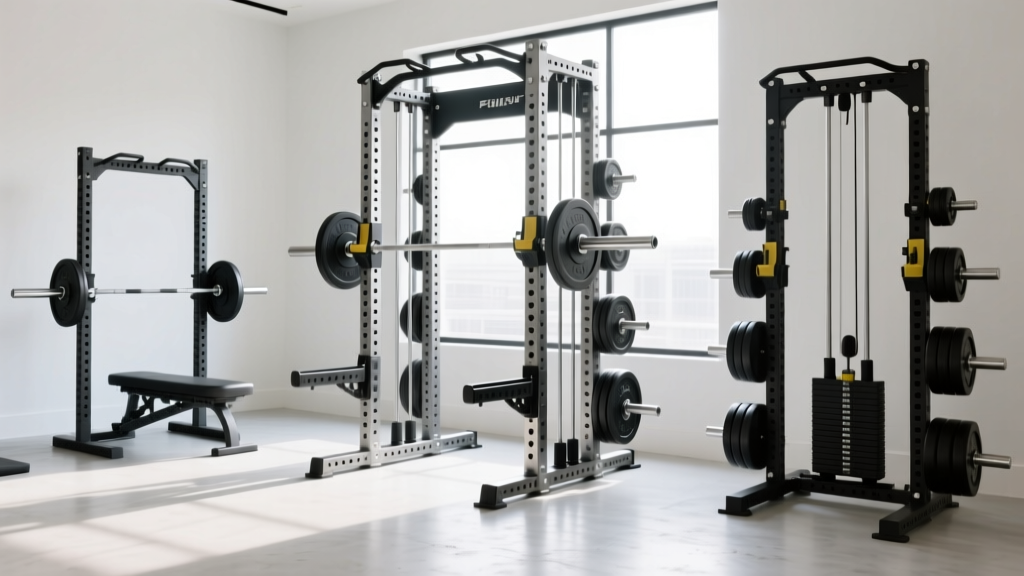
- Power Rack (Full Cage): Features four uprights connected by crossmembers on all sides. It offers the highest safety rating for solo lifters but creates a confined 'cage' that can impede dumbbell movement and bench positioning.
- Squat Rack (Half Rack): Utilizes four uprights but leaves the front completely open. It often includes weight storage horns on the back, acting as a counterbalance. This design allows easy bench entry while maintaining overhead spotter arms.
- Squat Stand: Consists of two independent uprights with a wide base. It takes up the least visual space and offers zero restrictions on bench placement, but it relies entirely on the spotter arms' structural integrity and the lifter's discipline for safety.
Expert Insight: The Bench Clearance Rule
When evaluating any rack for dumbbell work, measure the interior width between the uprights. A standard Olympic bench is 12 inches wide. To comfortably perform dumbbell presses without your elbows or the dumbbell heads striking the uprights, you need a minimum interior clearance of 43 inches. All three contenders in this comparison meet this baseline, but the depth of the rack dictates how far back you can position a decline bench.
Head-to-Head Matrix: Specs, Pricing, and Footprints
The following matrix compares the 2026 baseline configurations for three of the most popular 2x3-inch, 11-gauge steel setups on the market. Pricing reflects base MSRP before shipping or attachments.
| Feature | Rogue R-3 Power Rack | REP PR-4000 Half Rack | Titan T-3 Squat Stand |
|---|---|---|---|
| Footprint | 49 in. x 43 in. | 47 in. x 47 in. | 48 in. x 48 in. |
| Upright Height | 90 in. | 90 in. | 41 in. or 50 in. |
| Base Price (Approx.) | $1,250 | $949 | $379 |
| Dumbbell Loading Ease | Poor (Front crossmember blocks) | Good (Open front) | Excellent (Zero obstruction) |
| Barbell Safety Rating | 10/10 (Enclosed) | 8/10 (Open front) | 5/10 (Stand-alone arms) |
The Lower Chest Dumbbell Test: Biomechanics vs. Steel
To understand why the rack choice matters, we must look at the biomechanics of chest isolation. According to the exercise directory at ExRx.net, the decline dumbbell press specifically targets the sternal (lower) head of the pectoralis major. Furthermore, research indexed by the National Center for Biotechnology Information (NCBI) demonstrates that dumbbell variations allow for a significantly greater range of motion and superior convergent adduction compared to barbells, making them essential for maximizing lower chest hypertrophy.
However, executing this movement requires specific spatial accommodations:
1. The Decline Bench Problem
Dedicated decline benches (like the Titan Fitness Decline Bench) feature wheels on one end and a drag handle on the other. In a Power Rack, the front bottom crossmember acts as a physical barrier. You cannot simply roll the bench into the center of the cage; you must lift the entire bench over the 2x3-inch steel tubing. If you have a bad lower back, this is a non-starter. The Half Rack and Squat Stand eliminate this issue entirely, allowing you to roll the bench precisely into position.
2. The Heavy Dumbbell 'Kick-Up'
When lifting 100+ lb dumbbells for lower chest work, you cannot clean them from the floor. You must sit on the bench, rest the dumbbells on your knees, and 'kick' them up into position one at a time. As noted by hypertrophy researchers at Stronger By Science, maximizing the stretched position of the pec is vital for muscle growth. In a confined power rack, the fear of clipping the uprights or the safety spotter arms with the dumbbell heads during the deep stretch of a decline press often causes lifters to subconsciously restrict their range of motion. Squat stands provide the psychological and physical freedom to drop the dumbbells deep into the stretch without fear of metal-on-metal collisions.
Warning: The Dumbbell Spotter Arm Gap
While squat stands offer superior freedom for the dumbbell exercise for lower chest, they present a massive safety flaw. Standard spotter arms on squat stands are typically 18 to 24 inches long. When performing a decline dumbbell press, your arms are positioned wider than a barbell grip. If you fail a rep, the dumbbell will fall outside the spotter arms, directly onto your torso or face. Never use squat stands for heavy, unassisted dumbbell pressing to failure.
Safety and Spotter Arm Limitations
If your training involves heavy barbell bench pressing alongside your dumbbell work, safety must dictate your purchase.
- Rogue R-3 Power Rack: The gold standard for solo lifters. The pin-pipe safety systems span the entire 43-inch depth of the rack. If you fail a barbell bench press, the rack catches it securely. However, the enclosed nature makes dropping heavy dumbbells after a grueling set of pullovers awkward and potentially damaging to the rack's interior finish.
- REP PR-4000 Half Rack: The ultimate compromise. The open front allows for easy dumbbell kick-ups and bench maneuvering, while the rear uprights provide a stable anchor for long, 24-inch sandwich J-cups and spotter arms. It is the most versatile option for lifters who alternate between heavy barbell benching and high-volume dumbbell isolation.
- Titan T-3 Squat Stand: Excellent for squats and light dumbbell work, but highly unstable for heavy benching. The 48x48 base is wide, but without rear weight storage to act as a counterbalance, a failed barbell bench press dropped onto the front spotter arms can theoretically tip the stand forward if not bolted down.
Expert Verdict: Which Should You Buy in 2026?
The 'best' setup depends entirely on your training split, spatial constraints, and reliance on dumbbells versus barbells.
Choose the Power Rack (Rogue R-3) If:
You are a powerlifter or strength-focused lifter who prioritizes heavy, solo barbell bench pressing and squatting above all else. You are willing to sacrifice some convenience when loading dumbbells for isolation work in exchange for maximum structural safety.
Choose the Half Rack (REP PR-4000) If:
You are a bodybuilder or hybrid athlete who values the dumbbell exercise for lower chest and upper back hypertrophy just as much as heavy barbell lifts. The open front design removes the friction of loading heavy dumbbells and positioning decline benches, while still providing adequate spotter arms for safe barbell pressing. This is the top recommendation for the modern hypertrophy-focused home gym.
Choose the Squat Stand (Titan T-3) If:
You have a strict budget under $500, limited ceiling height (opting for the 41-inch uprights), or a very small footprint. You primarily use dumbbells for chest work and only use the barbell for squats and overhead presses. You must be disciplined enough to never bench press heavy without a human spotter.
Frequently Asked Questions
Can I do dumbbell pullovers inside a power rack?
Yes, but it requires caution. The straight-arm dumbbell pullover is an excellent movement for the lower chest and lats. However, because the movement requires the dumbbell to travel backward over your head, the rear crossmembers or uprights of a shallow power rack may block the path of the weight. Ensure your power rack has a depth of at least 43 inches to accommodate the full range of motion.
Do I need a decline bench for lower chest development?
Not necessarily. While a dedicated decline bench is optimal, you can simulate the angle by placing a thick bumper plate under the foot-end of a standard flat bench. This creates a slight decline, allowing you to perform the dumbbell exercise for lower chest without purchasing a bulky, single-purpose piece of equipment.
How thick should the spotter arms be for dumbbell pressing?
Look for spotter arms with a minimum thickness of 2x2 inches and a high-density UHMW plastic lining. The plastic lining is crucial; when you drop heavy hex or urethane dumbbells onto the safety arms after a failed set, the plastic absorbs the shock, protecting both your equipment and your wrists from severe vibration feedback.
More gear to consider
All reviews
Standard vs Olympic Weight Plates: Setup & Dumbbell Drag Curl Tips

Loadable Dumbbell Care: Surviving the Leg Press with Dumbbells

Power Rack vs Squat Rack vs Stand: Arnold Dumbbell Press Setup
Bowflex SelectTech 552 Dumbbells and Stand vs 2026 Rivals
EZ vs Straight Bar Care: Longevity and the Dumbbell Isometric Hold