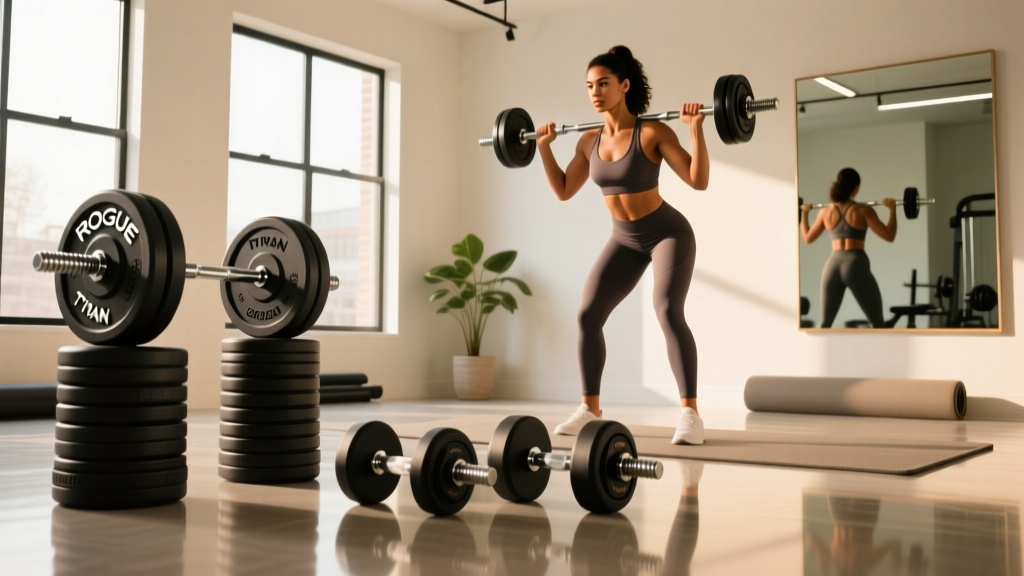
Power Rack vs Squat Stand: Full Body Dumbbell Workout Female Upgrade
Transitioning from a full body dumbbell workout? Compare power racks, squat racks, and squat stands to find the best home gym upgrade for female lifters.

When searching for the perfect full body dumbbell workout, female lifters often find incredible initial success using adjustable sets like the Nuobell or PowerBlock. Dumbbells are phenomenal for building foundational strength, correcting unilateral imbalances, and mastering movement patterns. However, as your strength adapts, you will inevitably hit a progression ceiling. Adjustable dumbbells typically max out between 70 and 90 pounds, and fixed dumbbells become prohibitively expensive and space-consuming to collect. To continue applying progressive overload—a core tenet of muscle adaptation highlighted by the National Strength and Conditioning Association (NSCA)—you need to integrate barbell movements, heavy rack pulls, and safe solo-lifting environments into your home gym.
This is where the great home gym debate begins: Power Rack vs. Squat Rack vs. Squat Stand. Upgrading your space isn't just about buying a barbell; it is about investing in a structural rig that supports your evolving programming, safely stores your heavy dumbbells, and fits your spatial constraints. In this 2026 comprehensive comparison, we break down the exact dimensions, pricing, and real-world applications of each rig type to help you make the ultimate home gym upgrade.
💡 The Dumbbell-to-Barbell Bridge: Racks aren't just for barbells. A properly configured rack allows you to perform heavy dumbbell step-ups, rack-supported RDLs, and provides essential bolt-on shelving to store 50+ lb dumbbells safely off the floor, protecting your joints from unnecessary bending and lifting.Power Racks: The Ultimate Enclosure for Solo Lifters
A power rack (often called a power cage) is a four-upright steel enclosure designed to catch a dropped barbell from any angle. For female lifters training alone at home, the power rack is the gold standard for safety and versatility. According to extensive testing by Garage Gym Reviews, a high-quality power rack is the single most important investment for long-term home gym longevity.
Top 2026 Models & Specifications
- Titan T-3 Series Power Rack: Priced around $449, this rack features 3x3-inch 11-gauge steel uprights, a 1,000 lb weight capacity, and a footprint of roughly 48x48 inches. It includes Westside hole spacing in the bench press zone, allowing for precise micro-adjustments on heavy dumbbell floor presses or barbell benching.
- Rogue Echo 2.0 Power Rack: Sitting at a premium price point of $695+, the Echo offers unmatched build quality, laser-cut hole numbering, and compatibility with Rogue’s extensive ecosystem of dumbbell storage shelves and lat-pulldown attachments.
Pros and Cons of Power Racks
Pros: Unmatched safety with full-length safety straps or pin-pipe safeties. You can fail a squat or bench press without a spotter. They also serve as an anchor point for resistance bands and suspension trainers, adding variety to your full-body routines.
Cons: The footprint is massive. A standard 4x4 power rack consumes 16 square feet of floor space and requires a ceiling height of at least 84 to 90 inches. They are also the most expensive option.
Half Racks (Squat Racks): The Open-Concept Compromise
Often referred to interchangeably as squat racks or half racks, these rigs typically feature two front uprights for the barbell and two shorter rear uprights that double as weight plate storage. This open-concept design is highly favored by athletes who perform dynamic movements that require stepping forward out of the rack, such as heavy dumbbell lunges, step-ups, or Olympic lifts.
Top 2026 Models & Specifications
- Rep Fitness PR-4000 Half Rack: Starting around $599, this rig offers a 3x3-inch footprint with an open front. The rear storage horns keep your bumper plates organized, freeing up floor space for your dumbbell circuits.
- Titan T-2 Half Power Rack: A budget-friendly alternative at roughly $299, featuring 2x2-inch steel. While slightly less robust than the 3x3 models, it easily handles the 300-400 lb loads typical of intermediate female lifters transitioning from dumbbells.
Pros and Cons of Half Racks
Pros: Better weight plate storage than squat stands. The open front provides more breathing room and spatial awareness during complex dumbbell-and-barbell supersets.
Cons: Safety spotter arms must be purchased separately and attached to the front uprights. If you fail a rep forward of the spotter arms, the barbell will hit the floor.
Squat Stands: The Minimalist Footprint
Squat stands consist of two independent uprights designed solely to hold the barbell. They are the ultimate space-saving solution for apartment dwellers, garage gyms shared with vehicles, or those on a strict budget. However, they require strict attention to safety protocols, especially when lifting heavy without a spotter.
Top 2026 Models & Specifications
- Rogue SML-1 Monster Lite Squat Stands: Priced at $295, these 90-inch tall stands feature 3x3-inch 11-gauge steel and a UHMW plastic-lined J-cup to protect your barbell knurling. They must be bolted to a platform or used with heavy spotter arms to prevent tipping.
- Fitness Reality 810XLT Super Max: An entry-level Amazon favorite at roughly $199. It features a wider base for stability but uses thinner steel and lower-grade hardware. It is suitable for light-to-moderate dumbbell and barbell work but not recommended for heavy maximal testing.
Head-to-Head Comparison Matrix
| Feature | Power Rack | Half Rack | Squat Stands |
|---|---|---|---|
| Average 2026 Price | $450 - $800+ | $300 - $650 | $199 - $350 |
| Footprint (W x D) | 48" x 48" (Standard) | 48" x 36" | 49" x 30" |
| Safety for Solo Lifting | Excellent (Enclosed) | Good (With extended arms) | Poor (High tip risk) |
| Dumbbell Storage | High (Bolt-on shelves) | Medium (Rear horns) | None (Floor only) |
| Pull-Up Bar Included? | Yes | Yes | Rarely |
Decision Framework: Which Rig Fits Your Space and Goals?
Choosing the right equipment requires an honest assessment of your training environment and your programming trajectory. The experts at Girls Gone Strong frequently emphasize that the best equipment is the one that removes friction from your daily workout routine. Here is how to decide based on your specific scenario.
Scenario A: The Garage Gym (Space is Plentiful)
If you have a dedicated two-car garage or a basement with 9-foot ceilings, buy a Power Rack. The Titan T-3 or Rogue Echo will serve you for a lifetime. The enclosed safety straps mean you can confidently attempt heavy barbell squats, hip thrusts, and bench presses without the anxiety of getting pinned under the weight. Furthermore, you can bolt dumbbell shelves to the uprights, transforming the rack into a centralized storage hub for your entire dumbbell collection.
Scenario B: The Apartment or Spare Bedroom
If you are training in a 10x10 spare bedroom or a shared living space, choose Squat Stands. Look for folding squat stands (like the PRx Profile) that mount to the wall and fold flat when not in use, or opt for the Rogue SML-1 stands which can be pushed into a corner. You will need to be highly disciplined about using floor protectors and managing your weight selection to ensure safety.
Scenario C: The Heavy Dumbbell & Kettlebell User
If your programming relies heavily on dumbbell step-ups, Bulgarian split squats, and kettlebell swings, a Half Rack is your best compromise. The open front allows you to step forward and laterally without hitting a steel upright, while the rear storage horns keep your bumper plates and heavy kettlebells organized and off your workout floor.
Safety First: Spotter Arms and Straps
Regardless of which rig you choose, the method of catching a failed lift is paramount. In 2026, the industry standard has shifted away from steel pin-pipe safeties (which can damage your barbell and create loud, jarring impacts) toward UHMW-lined safety straps. These heavy-duty nylon straps catch the barbell quietly, protect the knurling, and are significantly easier for smaller lifters to adjust between exercises. If you are transitioning from a dumbbell-only routine, do not overlook the importance of easily adjustable safeties; if it takes five minutes to move your spotter arms, you will skip doing it, compromising your safety.
"The transition from dumbbells to barbell and rack-based training is a milestone in a female lifter's journey. It signifies a shift from general fitness to targeted, progressive strength development. Investing in the right rack is an investment in your long-term physical autonomy."
Final Verdict
Upgrading from a pure dumbbell setup to a rack-based system opens up an entirely new universe of progressive overload, heavy compound movements, and organized storage. While the power rack remains the undisputed king of safety and versatility, half racks and squat stands offer viable, space-conscious alternatives. Evaluate your ceiling height, measure your floor space, and choose the rig that will safely support your strength journey for the next decade.
More gear to consider
All reviews
Power Rack vs Squat Stand: Home Bicep Workout Without Dumbbells
What Dumbbell Exercise Is Good for Triceps? Top Moves & Loadable Dumbbell Maintenance
Organizing Your Dumbbell Curl Weight Collection: Storage & Layout
Power Rack vs Squat Rack vs Stand: Dumbbell Triceps & Heavy Lifts

Loadable Dumbbells for the Dumbbell Frog Pump: 2026 Value Guide