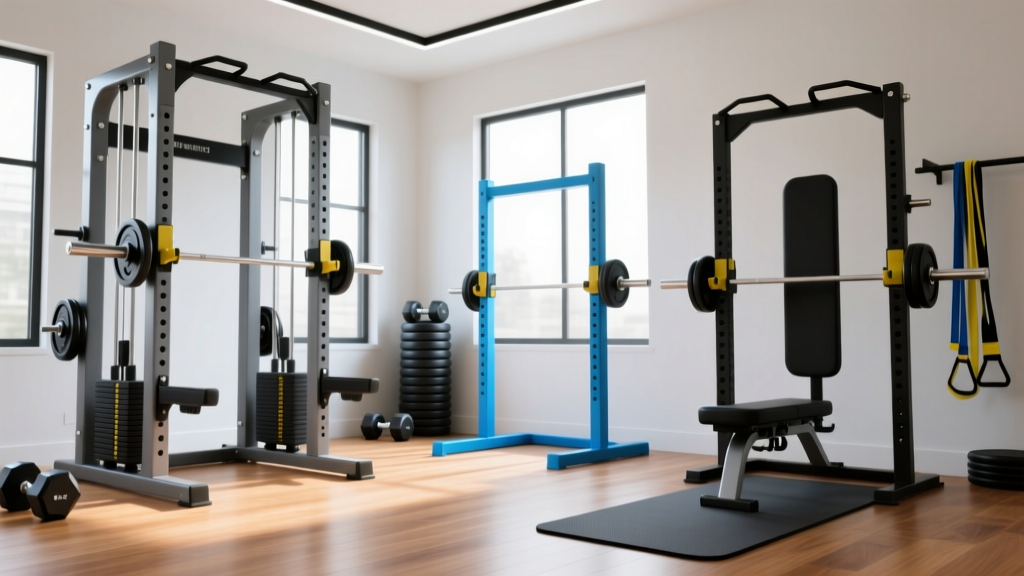
Power Rack vs Squat Rack vs Stand: Beyond 1 Dumbbell Exercises
Compare power racks, squat racks, and squat stands. Find the best setup to upgrade from 1 dumbbell exercises to heavy barbell training in 2026.

The Progression: Moving Past 1 Dumbbell Exercises
Mastering 1 dumbbell exercises—such as heavy single-arm rows, unilateral goblet squats, and suitcase deadlifts—builds exceptional core stability and exposes left-to-right strength imbalances. However, as you approach the 100-pound mark with a single dumbbell, grip fatigue and core stabilization become the limiting factors before your prime movers actually fail. To unlock true bilateral strength and central nervous system (CNS) adaptation, you must transition to barbell training. That transition demands a proper racking system.
In 2026, the home gym market offers three distinct tiers of barbell housing: Squat Stands, Squat Racks (Half Racks), and Power Racks (Full Cages). Choosing the wrong footprint or steel gauge can lead to catastrophic equipment failure or a permanently damaged garage floor. Below, we break down the exact specifications, pricing, and failure points of each category to help you make an informed upgrade.
Upgrading from unilateral dumbbell work to a barbell rack isn't just about adding weight; it's about unlocking central nervous system adaptation through absolute axial loading and safe failure-point management.
Head-to-Head Comparison Matrix
Before diving into the nuances of steel gauge and attachment ecosystems, here is a high-level overview of how these three categories compare for the modern home gym builder.
| Feature | Squat Stand | Squat Rack (Half Rack) | Power Rack (Full Cage) |
|---|---|---|---|
| Footprint | ~24x48 inches | ~48x48 inches | ~49x49 or 53x53 inches |
| Avg. Price (2026) | $350 - $500 | $600 - $850 | $700 - $1,500+ |
| Safety Mechanism | External Spotter Arms | Internal/External Pins | Internal Straps/Pipes |
| Weight Capacity | 800 - 1,000 lbs | 800 - 1,000 lbs | 1,000 - 1,500 lbs |
| Best For | Small spaces, strict budgets | Olympic lifts, open feel | Heavy solo lifting, attachments |
Squat Stands: The Minimalist's Anchor
Squat stands are essentially two independent, heavy-duty uprights designed to hold a barbell. They are the logical next step when your living space simply cannot accommodate a full cage.
Top Contender: Rogue SML-1 71" Monster Lite
Priced around $425 in 2026, the Rogue SML-1 remains the gold standard for squat stands. It features 3x3-inch 11-gauge steel tubing and a 1,000-pound capacity. The 71-inch height is specifically designed to clear standard 8-foot ceilings while still allowing for overhead pressing.
⚠️ Critical Safety Note: When using squat stands for heavy bench pressing, always utilize spotter arms that extend at least 12 inches past your chest line. A missed rep on a 71-inch squat stand without extended safety arms is a leading cause of home gym injuries.The Drawback: According to testing by Garage Gym Reviews, squat stands lack the lateral stability of a fully bolted-together cage. If you fail to bolt the stand to your concrete floor or a heavy plywood platform, aggressive re-racking can cause the entire unit to tip forward.
Squat Racks (Half Racks): The Open-Air Compromise
Often confused with squat stands, a true squat rack (or half rack) features four uprights, but the front pair is significantly shorter than the rear pair. This design provides a stable base and built-in weight storage on the rear uprights while leaving the front open for Olympic lifts or stepping out with heavy dumbbells.
Top Contender: Titan Fitness X-3 Half Rack
Retailing for roughly $699, the Titan X-3 offers 3x3-inch 11-gauge steel and a massive attachment ecosystem. The open front allows you to perform the heavy compound movements you couldn't safely execute during your 1 dumbbell exercises days, like barbell front squats and push presses, without hitting the uprights.
- Pros: Excellent for Olympic weightlifting (cleans and snatches), integrated plate storage, highly stable footprint.
- Cons: Takes up more depth than a squat stand; safety spotter arms must be purchased separately or as part of a bundle.
Power Racks: The Ultimate Fortress
A power rack (full cage) features four full-height uprights connected by crossmembers at the top and bottom. This creates an enclosed environment where safety straps or pin-pipe safeties can be mounted inside the working area.
Top Contender: Rep Fitness PR-4000
The PR-4000 (starting at $699) has disrupted the 2026 market with its 1-inch hole spacing throughout the entire upright and a built-in multi-grip pull-up bar. As noted in BarBend's comprehensive rack breakdown, the enclosed cage design means that if you drop a barbell, it stays inside the rack rather than bouncing into your drywall.
Attachment Ecosystems and Hardware Sizing
When buying a power rack, pay strict attention to the hardware hole sizing. The industry is split between 5/8-inch and 1-inch holes.
- 1-Inch Holes: Found on premium racks like the PR-4000 and Rogue Monster series. Offers maximum shear strength and compatibility with a massive third-party attachment market.
- 5/8-Inch Holes: Common on budget racks. Limits your attachment options and requires proprietary J-cups and safety straps.
Understanding Steel Gauge and Tubing Dimensions
Do not let marketing jargon obscure the physics of your equipment. The structural integrity of your rack dictates your safety.
| Steel Gauge | Thickness (Inches) | Common Application |
|---|---|---|
| 7-Gauge | 0.179" | Commercial gyms, Rogue Monster series |
| 11-Gauge | 0.119" | Premium home gyms (The 2026 Sweet Spot) |
| 14-Gauge | 0.083" | Budget Amazon racks (Avoid for heavy lifting) |
Furthermore, ensure the J-cups feature UHMW (Ultra-High Molecular Weight) plastic lining. This protects the aggressive knurling on your barbell from being shaved off every time you re-rack a heavy squat.
Step-by-Step Decision Framework
Use this framework to finalize your purchase based on your specific environmental constraints:
- Measure Ceiling Height: If your ceiling is exactly 84 inches (7 feet), you must buy a 71-inch squat stand or a specialized short power rack (like the Rogue S-1 or a 72-inch PR-4000). Standard 90-inch power racks will punch through your drywall.
- Assess Flooring: Squat stands must be bolted to a wooden platform or concrete floor using wedge anchors. If you are renting and cannot drill into the concrete, you must buy a power rack or half rack with a rear weight-storage base to act as a counterbalance.
- Define Your Training Style: If your routine heavily features Olympic lifts (power cleans, snatches), avoid full power racks with low top crossmembers. Opt for a half rack or squat stands to allow the barbell to travel in a straight vertical path without obstruction.
Expert Verdict
Transitioning from 1 dumbbell exercises to a barbell-centric routine is a massive milestone in your fitness journey. If budget and space are your primary constraints, the Rogue SML-1 Squat Stand is an indestructible, minimalist choice—provided you can bolt it down. For lifters who want the safety of an enclosed cage without sacrificing the ability to perform dynamic Olympic movements, a Half Rack like the Titan X-3 strikes the perfect balance. However, for 90% of home gym owners training solo in 2026, a 3x3-inch 11-gauge Power Rack remains the undisputed king of safety, versatility, and long-term value.
More gear to consider
All reviews
Neoprene Dumbbells: Best Picks for Dumbbell Upper Body Routines

Best Adjustable Dumbbells for Beginner Friendly Dumbbell Exercises

Double Arm Dumbbell Row: Complete Home Setup & Form Guide

Bumper vs Iron Plates: Single Arm Overhead Dumbbell Extensions Space
Olympic Barbell Weight, Knurling & Dumbbell Hammer Preacher Curl
