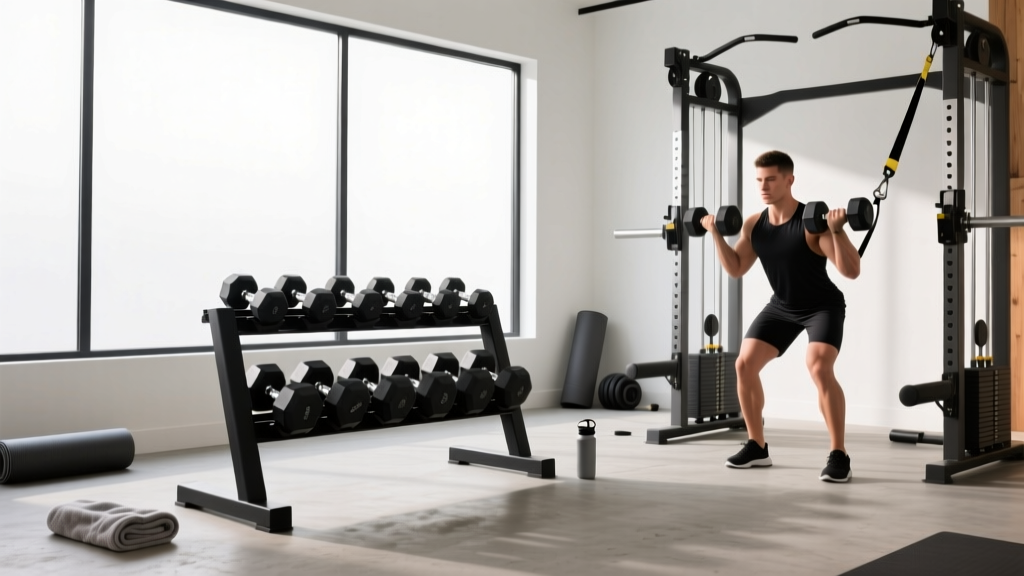
Quadriceps Dumbbell Workout Mistakes Using Neoprene Home Weights
Fix your quadriceps dumbbell workout. Troubleshoot common mistakes, grip issues, and programming errors when using neoprene coated dumbbells at home.

Building a highly effective quadriceps dumbbell workout in a home gym often begins with the most accessible equipment available: neoprene-coated dumbbells. Brands like CAP Barbell and Amazon Basics dominate the entry-level market, pricing their neoprene sets between $1.20 and $1.50 per pound. However, when lifters attempt to transition these brightly colored, lightweight tools from general toning to serious lower-body hypertrophy, they inevitably hit a physiological and biomechanical wall.
Neoprene dumbbells are typically capped at 15 to 20 pounds per hand, with rare, exceptionally bulky 50-pound exceptions. Furthermore, the synthetic rubber coating fundamentally alters the kinematics of your grip. If you are struggling to see quad growth, experiencing wrist pain, or feeling like your legs aren't being challenged, you are likely falling victim to an equipment-programming mismatch. This troubleshooting guide will diagnose the exact failure points of using neoprene weights for leg day and provide the 2026 corrective protocols to force adaptation.
The Biomechanical Reality of Neoprene Dumbbells
Before troubleshooting your routine, you must understand the physical limitations of the tool. Neoprene (polychloroprene) is a closed-cell foam rubber. While excellent for drop-resistance and floor protection, it adds significant girth to the handle.
Equipment Insight: A standard Olympic barbell has a shaft diameter of 28mm. Most 10lb to 20lb neoprene dumbbells feature a handle diameter of 35mm to 42mm, including the coating wrap. This seemingly minor increase forces the forearm flexors into a state of constant pre-fatigue before the quadriceps ever reach mechanical failure.When selecting a neoprene coated dumbbell for home use, most buyers prioritize floor protection and noise reduction over biomechanical performance. This is perfectly fine for upper-body isolation movements, but compound lower-body exercises require a different approach to overcome the grip bottleneck.
4 Critical Mistakes in Your Quadriceps Dumbbell Workout
1. Relying on Mechanical Tension Over Metabolic Stress
The most common error is treating a 20-pound neoprene dumbbell like a 60-pound iron hex dumbbell. Lifters will perform standard goblet squats for 3 sets of 10, wondering why their quads aren't growing. Because the load is too light to create high-threshold motor unit recruitment via mechanical tension, the muscle simply isn't receiving a growth stimulus. According to foundational hypertrophy research, when mechanical tension is low, you must maximize metabolic stress and cellular swelling to trigger muscle growth source. If you aren't training to absolute failure or using advanced tempo techniques, light neoprene weights will not build your quads.
2. The Goblet Squat Wrist Extension Failure
Holding a thick, rubber-coated dumbbell vertically against your chest forces the wrists into extreme extension. As the set progresses and fatigue sets in, the thick neoprene handle slips down the palm, placing immense shearing force on the radiocarpal joint. The American Council on Exercise (ACE) notes that excessive wrist extension under load is a primary catalyst for tendonitis and grip failure source. When your wrists give out on rep 12, but your quads could have done 20, the exercise is useless for leg development.
3. Ignoring the Bilateral Deficit in Split Stances
Unilateral training is highly recommended for correcting imbalances, but holding two 20-pound neoprene dumbbells for Bulgarian split squats alters your center of mass. The bulky physical size of a 20lb neoprene dumbbell often causes the weights to bump against the thighs or knees during the descent, forcing the lifter to widen their stance unnaturally. This shifts the tension away from the quadriceps and onto the adductors and glutes.
4. Overlooking Neoprene Degradation and Slippage
Neoprene is porous. Over 12 to 18 months of heavy home use, the coating absorbs sweat, skin oils, and chalk, creating a slick, degraded surface. During walking lunges or dynamic step-ups, this microscopic slippage forces the lifter to squeeze the handle 30% harder, accelerating forearm fatigue and ruining the mind-muscle connection with the quads.
Troubleshooting Matrix: Exercise vs. Neoprene Limitation
| Exercise | Primary Failure Point | The 2026 Corrective Fix |
|---|---|---|
| Goblet Squat | Wrist extension pain; thick grip gives out before quads. | Switch to dual-dumbbell front rack or heel-elevated sissy squats. |
| Bulgarian Split Squat | Bulky dumbbells hit the knee; balance instability. | Implement 1.5 rep style and 4-second eccentric tempos. |
| Walking Lunges | Sweaty neoprene coating causes grip slippage. | Use lifting straps or transition to stationary reverse lunges. |
| Dumbbell Step-Ups | Insufficient load for mechanical tension on the lead leg. | Add a 3-second isometric pause at the top of the movement. |
The Metabolic Quad Protocol for Light Weights
To build an effective quadriceps dumbbell workout with sub-30-pound neoprene weights, you must manipulate time under tension (TUT) and leverage unilateral mechanical disadvantages. The National Strength and Conditioning Association (NSCA) highlights that unilateral movements significantly increase the neural drive to the working limb, compensating for lighter absolute loads source.
Stop counting reps. Start counting seconds. With neoprene home weights, a 10-rep set of standard squats is a warmup. A 10-rep set of 4-second eccentrics is a growth stimulus.
The 2026 Heel-Elevated Cyclist Squat Protocol
This specific movement isolates the vastus medialis and rectus femoris while entirely removing the thick-grip wrist issue associated with goblet squats.
- Setup: Place two 10lb or 15lb neoprene dumbbells on the floor. Stand with your heels elevated on a 1-inch thick weight plate or a sturdy wooden wedge. Hold the dumbbells at your sides (suitcase grip).
- The Descent (Eccentric): Lower yourself over exactly 4 seconds. Keep your torso completely upright. The heel elevation forces the knees to track forward, maximizing quad stretch.
- The Hole (Isometric): Pause for 2 seconds at the absolute bottom. Do not bounce.
- The Ascent (Concentric): Drive up explosively (1 second) but stop just short of full knee lockout to maintain constant tension on the quad.
- Volume: Perform 3 sets to absolute technical failure. Expect to reach failure between 12 and 18 reps.
Equipment Care: When to Retire Your Neoprene Set
Neoprene is not a lifetime material. Unlike cast iron or urethane, which can last decades, neoprene coated dumbbells for home use typically have a functional lifespan of 3 to 5 years before the coating begins to peel, flake, or become permanently slick. If you notice black rubber residue on your hands or your floors after a heavy quad workout, the chemical bonds in the polychloroprene are breaking down due to UV exposure and sweat acidity.
At this stage, the dumbbells become a slipping hazard during heavy unilateral lunges. If your set is degrading, consider upgrading to a set of urethane-coated hex dumbbells. While urethane costs slightly more upfront (averaging $2.00 to $2.50 per pound in 2026), it features a much thinner, denser coating that preserves the handle diameter, allowing for a secure grip during high-tension leg workouts without the rapid degradation associated with foam-based neoprene.
Summary: Adapting to Your Equipment
A successful quadriceps dumbbell workout doesn't require a massive commercial gym; it requires intelligent programming that respects the limitations of your gear. By abandoning heavy, low-rep strength paradigms and embracing metabolic stress, strict tempos, and joint-friendly grips, you can push your quads to their absolute limits using nothing but a modest set of neoprene home dumbbells.
More gear to consider
All reviews
Dumbbell Skull Crusher Alternative: Barbell Weight & Knurl Guide

EZ Curl Bar vs Straight Bar & Dumbbell Shrugs Traps Guide

Barbell Collars: Safe Setup for Back Exercises with Dumbbells

Dumbbell Chest Press Muscles Worked & Budget Storage Rack Breakdown
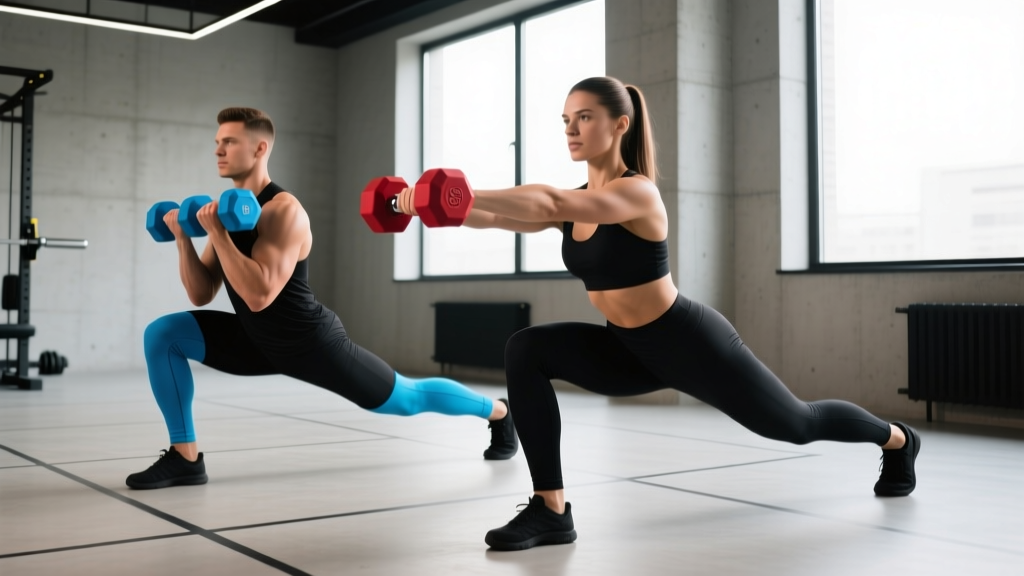
Bulgarian Split Squat One or Two Dumbbells: Neoprene Troubleshooting