Power Rack vs Squat Stand for Various Exercises with Dumbbells
Compare power racks, half racks, and squat stands to find the best setup for various exercises with dumbbells. Expert specs, pricing, and safety tips.

The Dumbbell Dilemma: Why Your Rack Choice Matters
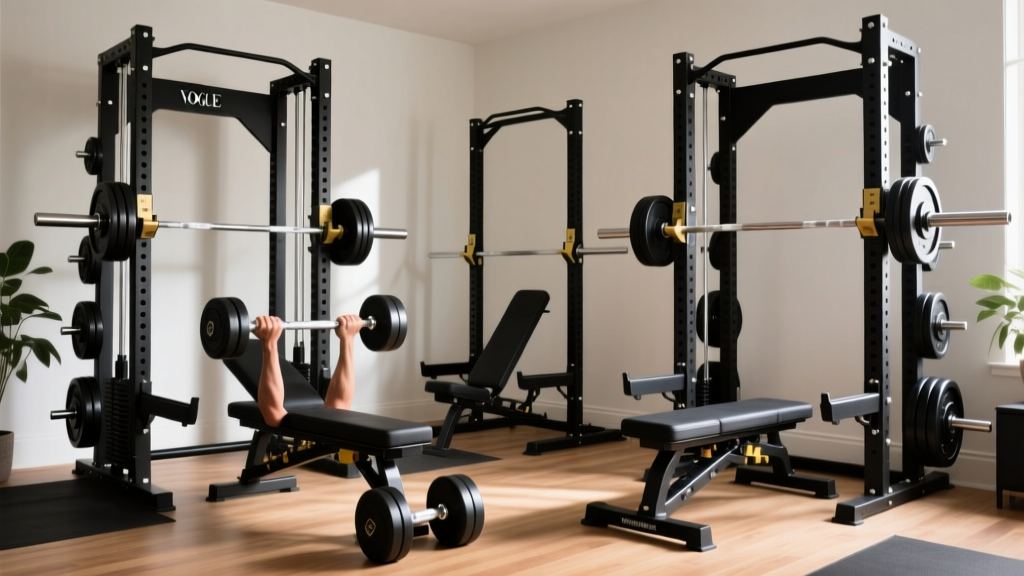
When most lifters invest in a home gym rack, the immediate focus is on barbell movements: back squats, overhead presses, and conventional deadlifts. However, a well-rounded hypertrophy and strength program requires performing various exercises with dumbbells—from heavy incline presses and unilateral step-ups to rack pulls and cable-pulley isolations. The problem? Most racks are engineered around the 7-foot barbell, leaving dumbbell practitioners to deal with restricted clearance, unsafe spotter arm placements, and incompatible bench footprints.
If your 2026 training split relies heavily on free-weight dumbbell work, choosing between a full power rack, an open squat rack (half rack), or a minimalist squat stand will dictate your safety, range of motion, and attachment ecosystem. Below, we break down the exact spatial geometry, steel gauges, and failure modes of each setup to help you make an informed decision.
Contender 1: The Power Rack (Full Cage)
The power rack is a fully enclosed, four-post (or six-post) steel cage. Premium models in 2026, such as the Rep Fitness PR-4000 or the Rogue RML-390F, are constructed from 11-gauge 3x3-inch steel with 1,000 lb+ weight capacities.
Pros for Dumbbell Training
- Maximum Safety: Full-length pin-pipe safeties or heavy-duty nylon straps catch dropped dumbbells during heavy floor presses or incline work.
- Attachment Ecosystem: Cages support lat pulldown towers, functional trainer cable systems, and landmine attachments, effectively turning your dumbbell rack into a full commercial gym.
- Weight Storage: Most cages feature built-in horn storage for urethane or rubber hex dumbbells, keeping your workout space organized.
Cons & Edge Cases
- Internal Clearance Issues: Standard cages have a 43-inch internal width. A typical adjustable FID (Flat/Incline/Decline) bench is 28 inches wide at the base but features a 12-inch top pad. When performing heavy 100 lb dumbbell incline presses, your elbows or the dumbbell heads will strike the uprights. You must seek out a cage with a 47-inch to 49-inch internal width.
- Footprint: Requires a minimum of 48x48 inches of dedicated floor space, plus 12 inches of clearance for plate loading.
Contender 2: The Squat Rack (Half Rack / Open Frame)
Half racks, like the Titan T-2 Series or Rogue Echo Half Rack, feature two main front uprights and an open interior. They often include rear weight storage horns that double as counterbalance stabilizers.
Pros for Dumbbell Training
- Unobstructed Lateral Movement: Because there are no rear posts, exercises like dumbbell lateral lunges, Bulgarian split squats, and wide-stance goblet squats can be performed without the risk of backing into a steel post.
- Bench Flexibility: You can easily slide an adjustable bench in and out at odd angles for single-arm dumbbell rows or seated shoulder presses without fighting a cage door.
Cons & Edge Cases
- Safety Arm Limitations: Spotter arms extend forward. If you fail a heavy dumbbell bench press and drop the weights backward or outward, the spotter arms may not catch the dumbbells, risking shoulder or chest injuries.
- Tipping Hazards: Racking heavy 120 lb dumbbells on the J-cups of a half rack without adequate rear counterbalance weight storage can cause the unit to tip forward.
Contender 3: The Squat Stand (Minimalist Uprights)
Squat stands consist of two independent, bolted-together or freestanding uprights. The Rogue SML-1 and Bells of Steel Residential Squat Stand are prime examples, priced between $250 and $450.
Pros for Dumbbell Training
- Space Efficiency: Ideal for apartments or small garages. You can fold them away or push them into a corner when performing open-floor dumbbell circuits.
- Cost-Effective: Leaves more budget for high-quality urethane dumbbell sets and a premium adjustable bench.
Cons & Edge Cases
- Zero Attachment Support: You cannot mount cable pulley systems or lat towers, severely limiting isolation exercises like tricep pushdowns or dumbbell-compatible cable crossovers.
- Poor Spotter Integration: Most squat stands do not support safety spotter arms, making heavy dumbbell floor presses or deep goblet squats inherently dangerous if training alone.
Head-to-Head Comparison Matrix
| Feature | Power Rack (e.g., Rep PR-4000) | Half Rack (e.g., Titan T-2) | Squat Stand (e.g., Rogue SML-1) |
|---|---|---|---|
| Avg. Price (2026) | $900 - $1,600 | $400 - $700 | $250 - $450 |
| Internal Clearance | 43' to 49' (Model Dependent) | Open Rear (Unlimited) | Open Rear (Unlimited) |
| Heavy DB Bench Safety | Excellent (Full Pin-Pipe) | Moderate (Front Arms Only) | Poor (Rarely Supported) |
| Cable/Pulley Integration | Full Functional Trainer Capable | Limited Lat Tower Options | None |
| DB Storage Options | High (Multi-tier Saddles) | Medium (Rear Horns) | Low (Floor Trays Required) |
Optimizing Your Setup for Various Exercises with Dumbbells
According to equipment testing by Garage Gym Reviews, the difference between a frustrating dumbbell workout and a seamless one comes down to three micro-adjustments in your rack configuration.
1. The Geometry of Dumbbell Benching
When performing flat or incline dumbbell presses, your elbows naturally flare or tuck depending on the targeted muscle head. If you are using a standard 43-inch internal width power rack, a 12-inch dumbbell handle leaves you with barely 4 inches of clearance on either side. This forces you to tuck your elbows unnaturally, shifting the load from the pectorals to the triceps. The Fix: Purchase a rack with 47-inch or 49-inch internal spacing, or opt for a half rack where the uprights are positioned behind your head.
2. Safety Straps vs. Pin-Pipe Safeties
For barbell squats, nylon safety straps are excellent because they protect the knurling on your barbell. However, when performing various exercises with dumbbells like heavy floor presses or rack pulls, dropping a cast-iron or rubber hex dumbbell from 18 inches onto a nylon strap creates a massive dynamic shock load. Over time, this stretches the stitching and can lead to catastrophic failure. Always use 1-inch steel pin-pipe safeties or UHMW plastic-lined flip-safeties for dumbbell failure catching.
3. Westside Hole Spacing for Rack Pulls and Step-Ups
Dumbbell rack pulls and heavy dumbbell step-ups require the safety spotter arms to be set precisely just below the knee or mid-shin. Standard 2-inch hole spacing often leaves a 3-inch gap where the bar or dumbbell can slip through and cause injury. Look for racks featuring Westside hole spacing (1-inch spacing in the bench/squat zone) to micro-adjust your safeties for unilateral dumbbell work. You can verify industry spacing standards via the Rogue Fitness Racks catalog.
Expert Tip: If you plan to use your rack for dumbbell step-ups, ensure the pull-up bar is bolted with Grade 8 hardware. Dynamic stepping forces create lateral torque that can loosen standard tension-bolted pull-up bars over time.
Expert Decision Framework
Which Rack Should You Buy?
- Choose the Power Rack IF: You have the floor space (at least 8x8 feet), you train alone, and your programming includes heavy dumbbell benching, cable isolations, and rack pulls. Target Model: Rep Fitness PR-4000 (47-inch width).
- Choose the Half Rack IF: You prioritize unilateral movements (lunges, split squats) and need to move an adjustable bench freely, but still want weight storage for counterbalance. Target Model: Titan T-2 Series.
- Choose the Squat Stand IF: You are on a strict budget, have a small footprint, and your dumbbell routine consists mostly of standing movements, goblet squats, and open-floor circuits. Target Model: Rogue SML-1.
Frequently Asked Questions
Can I use a power rack for dumbbell lat pulldowns?
Yes, but not with the dumbbells themselves. You can attach a lat pulldown tower to most 3x3 power racks and use a weight stack. If you want to use dumbbells as resistance, you will need to purchase a specialized 'dumbbell-to-cable' adapter handle, though this is generally less stable than a standard pin-loaded stack.
Are squat stands safe for heavy dumbbell bench presses?
No. As noted by strength equipment experts at BarBend, squat stands lack the structural cross-members required to support forward-extending spotter arms safely. If you fail a heavy dumbbell press on a squat stand, the dumbbells will drop directly to the floor or onto your torso. Always use a full cage or half rack with extended spotter arms for heavy pressing.
What is the best rack height for dumbbell exercises?
Standard 82-inch racks are ideal for most home gyms with standard ceilings. However, if you plan to do dumbbell pull-overs or seated dumbbell overhead presses on an adjustable bench, ensure the top cross-member does not interfere with your range of motion. For tall lifters (6'2'+), a 90-inch rack is highly recommended to prevent striking the pull-up bar during overhead work.
More gear to consider
All reviews
Compact Kettlebells & Dumbbells for Seniors: Cast vs Competition

Best Dumbbell for One Arm Bent Over Row: Rubber vs Urethane

Dumbbell Deadlift to Curl to Press: Kettlebell Space Guide

Space-Saving Dumbbell Racks & The Dumbbell Row No Bench

Best Neoprene Dumbbells for Dumbbell Chest Flyes: 2026 Comparison