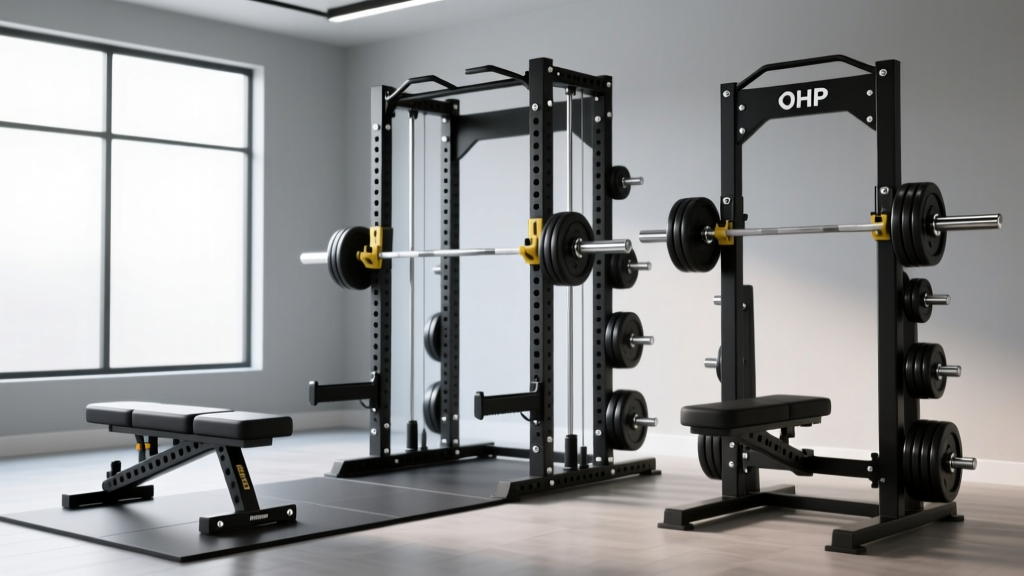
Rack Setup Guide: Squat Stands vs Power Racks for Dumbbell OHP
Compare power racks, squat racks, and stands. Our setup walkthrough covers anchoring, safety arms, and optimizing your rig for the dumbbell OHP.

The Home Gym Rack Dilemma: Beyond the Barbell
When outfitting a home gym, the debate between a power rack, a traditional squat rack, and minimalist squat stands usually centers on barbell squats and bench presses. However, as lifters advance and incorporate heavier unilateral and dumbbell movements, the structural nuances of your rig become critical. If you are programming heavy dumbbell OHP (Overhead Press) variations, your choice of rack dictates not just your clearance, but your safety margins when lifting near failure.
In 2026, the home fitness equipment market offers hyper-specialized rigs, but a flawed installation or a mismatched rack footprint can turn a simple seated dumbbell OHP into a hazardous endeavor. This complete setup and installation walkthrough will guide you through selecting the right framework, preparing your subfloor, and configuring safety spotter arms to accommodate both heavy barbell lifts and demanding dumbbell OHP sessions.
Decision Matrix: Power Rack vs. Squat Rack vs. Squat Stand
Before unboxing any hardware, you must align your equipment choice with your spatial constraints and exercise repertoire. Below is a comparative breakdown of the three primary rack systems available on the market today.
| Feature | Squat Stands (e.g., Rogue SML-1) | Half Rack / Squat Rack (e.g., Rep Fitness HR-5000) | Full Power Rack (e.g., Rogue RM-43) |
|---|---|---|---|
| Average 2026 Cost | $450 - $600 | $800 - $1,200 | $1,100 - $2,500+ |
| Footprint | 48' x 48' (Minimal) | 48' x 53' (Moderate) | 49' x 43' to 49' x 53' |
| Standing Dumbbell OHP Clearance | Unrestricted (Open space) | Good (Open front) | Poor to Fair (Depends on depth) |
| Seated Dumbbell OHP Safety | Low (No lateral catch) | High (With spotter arms) | Maximum (Enclosed cage) |
| Installation Complexity | Low (Must be bolted down) | Medium | High (Heavy, multi-piece) |
The Dumbbell OHP Factor: Why Your Rack Choice Matters
According to exercise biomechanics experts featured in BarBend's dumbbell OHP guide, the overhead press requires strict vertical barbell or dumbbell tracking to avoid lumbar hyperextension. When performing a standing dumbbell OHP inside a full power rack, the internal depth of the cage becomes a major limiting factor.
Clearance Warning: The 30-Inch Rule
If you plan to perform standing dumbbell OHP inside your rig, you must purchase a power rack with an internal depth of at least 30 inches. Standard 24-inch deep racks will cause the heads of heavy dumbbells (like 100lb+ urethane hex bells) to strike the rear uprights during the ascent, disrupting your groove and potentially damaging the rack's powder coat or the dumbbell casing.
Conversely, if you prefer the seated dumbbell OHP to isolate the anterior deltoids without lower back fatigue, a full power rack or a half rack equipped with extended safety spotter arms is mandatory. If you fail a rep with 120-pound dumbbells over your face, a power rack's pin-pipe safeties set just below shoulder height will catch the drop. Squat stands offer zero overhead or lateral protection for this movement.
Complete Installation Walkthrough: From Concrete to Calibration
Whether you opt for the open-air freedom of squat stands or the enclosed safety of a power rack, a rigorous installation is non-negotiable. A poorly anchored rack can tip during aggressive re-racking or when dropping heavy dumbbells onto safety straps.
Phase 1: Subfloor Prep and Anchoring
Never install a rack directly over floating rubber horse stall mats without anchoring through them. The compression of the rubber will cause the rack to wobble, which is highly dangerous when standing inside the cage for a dumbbell OHP.
- Concrete Drilling: If bolting directly to a garage slab, use a hammer drill with a 1/2-inch masonry bit. Ensure your concrete is at least 3,000 PSI and 4 inches thick. Use 3/8' x 3' Red Head wedge anchors.
- The Plywood Platform Method: For basement gyms or finished floors, build a 3/4-inch tongue-and-groove plywood platform. Bolt the rack to the plywood using 3/8' carriage bolts, and then secure the plywood to the concrete subfloor. This distributes the kinetic load of dropped weights and provides a dead-flat surface for benching and seated pressing.
Phase 2: Upright Squaring and Bolt Torquing
Assembling a power rack involves dozens of structural bolts. Do not fully tighten any bolt until the entire frame is assembled and standing upright. Once the cage is erected, use a carpenter's level on all four uprights.
- Torque Specs: Use a calibrated torque wrench to tighten all structural 5/8-inch hardware to exactly 90-100 ft-lbs. Over-torquing can warp the steel brackets, causing the J-cups to sit unevenly.
- Nyloc Nuts: Ensure the nylon insert on your lock nuts is facing outward. If the threads do not extend at least 1/4-inch past the nylon ring, the bolt is too short and structurally compromised.
Phase 3: Configuring Safety Spotter Arms for Dumbbell OHP
Setting up safeties for a barbell bench press is straightforward, but configuring them for a seated dumbbell OHP requires precise measurement. According to comprehensive testing by Garage Gym Reviews, adjustable safety straps are often superior to steel pin-pipes for dumbbell work, as they prevent the dumbbell handles from slipping off a rigid metal bar.
Setup Protocol for Seated Dumbbell OHP:
- Sit on your bench with perfect posture, holding a light pair of dumbbells at the bottom of the pressing movement (dumbbells at shoulder/ear level).
- Have a partner measure the distance from the floor to the bottom of the dumbbell handle.
- Set your safety straps or pin-pipes exactly 2 inches below this measurement.
- This ensures that if your triceps fail at the bottom of the movement, the dumbbells will rest on the safeties before your shoulders are forced into extreme, injurious external rotation.
Edge Cases and Troubleshooting
Troubleshooting: Rack Sway During Standing Presses
Issue: When performing a standing dumbbell OHP or strict barbell press, the rack sways slightly.
Diagnosis: This is almost always caused by uneven floor compression or under-torqued crossmember bolts.
Fix: Loosen all crossmember bolts, use a rubber mallet to seat the frame firmly against the floor or platform, and re-torque to 95 ft-lbs. If using squat stands, verify that your rear stabilizer bar is tightly bolted and that the concrete anchors have not spun during tightening.
Another common edge case involves weight storage horns. If you purchase a power rack with integrated weight storage, loading heavy bumper plates on the rear horns increases the rack's overall footprint. Ensure you leave at least 18 inches of clearance behind the rack so you can freely walk around it to retrieve dumbbells for your OHP sets without tripping over loaded plates.
Final Verdict: Which Rig Should You Build?
If your programming heavily features heavy barbell squats, benching, and you occasionally mix in seated dumbbell OHP work, a Full Power Rack with an internal depth of 30 inches or more is the undisputed champion of safety and versatility. The enclosed cage allows you to push dumbbell presses to absolute failure without a spotter.
However, if your garage is narrow, or if you strictly prefer standing dumbbell OHP and Olympic lifts where an enclosed cage would restrict your movement path, a pair of heavy-duty Squat Stands paired with a separate, adjustable utility bench is the superior 2026 setup. Just remember: when using squat stands, you must practice strict bailout techniques for dumbbell presses, as the equipment will not save you from a failed rep.
For more insights on building a complete free-weight sanctuary, consult the equipment safety standards outlined by the National Strength and Conditioning Association (NSCA) to ensure your home gym meets commercial-grade safety protocols.
Expert Tip: Always keep a pair of 10lb or 15lb fractional plates near your dumbbell rack. When progressing your dumbbell OHP, jumping from 70s to 80s is a massive 14% load increase. Fractional plates allow you to micro-load your dumbbells, ensuring continuous progressive overload without sacrificing your pressing mechanics.
More gear to consider
All reviews
Power Rack vs Squat Stand for Various Exercises with Dumbbells

Cast Iron vs Competition Kettlebells & Pec Workout with Dumbbells
Lying Hamstring Curls with Dumbbells: Rubber Hex vs Urethane 2026

DIY Dumbbells vs Loadable Handles: A 2026 Cost Breakdown
Best Adjustable Dumbbells for Incline Dumbbell Chest Fly (2026)
