Olympic vs Standard Plates: Setup & Dumbbell Supinated Curl Guide
Discover how to choose and install Olympic vs standard weight plates for your home gym, optimizing setup for barbell lifts and the dumbbell supinated curl.

The Foundation of Your 2026 Home Gym Ecosystem
When building a home gym, most lifters obsess over the power rack or the barbell, treating weight plates as an afterthought. However, the choice between 1-inch Standard and 2-inch Olympic weight plates is the most critical infrastructural decision you will make. This choice dictates your barbell compatibility, your storage footprint, and surprisingly, the biomechanical efficiency of your isolation movements.
In this complete setup and installation walkthrough, we will break down the exact specifications, 2026 pricing matrices, and spatial requirements for both plate ecosystems. More importantly, we will explore a highly overlooked E-E-A-T insight: how your plate choice directly impacts the clearance and execution of the dumbbell supinated curl when using loadable dumbbell handles.
Standard vs. Olympic: The 2026 Buyer’s Matrix
Before unboxing and assembling your gear, you must understand the physical and financial differences between the two primary plate ecosystems. According to BarBend's comprehensive guide to plate ecosystems, the standard vs. Olympic debate ultimately comes down to load capacity, bore tolerance, and long-term scalability.
| Feature | Standard (1-Inch) | Olympic (2-Inch) |
|---|---|---|
| Bore Diameter | 1 inch (25.4mm) - Often inconsistent | 2 inches (50.8mm) - Machined to 50.4mm |
| Max Load Capacity | 150 - 250 lbs (per dumbbell handle) | 500 - 1,000+ lbs (per barbell/dumbbell) |
| 2026 Avg. Pricing (Rubber/Iron) | $0.90 - $1.30 per lb | $1.50 - $3.50 per lb |
| Fractional Plate Availability | Rare / Non-existent | Abundant (0.25lb to 1lb change plates) |
| Storage Integration | Standard 1" pegs (often flimsy) | 2" Olympic horns / heavy-duty saddles |
The Biomechanical Edge: Dumbbell Supinated Curl Clearance
Why does plate diameter and ecosystem matter for an isolation exercise? The biceps brachii serves two primary functions: elbow flexion and forearm supination. To maximize muscle fiber recruitment during a dumbbell supinated curl, the lifter must rotate the wrist outward while flexing the elbow, bringing the dumbbell toward the shoulder.
⚠️ Failure Mode: Forearm Clipping on Standard Spin-Locks
If you are using 1-inch Standard cast iron plates on a traditional spin-lock dumbbell handle, you will encounter a severe biomechanical failure mode. A standard 10lb cast iron plate is roughly 1.5 inches thick with a 4.5-inch diameter. Because 1-inch handles have minimal inner collar clearance (often less than 1.5 inches), the bulky plate sits dangerously close to your grip. As you supinate and flex past 90 degrees, the medial edge of the standard plate will physically collide with your flexor carpi radialis (inner forearm), artificially limiting your range of motion and ruining the peak contraction.
The Olympic Loadable Dumbbell Solution
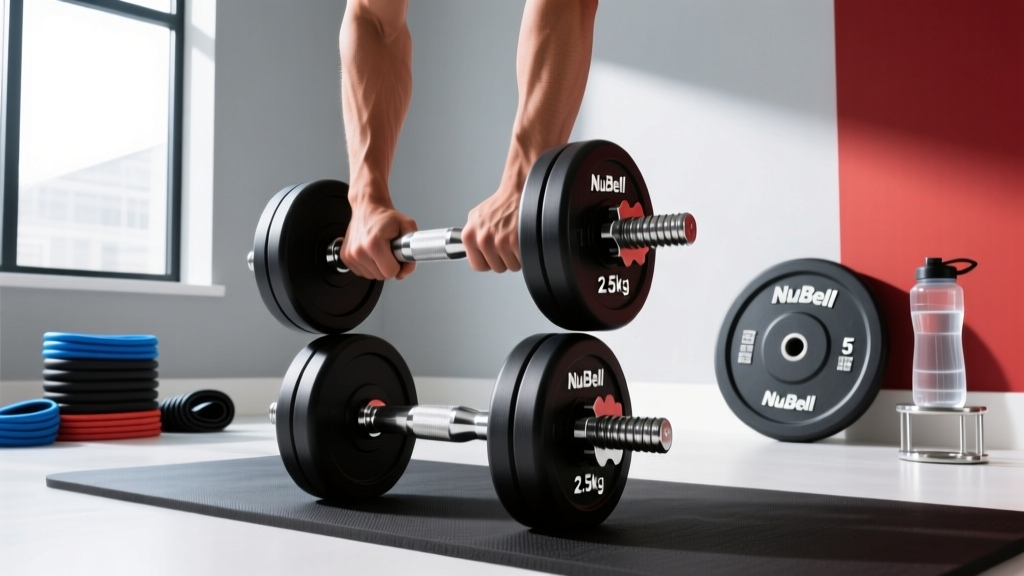
Conversely, upgrading to an Olympic ecosystem allows you to use Rogue Loadable Dumbbell Handles or similar 2-inch sleeve dumbbells. These handles feature a massive inner flange and a longer sleeve, pushing the weight plates further away from the grip zone. Even though Olympic plates are larger in overall diameter, the lateral distance from the handle creates a 4+ inch clearance gap. Your forearm can rotate and flex freely into a full dumbbell supinated curl without any hardware interference.
Complete Setup and Installation Walkthrough
Once you have committed to your plate ecosystem (we strongly recommend Olympic for long-term scalability and biomechanical clearance), follow this step-by-step installation guide to integrate your plates, storage, and dumbbell station.
Step 1: Assessing Rack and Tree Footprints
Weight plates require dedicated, structurally sound storage. Do not lean plates against a wall; this is a severe safety hazard and degrades the rubber coating over time.
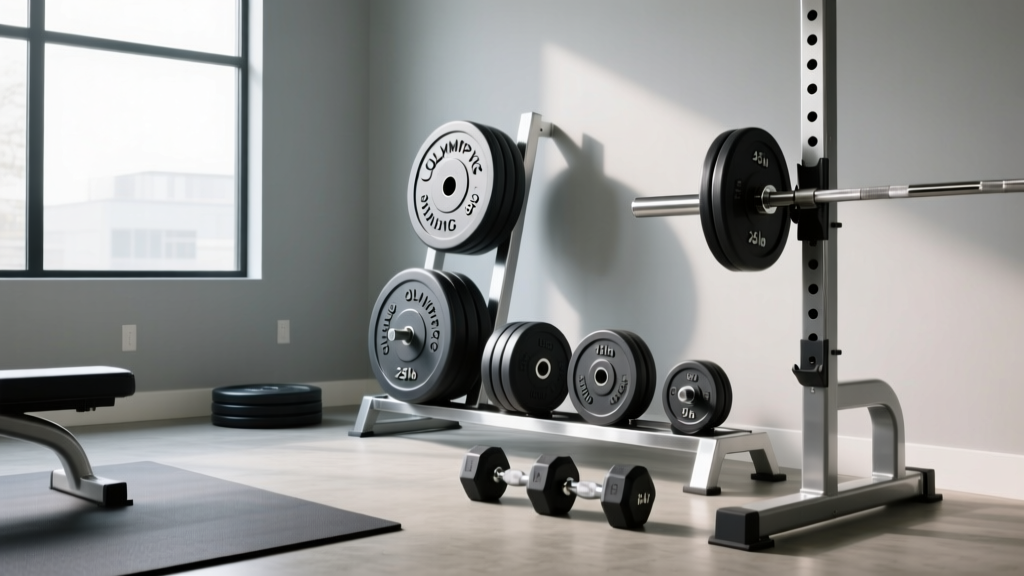
- Power Rack Integration: If you own a rack like the REP Fitness PR-4000 or Titan T3, install the 2-inch Olympic storage pegs on the rear uprights. Ensure the pegs are mounted at least 18 inches from the floor to prevent plates from resting on the ground, which can cause moisture damage and rust on the inner steel rings.
- Standalone Weight Trees: For garages with limited rack space, install an A-frame Olympic weight tree. Installation Tip: Anchor the base of the tree to your concrete floor using wedge anchors. A fully loaded tree can exceed 800 lbs and poses a tipping hazard if bumped by a rolling barbell.
Step 2: Bore Tolerance Testing and Maintenance
Upon receiving your Olympic plates, perform a bore tolerance test. High-quality 2026 urethane and rubber plates are machined to 50.4mm to ensure a snug fit on 50mm barbell sleeves. Slide a plate onto your barbell or dumbbell handle. It should slide on smoothly but require a firm tap to remove. If it rattles excessively, the bore is out of spec. Wipe the inner steel rings with a microfiber cloth and apply a light coat of 3-in-One oil to prevent oxidation, which can cause the plates to seize onto the steel sleeves.
Step 3: Assembling the Loadable Dumbbell Station
To set up your dumbbell station specifically for isolation movements like the dumbbell supinated curl, you must prioritize micro-loading and collar security.
- Select the Handles: Use 2-inch Olympic loadable handles with screw-down or clamp collars. Avoid spring collars for dumbbells, as the lateral torque generated during supination can cause spring collars to slip.
- Load with Fractional Plates: Isolation movements require small progressive overload increments. Jumping from 20lb to 25lb dumbbells is a 25% load increase, which can trigger distal bicep tendonitis. Utilize 0.5lb and 1lb Olympic fractional change plates. Load the fractional plates first (closest to the handle), followed by your primary 5lb or 10lb bumpers/cast iron plates.
- Secure the Collars: Tighten the screw-down collars flush against the outermost plate. Ensure the rubber gaskets inside the collars are intact to prevent the plates from shifting and altering the center of gravity mid-curl.
💡 Pro-Tip: The Urethane Advantage
For home gyms in 2026, Urethane Olympic plates are the gold standard. Unlike traditional rubber plates, urethane does not off-gas toxic odors, is highly resistant to UV degradation from garage windows, and features a thinner profile. This thinner profile further reduces the lateral bulk on loadable dumbbell handles, maximizing your clearance for the dumbbell supinated curl and other close-grip movements.
Storage Solutions and Safety Protocols
Proper storage extends the life of your equipment and keeps your training space safe. When organizing your Olympic plates on a weight tree or rack pegs, follow the 'Heavy-Low, Light-High' protocol.
- Bottom Tier (Horns 1 & 2): 45lb and 35lb plates. Keeping the heaviest plates near the base lowers the center of gravity of the weight tree, preventing tipping.
- Middle Tier (Horns 3 & 4): 25lb and 15lb plates.
- Top Tier (Horns 5 & 6): 10lb, 5lb, and fractional change plates.
Safety Warning: Never load a single heavy 45lb plate onto one side of a weight tree without balancing it on the opposite side. The asymmetric torque can bend the storage horn or tip an unanchored tree.
Final Verdict: Scaling for the Long Term
While 1-inch Standard plates offer a lower barrier to entry regarding upfront cost, they severely limit your training potential. The inconsistent bore sizes, lack of fractional change plates, and the biomechanical interference they cause during exercises like the dumbbell supinated curl make them a poor investment for serious lifters.
By installing a 2-inch Olympic ecosystem, utilizing loadable dumbbell handles, and integrating fractional plates, you create a commercial-grade home gym setup. This configuration not only supports heavy compound barbell lifts but also provides the precise micro-loading and physical clearance required to perfect your isolation mechanics for years to come.
More gear to consider
All reviews
Barbell Clamps Compared: Safety for Your Dumbbell Gym Workout

The Ultimate Home Setup for Seated Bicep Curls with Dumbbells

Dumbbell Workout for Belly Fat: Fixing Neoprene Mistakes
Power Rack vs Squat Rack vs Stand for Dumbbell Step-Ups & Lifts

Cheap vs Premium Weights: What You’re Really Paying For — A Data-Driven Breakdown