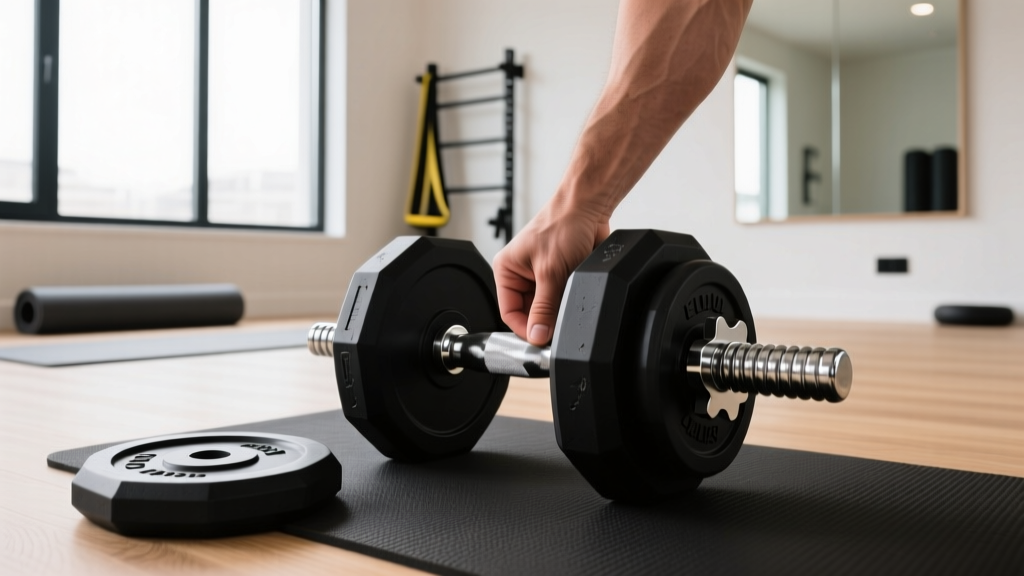
Olympic vs Standard Plates: Setup Guide for Your 50 Pound Dumbbell Rack
Master your home gym setup with our Olympic vs standard plate guide. Learn rack installation, storage, and how to safely integrate your 50 pound dumbbell.

The Foundation: Choosing Your Weight Plate Ecosystem
When building a comprehensive home gym, the most critical infrastructure decision occurs before you even unbox your power rack: choosing between Olympic and standard weight plates. This choice dictates not only your barbell progression but also the spatial geometry of your entire lifting station, including how you integrate heavy free weights like a fixed or adjustable 50 pound dumbbell into your storage layout. A mismatched ecosystem leads to bent sleeves, incompatible storage pegs, and a cluttered, unsafe workout environment.
In this complete setup and installation walkthrough, we will break down the biomechanical and structural differences between Olympic and standard plates, guide you through the physical installation of your weight storage tree, and demonstrate exactly how to configure your rack to safely house heavy implements alongside your barbell plates.
Phase 1: Olympic vs. Standard Plate Matrix
The divide between Olympic and standard plates comes down to the center bore diameter: 2 inches (50.6mm) for Olympic, and 1 inch (25.4mm) for standard. While standard plates are often marketed to beginners due to a lower upfront cost, they introduce severe limitations as your strength increases. According to equipment safety guidelines published by the National Strength and Conditioning Association (NSCA), using improperly rated bars and plates can lead to catastrophic equipment failure under heavy eccentric loads.
| Feature | Standard Plates (1" Bore) | Olympic Plates (2" Bore) |
|---|---|---|
| Max Load Capacity | ~200-250 lbs (Bar yielding risk) | 1,000+ lbs (IPF Rated) |
| Sleeve Length | 6" - 8" (Limited plate real estate) | 16.3" (Standardized for heavy loading) |
| Bar Mechanics | Solid steel, no rotation (wrist torque) | Bronze bushings/needle bearings |
| Cost per Pound | $1.25 - $1.75 / lb | $2.00 (Iron) to $5.00 (Urethane) / lb |
| Resale Value & Longevity | Low (High upgrade churn) | High (Lifetime durability) |
Phase 2: Weight Tree and Rack Installation Walkthrough
Once you have committed to your plate type, the next step is installing the storage infrastructure. For this walkthrough, we are using a 4-post commercial weight tree with integrated dumbbell tiers, a common setup for hybrid home gyms that utilize both barbells and heavy dumbbells.
Step 1: Floor Preparation and Footprint Mapping
Before assembling the tree, lay down 3/4-inch vulcanized rubber horse stall mats. These provide a 40-durometer shock absorption layer that protects both your concrete subfloor and the cast iron of your plates. Map out a 4x6 foot footprint. Ensure the weight tree is positioned exactly 36 inches away from the uprights of your power rack to allow for safe barbell un-racking and plate loading without spatial interference.
Step 2: Assembling the Storage Tree
- Base Alignment: Attach the front and rear A-frame legs to the central spine using the provided 1/2-inch Grade 8 hex bolts. Hand-tighten first to allow for micro-adjustments.
- Peg Installation: Insert the 2-inch solid steel Olympic storage pegs. Ensure the retaining pins are fully seated. For standard plates, swap in the 1-inch sleeves, but remember the warning above regarding ecosystem mixing.
- Tier Angling: If your tree features adjustable dumbbell tiers, set the bottom tier to a 15-degree upward angle. This prevents heavy implements from sliding off during aggressive grabs.
- Torque and Level: Use a 24-inch torpedo level across the top crossbar. Tighten all bolts to 60 ft-lbs using a calibrated torque wrench.
Phase 3: Integrating the 50 Pound Dumbbell
A major challenge in home gym setups is accommodating heavy, high-volume free weights alongside barbell plates. The 50 pound dumbbell is a transitional threshold weight—heavy enough to require serious structural support on the rack, but light enough to be used for high-rep hypertrophy work like Romanian Deadlifts or heavy Goblet Squats.
Fixed Hex vs. Adjustable: Spatial Considerations
If you are using a fixed 50 lb rubber hex dumbbell (such as the REP Fitness Rubber-Coated 50lb pair), each dumbbell measures approximately 14.5 inches in length with a 4.5-inch head width. On a standard 3-tier dumbbell rack, a pair of 50 lb dumbbells requires a minimum of 32 inches of horizontal clearance on the bottom tier to prevent the rubber heads from grinding against each other, which accelerates urethane degradation.
Alternatively, if your setup relies on an adjustable 50 pound dumbbell system (like the Nuobell 50 LB or Bowflex SelectTech 552), the spatial footprint shrinks drastically to roughly 15 x 8 inches per cradle. However, adjustable dumbbells require strict vertical clearance. Ensure the tier above your 50 lb adjustable cradle is at least 14 inches high; otherwise, the dial mechanism or handle housing will scrape the rack above it when you lift the weight out of the cradle.
'When organizing your weight tree, always place your heaviest dumbbells and largest diameter bumper plates on the lowest pegs or tiers. This lowers the center of gravity of the storage unit, preventing tip-overs during dynamic plate removal.' — FitGearPulse Equipment Safety Manual
Phase 4: Step-by-Step Loading and Calibration Protocol
With the tree assembled and the 50 pound dumbbell station configured, it is time to calibrate your loading protocol. Proper installation isn't just about bolting metal together; it's about establishing a safe workflow.
- Calibrate the Bar: Before adding plates, slide your empty Olympic barbell onto the rack J-cups. Ensure the knurling rings align symmetrically with the uprights.
- Load Symmetrically: When pulling plates from your newly installed tree, always load in a 1:1 ratio. Slide the 45 lb (20 kg) plates flush against the inner collar.
- Secure the Sleeves: Use spring collars for quick changes, but for heavy eccentric sets involving the barbell or when pairing barbell work with your 50 pound dumbbell accessory sets, use machined aluminum lock-jaw collars to prevent lateral plate shift.
- Dumbbell Integration: When transitioning from barbell bench presses to heavy dumbbell flyes, place your 50 pound dumbbells parallel to the bench, 12 inches apart, with the handles facing outward. This 'ready position' minimizes lower back torque when you hinge to pick them up for the knee-kick start.
Expert Troubleshooting: Edge Cases and Failure Modes
Even with premium equipment, installation and usage edge cases arise. Here is how to troubleshoot the most common issues encountered when mixing plate storage and heavy dumbbell usage.
1. Sleeve Rattle and Play
The Issue: Your Olympic plates wobble laterally on the barbell sleeve, creating a loud rattling noise and shifting your center of mass during lifts.
The Fix: This is usually caused by a buildup of chalk and oxidized metal dust inside the plate bore. Remove the plates from the tree, wipe the inner steel ring with a microfiber cloth dampened with 3-in-One oil, and clean the barbell sleeve with a nylon bristle brush. Never use WD-40, as it attracts dust and degrades bronze bushings.
2. Urethane Degradation on Heavy Dumbbells
The Issue: The rubber coating on your 50 lb hex dumbbells is peeling or emitting a persistent chemical odor.
The Fix: Cheap imported rubber uses sulfur-based vulcanization that off-gasses indefinitely and becomes brittle. If installing a new set, always opt for virgin urethane or high-density natural rubber (like Rogue Rubber Dumbbells). To clean existing peeling dumbbells, use a mild dish soap and warm water solution; avoid harsh degreasers that break down the polymer chains.
3. Weight Tree Tipping Under Asymmetric Loads
The Issue: The storage tree lifts off the ground when you remove a heavy pair of plates or your 50 pound dumbbell from one side.
The Fix: If your tree does not have a bolt-down flange, you must add counter-ballast. Store your heaviest, least-used items (like specialty barbells or sandbags) on the lowest rear cross-member. Alternatively, anchor the rear feet using 3/8-inch concrete wedge anchors if your gym is on a slab foundation.
Final Thoughts on Gym Ecosystems
Building a functional home gym requires viewing your equipment not as isolated tools, but as an interconnected ecosystem. By choosing Olympic plates over standard ones, you future-proof your barbell progression. By meticulously installing your weight tree and carefully mapping out the spatial requirements for heavy implements like a 50 pound dumbbell, you create a safe, efficient, and professional-grade training environment. Take the time to measure twice, torque your bolts to spec, and respect the geometry of your lifting space. For further reading on biomechanical safety and equipment standards, refer to the technical guidelines provided by the International Powerlifting Federation (IPF).
More gear to consider
All reviews
Troubleshooting Grip: Dumbbell Pull Through & Barbell Knurling

Top Neoprene Dumbbells for a Home Traps Workout With Dumbbells

Power Rack vs Squat Rack vs Squat Stand & Reverse Wrist Curls Dumbbell
Best Dumbbell Racks to Support Dumbbell Only Back Exercises
Olympic Barbell Weight & Knurling vs Press Dumbbells 2026