
Olympic vs Standard Plates for Your Single Dumbbell Tricep Extension
Discover the critical differences between Olympic and standard weight plates, and how your choice impacts exercises like the single dumbbell tricep extension.

The Foundation of Iron: Why Plate Diameter Dictates Your Gym
When building or upgrading a home gym in 2026, the most critical decision you will make isn't which power rack to buy or which smart mirror to mount—it is the diameter of your weight plates. The choice between Olympic and standard weight plates dictates the compatibility of your barbells, the durability of your racks, and surprisingly, the efficacy of your isolation movements. Many lifters overlook how plate dimensions affect exercises like the single dumbbell tricep extension, assuming all iron is created equal. It is not. This in-depth buying guide breaks down the metallurgical, dimensional, and practical differences between Olympic and standard plates, providing a concrete framework to help you invest your money wisely.
The Dimensional Divide: 1-Inch vs. 2-Inch
The fitness industry relies on a longstanding misnomer. 'Standard' plates do not actually have a 1-inch center hole; they measure exactly 1.0625 inches (27mm). Similarly, 'Olympic' plates do not have a true 2-inch hole; they are precision-machined to 1.968 inches (50mm) to fit the sleeves of international weightlifting federation (IWF) spec bars. This 0.032-inch difference on a standard plate might seem negligible, but it fundamentally changes the structural integrity of the barbell or dumbbell handle you are using. According to equipment testing by BarBend, the wider 50mm sleeve of an Olympic setup distributes torque far more evenly, reducing shear stress on the metal during heavy, off-center lifts.
Head-to-Head Comparison Matrix
| Feature | Standard Plates (1.0625") | Olympic Plates (1.968") |
|---|---|---|
| Center Hole Diameter | 1.0625 inches (27mm) | 1.968 inches (50mm) |
| Average 2026 Cost | $1.20 - $1.50 per lb | $2.50 - $4.50 per lb |
| Max Load Capacity | ~250 lbs (bar yield limit) | 800 - 1,500+ lbs |
| Dumbbell Sleeve Length | Typically 4 to 5 inches | Typically 6.5 to 8 inches |
| Resale Value | Low (High market saturation) | High (Universal gym standard) |
| Drop Durability | Poor (Cast iron chips/cracks) | High (Especially urethane/rubber) |
Standard Plates: The Budget Beginner's Trap
Standard cast iron plates, often sold in boxed sets by brands like CAP Barbell or Weider, are the default entry point for budget-conscious lifters. Priced attractively between $1.20 and $1.50 per pound, they allow you to assemble a 200-pound home gym for under $300. However, standard plates come with a severe mechanical ceiling.
The Failure Mode: Bar Whip and Yield Strength
Standard barbells and dumbbell handles are typically constructed from lower-grade steel with a yield strength of under 40,000 PSI. When loaded past 200 to 250 pounds, standard bars experience permanent 'whip' or bending. Furthermore, the 1-inch sleeves on standard dumbbell handles are notoriously short. A standard 14-inch dumbbell handle features a 5-inch grip and two 4-inch sleeves. Because standard cast iron plates are relatively thick, a 4-inch sleeve can only accommodate about three 10-pound plates and a collar per side. This physically limits your maximum load to roughly 35 pounds per dumbbell, creating a massive roadblock for progressive overload.
Olympic Plates: The Lifetime Investment
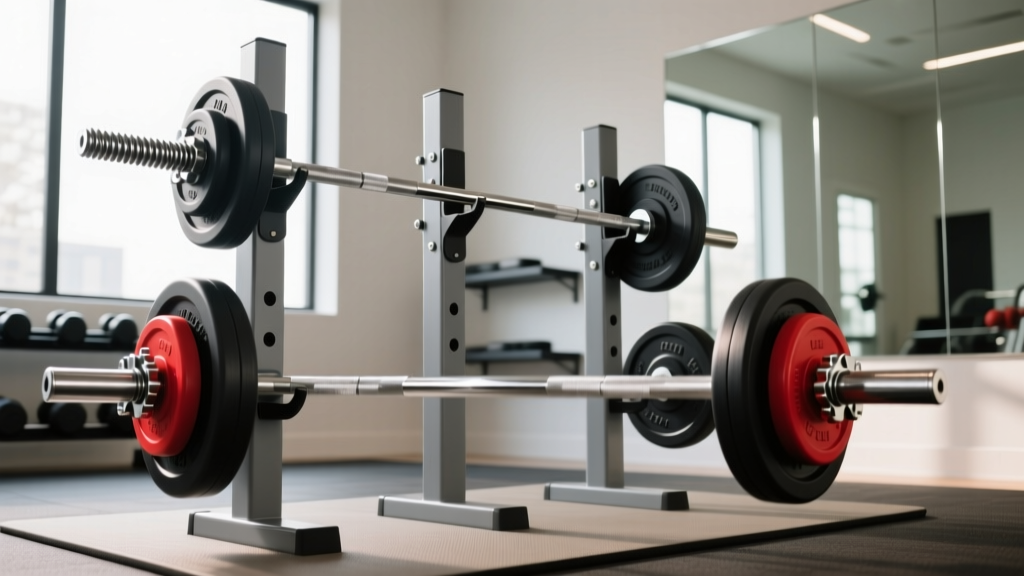
Olympic plates are the undisputed standard for commercial gyms, competitive powerlifters, and serious home gym owners. Whether you opt for cast iron, urethane (like Rep Fitness Urethane plates), or rubber bumpers (like Rogue Echo Bumpers), Olympic plates are designed to mate with high-tensile steel bars boasting a yield strength of 190,000 PSI or higher.
- Pros: Unmatched durability, universal compatibility, high resale value, accommodates massive weight loads, smoother rotation on barbell sleeves.
- Cons: Higher initial cost ($2.50 to $4.50+ per lb), heavier and bulkier to transport, requires a larger initial investment in Olympic-spec bars and racks.
Expert Insight: Never buy standard plates if you plan to lift for more than two years. The cost of replacing bent standard bars and outgrown dumbbell handles will quickly eclipse the money you saved by avoiding Olympic plates initially.
Application Spotlight: Loading for the Single Dumbbell Tricep Extension
How does the Olympic vs. standard debate affect isolation movements? Let us examine the single dumbbell tricep extension (often called the overhead tricep extension or French press). This exercise requires you to grasp a single heavy dumbbell with both hands, lower it behind your head, and extend the elbows to isolate the long head of the triceps.
The Grip and Sleeve Limitation
For an intermediate to advanced lifter, a proper single dumbbell tricep extension requires loads ranging from 60 to 100+ pounds. If you are using standard plates and a standard plate-loaded dumbbell handle, you will hit a physical wall. As noted earlier, the short 4-inch sleeves of a standard handle simply cannot hold enough iron to reach 80 pounds. You would be forced to buy expensive, fixed-weight hex dumbbells to progress.
Conversely, an Olympic dumbbell handle—such as the Titan Fitness 20-inch Olympic Dumbbell Handle or the Rogue Loadable Dumbbell Handle—features sleeves that are 6.5 to 8 inches long. Because Olympic plates (especially calibrated steel or thin urethane plates) have a narrower profile relative to their weight, you can easily slide three 25-pound Olympic plates onto each sleeve, securely lock them with heavy-duty clamps, and perform your single dumbbell tricep extension with 150+ pounds of total load.
Biomechanics and Handle Diameter
When performing the single dumbbell tricep extension, your hands are stacked or interlocked around the inner collar of the dumbbell. Standard dumbbell handles usually feature a 1-inch grip diameter, which can cause wrist fatigue and grip failure before your triceps actually reach muscular failure. Olympic dumbbell handles feature a thicker grip (often 1.2 to 1.4 inches at the collar base) and aggressive knurling. This thicker profile forces your forearms to work harder to stabilize the weight overhead, improving overall grip strength and providing a more secure, slip-free surface for the palms during heavy overhead extensions.
The 2026 Home Gym Decision Framework
The 300-Pound Rule
Use this simple framework to make your purchasing decision:
- Buy Standard IF: Your total gym budget is under $400, you are strictly doing light rehabilitation work, or you are building a gym for young children/teens where loads will never exceed 100 lbs.
- Buy Olympic IF: You plan to squat, deadlift, or bench press over 200 lbs, you want to utilize plate-loaded dumbbell handles for heavy isolation work like the single dumbbell tricep extension, or you want equipment that retains 70%+ of its resale value on the secondary market.
Final Verdict: Standardize Your Iron
While standard plates offer a tempting entry point into home fitness, their mechanical limitations become apparent the moment you attempt to seriously progress your physique. The inability to adequately load plate-loaded dumbbell handles for movements like the single dumbbell tricep extension is just one of many frustrations standard plates will cause. By investing in Olympic plates from reputable manufacturers like Rogue, Rep Fitness, or Eleiko, you are not just buying weight; you are buying structural integrity, limitless progressive overload, and a lifetime of uninterrupted training.
More gear to consider
All reviews
Olympic Barbell Guide vs Dumbbell Hamstring Curl Alternative

Working Out With 10 Lbs Dumbbells: Adjustable Mistakes & 2026 Review

Rubber Hex vs Urethane: Best Gear for the Dumbbell Step Up Exercise

Rubber Hex vs Urethane Dumbbell: Curing the Shake & Budget Breakdown
Barbell Clamps Compared: Gear for Dumbbell Rows for Rear Delts
