Olympic vs Standard Weight Plates vs PowerBlock Dumbbells
Compare Olympic vs standard weight plates and power block dumbbells. Discover the best home gym setup based on space, budget, and lifting goals.

The Home Gym Crossroads: Plate-Loaded vs. Adjustable
When outfitting a home gym in 2026, enthusiasts inevitably hit a major crossroads: do you invest in traditional plate-loaded systems, or do you pivot to space-saving adjustable alternatives? The debate often centers around the foundational building blocks of resistance training. Understanding the mechanical and financial differences between Olympic vs standard weight plates is critical for any barbell or dumbbell setup. However, the rise of premium adjustable systems has introduced a third variable to the equation. Specifically, integrating power block dumbbells into your equipment matrix can entirely bypass the need for massive plate collections for upper-body isolation work. In this comprehensive head-to-head comparison, we break down the metallurgy, ergonomics, spatial economics, and real-world failure modes of standard plates, Olympic plates, and adjustable caged dumbbells to help you engineer the ultimate lifting environment.
Standard Weight Plates: The 1-Inch Bore Economy
Standard weight plates are defined by their 1-inch (25.4mm) center bore. They are the traditional entry point for home gym owners due to their lower upfront cost and widespread availability in big-box sporting goods stores. However, evaluating them strictly on price per pound ignores the long-term biomechanical and structural limitations.
Material and Metallurgy
Standard plates typically come in two materials: cast iron and vinyl-cement. Vinyl-cement plates are incredibly cheap (often $1.00 to $1.50 per pound) but suffer from severe volumetric inefficiency. A 25-pound vinyl plate is significantly thicker and wider than its cast iron counterpart, limiting how much weight you can physically fit onto a dumbbell handle. Furthermore, the vinyl casing is prone to tearing and leaking cement dust after repeated drops or exposure to temperature fluctuations in a garage gym. Cast iron standard plates ($2.00 to $2.50 per pound) are far more durable and compact, though they lack the drop-protection of rubber or urethane coatings.
The Handle Bottleneck
The most critical failure point of a standard plate system isn't the plate itself; it is the dumbbell handle. Standard handles feature a 1-inch diameter sleeve, usually 14 to 16 inches in total length. Once you load more than 35 pounds per hand, the physical space on the sleeve runs out. Furthermore, standard handles rely on threaded star-lock collars. Under heavy, dynamic loads like dumbbell bench presses, the torque can cause these collars to back off mid-set, creating a severe safety hazard as plates slide off the sleeve.
Olympic Weight Plates: The 2-Inch Professional Standard
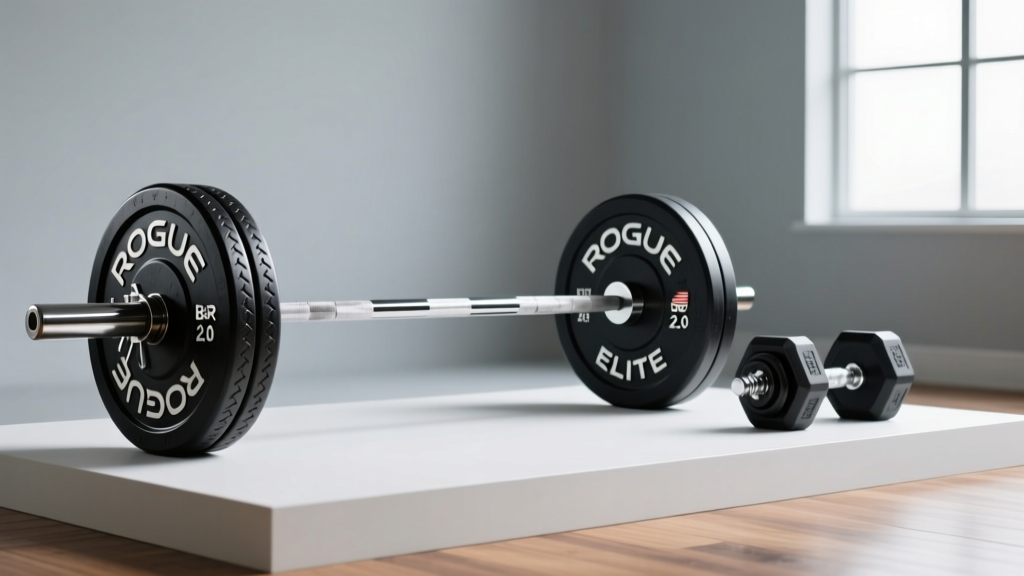
Olympic weight plates feature a 2-inch (50.4mm) bore designed to fit Olympic barbells and specialized Olympic dumbbell handles. This is the universal standard for commercial gyms, competitive powerlifting, and serious home garages. According to industry benchmarks from Rogue Fitness Olympic Plates, the 2-inch bore allows for a vastly superior weight distribution and structural integrity.
Bumper vs. Iron vs. Urethane
The Olympic ecosystem offers diverse material choices. Cast iron Olympic plates remain the most cost-effective for general strength training ($1.50 to $2.50 per pound). Rubber-grip plates add a layer of protection and ease of handling, while virgin rubber bumper plates are mandatory for Olympic weightlifting drops. For high-end commercial or luxury home gyms, urethane Olympic plates ($4.00+ per pound) offer the ultimate combination of dead-bounce drop protection, scratch resistance, and zero odor.
Ergonomics and Sleeve Rotation
Olympic dumbbell handles are a revelation compared to standard handles. They feature thick, knurled grips and, crucially, rotating sleeves equipped with bushings or bearings. This rotation allows the plates to spin independently of the handle during dynamic movements like snatches or heavy dumbbell curls, drastically reducing torque on the lifter's wrists and elbows. An Olympic handle can comfortably hold 100+ pounds, making it viable for elite-level bodybuilding and strongman training.
PowerBlock Dumbbells: Bypassing the Plate Debate
While the Olympic vs standard weight plates debate focuses on how to load a traditional handle, power block dumbbells offer an entirely different paradigm. Instead of sliding circular plates onto a cylindrical bar, PowerBlock utilizes a rectangular, welded steel cage system with a polyurethane selector pin. This design replaces entire racks of fixed-weight dumbbells and eliminates the need for dumbbell handles and plate storage racks altogether.
Space and Cost Economics
Consider the footprint of a traditional setup. To have a full range of dumbbells from 10 to 50 pounds in 5-pound increments using Olympic plates and handles, you would need over 400 pounds of plates, multiple handles, and a dedicated storage tree, costing upwards of $1,200 and consuming 15 square feet of floor space. By contrast, a single pair of PowerBlock Elite USA adjustable dumbbells (5-50 lbs) retails for roughly $329. They measure just 12 inches long by 6.5 inches wide, occupying less than 1 square foot of space while providing instant weight changes in 2.5 or 5-pound increments.
Biomechanics of the Caged Grip
The unique rectangular geometry of power block dumbbells changes the biomechanics of the lift. The wrist rests securely against the padded side of the steel cage, which can actually reduce wrist extension strain during heavy pressing movements compared to a traditional cylindrical handle. However, the caged design does restrict certain movements; exercises that require the dumbbell to rest against the shoulder (like certain goblet squat variations) or movements where the hands need to be close together (like tight-grip tricep presses) can feel cumbersome due to the bulky steel frame.
Expert Insight: The Hybrid ApproachThe most efficient 2026 home gyms do not choose just one. The optimal setup pairs an Olympic barbell and a set of Olympic bumper plates for heavy compound lower-body lifts (squats, deadlifts) with a set of power block dumbbells for all upper-body isolation, hypertrophy, and accessory work. This hybrid model saves thousands of dollars and massive amounts of space compared to buying Olympic dumbbell handles and hundreds of pounds of fractional plates.
Head-to-Head Comparison Matrix
| Feature | Standard Plates (1-Inch) | Olympic Plates (2-Inch) | PowerBlock Dumbbells |
|---|---|---|---|
| Center Bore | 1 inch (25.4mm) | 2 inches (50.4mm) | N/A (Selector Pin) |
| Avg Cost per Pound | $1.00 - $2.50 | $1.50 - $5.00+ | ~$6.50 (Effective) |
| Max Dumbbell Load | ~35 lbs (Space limited) | 100+ lbs | Up to 120 lbs (Pro Series) |
| Handle Ergonomics | Thin, fixed sleeves | Thick, rotating sleeves | Caged, wrist-supported |
| Space Footprint | High (Requires rack/tree) | Very High | Ultra-Low (Under 1 sq ft) |
| Weight Change Speed | Slow (Unscrew collars) | Moderate (Spring collars) | Instant (1-2 seconds) |
Real-World Failure Modes and Edge Cases
Equipment longevity is defined by how it fails under stress. Based on extensive garage gym testing and community data aggregated by authorities like Garage Gym Reviews, here are the specific edge cases you must anticipate:
- Standard Plate Vinyl Degradation: If you buy cement-filled standard plates and use them in an unclimate-controlled garage, the extreme heat and cold will cause the vinyl to become brittle and split within 18 to 24 months. Once split, moisture enters the cement, causing it to expand and crumble.
- Olympic Hub Wear: Cheap, imported cast iron Olympic plates often have poorly machined center hubs. Over time, sliding these onto a barbell sleeve will scrape away the barbell's zinc or chrome finish, leading to rust on your expensive bar. Always look for plates with stainless steel inserts or precision-machined cast hubs.
- PowerBlock Internal Welds: The primary failure mode for power block dumbbells is not the selector pin, but the internal urethane cushions and welded steel cages. If a user repeatedly drops a fully loaded PowerBlock from overhead height onto a bare concrete floor, the kinetic shock can fracture the internal welds. While the outer cage may look intact, the internal weight plates can become dislodged, creating a dangerous rattling and shifting center of gravity during a lift.
- Standard Collar Thread Stripping: The star-lock collars on standard handles are notorious for cross-threading if forced. Once the threads strip, the collar is useless, rendering the handle a safety liability for heavy pressing.
The 2026 Buyer Decision Framework
To finalize your equipment strategy, apply this decision framework based on your specific training modalities:
Step 1: Assess Your Max Load Requirements
If your programming requires dumbbell bench pressing or heavy farmer's carries exceeding 60 pounds per hand, standard 1-inch plates are immediately disqualified due to sleeve length constraints. You must choose between heavy-duty Olympic dumbbell handles or the PowerBlock Pro/Commercial series (which expand up to 120 lbs).
Step 2: Evaluate Your Floor Plan
If you are building a gym in a small apartment, spare bedroom, or tight corner of a garage, the spatial economics heavily favor adjustable systems. A full set of Olympic plates and dumbbell handles requires a dedicated 6-foot wall for storage trees and plate racks. PowerBlock dumbbells can be tucked under a bench or stored in a closet.
Step 3: Factor in the Barbell Necessity
Remember that neither standard nor Olympic dumbbell plates can be used without a compatible barbell for your main compound lifts (squats, deadlifts, bench press). If you are already purchasing an Olympic barbell and a set of Olympic bumper plates for your main lifts, buying additional Olympic plates specifically for dumbbell handles is highly redundant and expensive. In this scenario, pairing your Olympic barbell setup with power block dumbbells for accessory work provides the ultimate blend of heavy-load capability, space efficiency, and financial prudence.
Ultimately, while the raw material cost of standard and Olympic weight plates will always be cheaper per pound, the hidden costs of storage space, handle limitations, and time spent loading collars make high-quality adjustable systems a superior investment for the modern home gym athlete.
More gear to consider
All reviews
Walking With Dumbbells Workout: Hex vs Urethane Space Guide

Single Leg Romanian Deadlifts With Dumbbells: 2026 Form & Gear Guide

Lower Back Workout Dumbbells: 2026 Loadable Plate Market Trends
Oblique Dumbbell Setup: Barbell Collar and Clamp Types Compared
Tricep Workout Dumbbells Only: Maintaining Loadable Handles & Plates