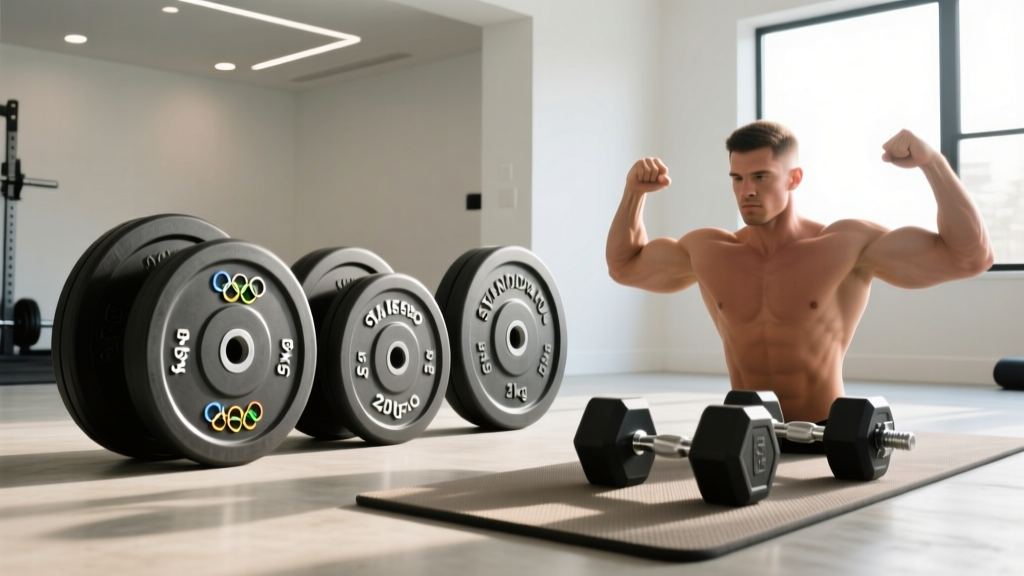
Olympic vs Standard Plates for Lat Exercise Dumbbell Routines
Compare Olympic vs standard weight plates for your lat exercise dumbbell routines. Discover sizing, grip impact, and the best setups for heavy back training.

The Foundation of Heavy Back Training: Plate Sizing Matters
When building a home gym, most lifters obsess over barbells and power racks, leaving their adjustable dumbbell setups as an afterthought. However, if you are serious about back development, the hardware you use to load your dumbbells directly impacts your biomechanics, safety, and progressive overload. Specifically, when configuring a lat exercise dumbbell for heavy single-arm rows, deep pullovers, or renegade rows, the debate between Olympic (2-inch) and Standard (1-inch) weight plates becomes a critical decision point.
The choice between these two plate standards is not just about the hole diameter; it dictates the handle thickness, sleeve length, maximum load capacity, and even the floor clearance during unilateral movements. In this comprehensive 2026 buying guide, we break down the exact specifications, pricing, and real-world edge cases of Olympic versus standard plates to help you engineer the ultimate back-training setup.
Quick Spec Check: The Core Differences
- Standard Hole Diameter: 1 inch (25.4mm)
- Olympic Hole Diameter: 2 inches (50.4mm)
- Max DB Load (14-inch Standard Handle): ~45 to 60 lbs
- Max DB Load (16-inch Olympic Handle): 120 to 160+ lbs
- Average Shaft Thickness: 25mm (Standard) vs. 28mm-32mm (Olympic)
The Biomechanics of Lat Exercise Dumbbell Movements
To understand why plate type matters, we must look at the biomechanics of the latissimus dorsi. According to the exercise kinesiology database at ExRx.net, movements like the dumbbell pullover require the lifter to lie supine on a bench while holding a single dumbbell by the inner plate or handle. The dumbbell is lowered behind the head to stretch the lats, then pulled back over the chest.
When performing this lat exercise dumbbell movement, the physical diameter of the weight plates dictates your range of motion and safety. A standard 10-pound cast iron plate has a diameter of roughly 6.5 inches. If you are holding the dumbbell by the handle, the bottom plate might scrape the bench or floor at the deepest part of the stretch, artificially limiting your range of motion. Conversely, Olympic plates—even lighter ones—often feature a wider profile or are paired with larger bumper plates, providing better clearance. Furthermore, during heavy single-arm lat rows, the rotational inertia of the plates matters. Standard plates on a thin 1-inch sleeve can wobble if the collar loosens, disrupting the mind-muscle connection and forcing your stabilizers to overcompensate.
Standard Weight Plates (1-Inch): The Budget & Space Saver
Standard weight plates feature a 1-inch center hole and are designed for lighter-duty adjustable dumbbell handles, typically secured with star-lock or spin-lock collars. For beginners or those with strict space and budget constraints, standard plates offer a highly accessible entry point into resistance training.
Pros of Standard Plates for Back Training
- Lower Starting Weight: A standard 14-inch dumbbell handle weighs only about 3.5 lbs. Paired with two 2.5 lb plates, your starting weight is under 10 lbs, which is ideal for high-rep lat pullovers or rehabilitation work.
- Compact Storage: Standard plates are generally thinner and smaller in diameter, making them easier to store in tight apartment gyms.
- Cost-Effective: As of 2026, standard cast iron plates average between $1.00 and $1.50 per pound, with basic handles costing under $20.
Cons and Edge Cases
The primary failure mode of standard setups is the sleeve length. A standard 14-inch handle only has about 4.5 inches of loadable sleeve space. Once you exceed 35 or 40 pounds per hand, you run out of physical space to add more plates. Furthermore, the 25mm shaft thickness of standard handles can cause severe grip fatigue during heavy unilateral rows. Your forearms and grip will fail long before your latissimus dorsi reaches muscular failure, effectively bottlenecking your back growth.
Olympic Weight Plates (2-Inch): The Heavy-Duty Standard
Olympic plates feature a 2-inch center hole and are the gold standard for commercial gyms and serious home setups. When paired with an Olympic loadable dumbbell handle (such as those from Rogue Fitness or Titan Fitness), they transform your adjustable dumbbells into elite back-training weapons.
Pros of Olympic Plates for Back Training
- Massive Load Capacity: Olympic dumbbell handles typically feature 6-inch to 7-inch sleeves. You can easily load 120 to 160 pounds per hand, accommodating elite-level single-arm lat rows.
- Superior Grip Mechanics: Olympic handles feature a 28mm to 32mm shaft thickness with aggressive knurling. This thicker grip naturally engages the brachioradialis and forearm flexors, but more importantly, it allows you to hook your fingers securely without crushing your palm during heavy pulling movements.
- Better Clearance & Stability: Olympic plates are wider and more stable. Using 10lb or 25lb Olympic bumper plates for pullovers ensures the dumbbell glides smoothly without catching on the bench.
Cons and Edge Cases
The main drawback is the heavy starting weight. An empty 16-inch Olympic dumbbell handle weighs between 6 and 10 pounds. Add a pair of spring collars (1 lb each) and the smallest available Olympic plates (often 2.5 lbs or 5 lbs), and your minimum starting weight is around 15 to 20 pounds. This makes Olympic setups less ideal for very light isolation work. Additionally, the cost is significantly higher, with premium urethane or bumper plates ranging from $3.00 to $6.00 per pound.
Comparison Matrix: Olympic vs. Standard for Back Training
| Feature | Standard (1-Inch) | Olympic (2-Inch) |
|---|---|---|
| Hole Diameter | 25.4mm (1 inch) | 50.4mm (2 inches) |
| Handle Shaft Thickness | ~25mm (Smooth/Light Knurl) | 28mm-32mm (Aggressive Knurl) |
| Max Load per Hand | 45 - 60 lbs | 120 - 160+ lbs |
| Pullover Clearance | Poor (Small diameter plates) | Excellent (Wide/Large diameter) |
| Average Cost per lb | $1.00 - $1.50 | $2.50 - $6.00 |
| Best For | Beginners, Rehab, Light Isolation | Heavy Rows, Progressive Overload |
Step-by-Step: Building the Ultimate Adjustable Lat Dumbbell
If you are ready to upgrade your back training, follow this framework to build a lat exercise dumbbell setup that maximizes muscle activation and minimizes joint strain.
- Select the Right Handle Length: For Olympic setups, opt for a 16-inch or 20-inch handle. The 16-inch is versatile for most lifters, but if you plan on loading over 100 lbs using thick bumper plates, the 20-inch sleeve prevents the plates from rubbing against your knuckles during rows.
- Choose Plate Material Wisely: For pullovers and floor-based movements (like dumbbell gorilla rows), invest in rubber-coated or urethane Olympic plates. They dampen noise, protect your flooring, and reduce the harsh metallic clanking that can distract from your mind-muscle connection.
- Invest in High-Quality Collars: Never use cheap spring clips for heavy unilateral lat rows. The rotational force of a 90-pound dumbbell row can loosen a weak collar, causing plates to shift mid-rep. Use locking aluminum collars (like Rogue HG 2.0 or Titan lock-jaws) that clamp down with over 200 lbs of lateral pressure.
- Manage Your Grip: Because Olympic handles are thicker, your grip may fail before your lats do. Keep a pair of lifting straps (like Versa Gripps or Harbinger BioForm) nearby. Loop the strap around the thick Olympic shaft to bypass forearm fatigue and pull directly from the elbow, ensuring the latissimus dorsi takes the brunt of the load.
Expert Tip: When performing single-arm Olympic dumbbell rows, do not wrap your thumb completely around the thick 30mm shaft. Instead, use a 'thumbless' or 'suicide' grip, hooking your fingers over the knurling. This aligns the weight directly over your wrist joint, reducing ulnar deviation and allowing you to pull heavier loads directly into your hip pocket for maximum lat contraction.
Frequently Asked Questions (FAQ)
Can I use standard plates on an Olympic dumbbell handle?
No. Standard plates have a 1-inch hole and will not fit over the 2-inch sleeve of an Olympic handle. While you can buy plastic adapter rings that expand a 1-inch hole to 2 inches, these are highly discouraged for heavy back training. The plastic compresses under load, causing the plates to wobble dangerously during dynamic movements like renegade rows.
Are bumper plates better than cast iron for lat exercises?
For pullovers and floor work, yes. Bumper plates have a uniform diameter (usually 17.7 inches for 10lb to 45lb plates), meaning a 10lb bumper plate provides the exact same floor clearance as a 45lb plate. This is incredibly useful for dead-stop lat rows off the floor. However, for bench-supported rows, standard cast iron is fine and takes up less lateral space.
What is the minimum weight I can make an Olympic dumbbell?
Using a standard 6-lb Olympic handle, a pair of 0.5-lb micro-plates (available from brands like Frank's Fitness or Rogue), and lightweight locking collars, you can build a dumbbell that weighs approximately 8 to 9 pounds. This bridges the gap between the heavy starting weight of Olympic gear and the need for lighter isolation movements.
More gear to consider
All reviews
Olympic vs Standard Plates for Dumbbell Lat Workouts & Home Gyms
How to Workout Using Dumbbells: CAP vs. Yes4All Neoprene

Lying Triceps Dumbbell Extension & Barbell Collar Setup Walkthrough

Best Neoprene Dumbbells for a Back Fat Workout: 2026 Matchup

Ivanko Dumbbell Setup & Adjustable Systems Compared