Olympic vs Standard Plates: Setup Guide for Perfect Dumbbell Form
Master your home gym setup with our Olympic vs standard plates installation walkthrough. Learn how plate sizing impacts your dumbbell form and safety.

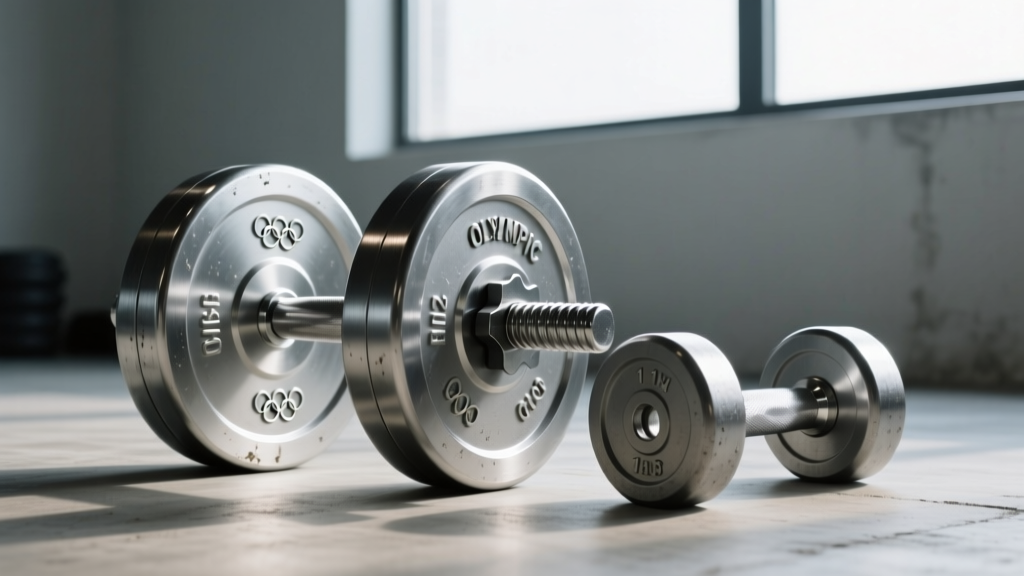
The Core Dilemma: 1-Inch Standard vs. 2-Inch Olympic Plates
Building a functional home gym requires more than just buying iron; it demands a strategic approach to equipment compatibility, spatial planning, and biomechanics. The foundational decision in any free weight setup is choosing between Standard (1-inch / 25mm sleeve) and Olympic (2-inch / 50mm sleeve) weight plates. While beginners often gravitate toward standard plates due to their lower upfront cost, serious lifters quickly realize that Olympic plates are the global standard for durability, accuracy, and exercise versatility.
According to equipment analysts at Garage Gym Reviews, standard cast-iron plates are generally limited to 25 lbs per plate due to the structural weakness of the 1-inch center hole. Drop a 45-lb standard plate from waist height, and you risk micro-fractures or catastrophic cracking around the center ring. Conversely, Olympic plates distribute force across a much larger 50mm hub, making them essential for dynamic movements and heavy loading.
⚠️ Installation Warning: Never use plastic or cheap metal adapters to mount 2-inch Olympic plates onto a 1-inch standard barbell. Under heavy loads (e.g., a 200-lb bench press), the lateral torque will warp the adapter, causing the plate to slip off the sleeve mid-rep—a leading cause of home gym injuries.Step-by-Step Rack and Plate Tree Installation Walkthrough
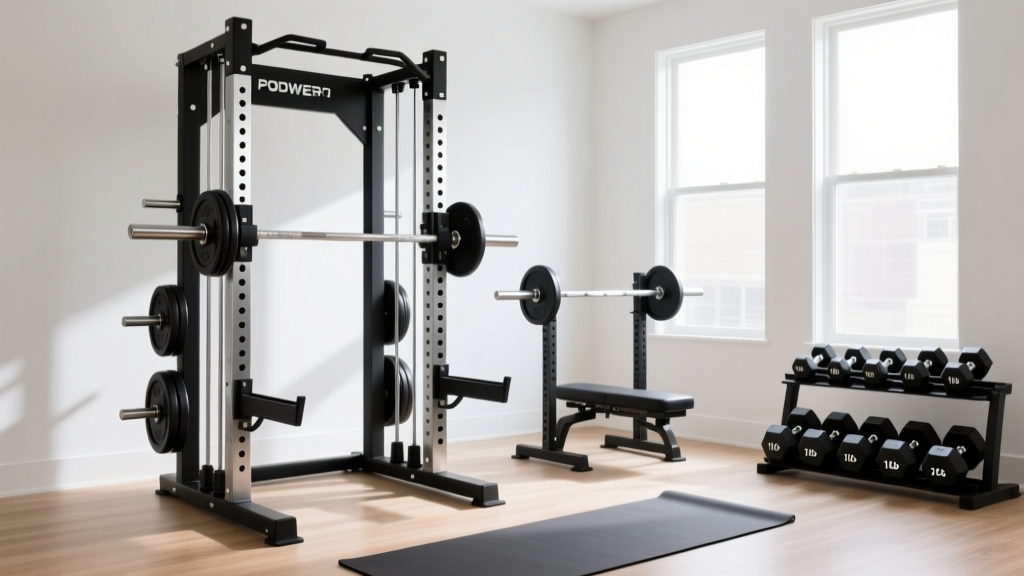
Proper installation of your weight storage and rack system is critical for safety and workflow efficiency. Here is a complete walkthrough for setting up a dedicated plate station integrated with a power rack.
Step 1: Floor Preparation and Anchoring
If you are installing a freestanding plate tree (such as the Titan Fitness 6-Peg Plate Tree) or a bolt-down rack, you must anchor into concrete. Do not rely on the weight of the plates to keep the tree stable; an unevenly loaded tree will tip.
- Locate Studs or Mark Concrete: For concrete floors, mark your anchor points through the base plate holes.
- Drill Pilot Holes: Use a hammer drill with a 1/2-inch masonry bit. Drill to a depth of 3 inches.
- Insert Wedge Anchors: Use M12 x 3-inch stainless steel wedge anchors. Tighten with a torque wrench to 60 ft-lbs to ensure the base is flush against the rubber matting.
Step 2: Rack Integration and Clearance Mapping
When attaching plate storage horns directly to your power rack uprights (e.g., Rogue R-3), spatial awareness is key. You must maintain a minimum of 18 inches of clearance between the rear of the rack upright and the wall to allow for safe plate loading and unloading. Mount your storage horns at chest height (approximately 48 inches from the floor) to prevent lower back strain when loading heavy 45-lb bumpers.
Step 3: Organizing by Diameter and Material
Arrange your pegs logically: place 45-lb and 35-lb Olympic plates on the lowest, thickest pegs to keep the center of gravity low. Store urethane or rubber-coated plates separately from bare cast iron to prevent the rubber from degrading due to friction against rough iron edges.
How Plate Bulk and Sizing Impacts Your Dumbbell Form
The choice between Olympic and standard plates extends far beyond barbells; it profoundly affects your dumbbell form, especially if you utilize loadable dumbbell handles to save space and money in your home gym.
Consider the biomechanics of a Goblet Squat or a Dumbbell Romanian Deadlift (RDL). If you are using standard 1-inch spin-lock dumbbell handles (like the CAP Barbell 14-inch model), you are forced to use standard plates. A 25-lb standard plate has an outer diameter of roughly 11.5 inches. When loaded onto a short handle, the bulky edges of the plates collide with your forearms and wrists, forcing you to flare your elbows and break your neutral wrist alignment. This physical interference directly compromises your dumbbell form, reducing muscle activation in the target area and increasing shear stress on the radiocarpal joint.
Conversely, upgrading to an Olympic loadable system—such as the Rogue Loadable Dumbbell Handles—allows you to slide on slim, high-density urethane Olympic plates or even fractional change plates. Because Olympic plates of the same weight can be manufactured with a thinner profile (or you can use multiple 10-lb plates with a 2-inch hub), the weight sits closer to the center of mass. This compact profile preserves strict dumbbell form during lateral raises, chest presses, and goblet squats, allowing for a natural range of motion without the plates banging against your body.
'The 2-inch Olympic standard was adopted globally not just for barbell tensile strength, but because the larger hub allows for tighter manufacturing tolerances and smoother rotation, which translates to better balance in loadable dumbbell applications.' — National Strength and Conditioning Association (NSCA) equipment guidelines.
Comparison Matrix: Olympic vs Standard for Home Gyms
| Feature | Standard Plates (1-Inch) | Olympic Plates (2-Inch) |
|---|---|---|
| Hole Diameter | 25mm (1.05 inches) | 50mm (2.05 inches) |
| Max Plate Weight | Typically 25 lbs | Up to 100+ lbs (Competition) |
| Average Cost (2026) | $1.00 - $1.40 / lb | $1.60 - $2.80 / lb (Urethane) |
| Durability (Drops) | Poor (Prone to center cracking) | Excellent (Steel hubs absorb shock) |
| Impact on Dumbbell Form | Negative (Bulky, causes wrist flare) | Positive (Compact, aligns with forearm) |
Loading, Collars, and Maintenance Best Practices
Once your tree and rack are installed, maintaining the integrity of your plates and barbell sleeves is paramount.
- Use Locking Collars: For Olympic setups, abandon spring clips. Invest in aluminum locking collars (like the Rogue HG 2.0 Collars, priced around $35/pair). They clamp down with 150 lbs of lateral force, preventing plates from shifting during asymmetrical movements like lunges.
- Sleeve Lubrication: Every six months, wipe down your barbell sleeves with a nylon brush and apply a light coat of 3-in-One oil or synthetic gun oil. This prevents rust buildup that can scrape the inner steel hub of your Olympic plates.
- Inspect for Hub Play: Over time, rubber-coated standard plates can develop 'hub play' where the metal ring separates from the rubber casing. If you can wiggle the metal ring independently of the rubber, retire the plate immediately to prevent it from sliding off the sleeve during a lift.
Frequently Asked Questions (FAQ)
Can I mix rubber bumper plates with cast iron plates on the same barbell?
Yes, but always place the cast iron plates on the inside (closest to the collar) and the rubber bumpers on the outside. According to Rogue Fitness Plate Specifications, bumpers are designed to absorb the initial impact of a drop. If an iron plate hits the floor first, it will transfer shock directly into the barbell sleeve and bearing system.
Are Olympic plates worth the extra cost for a beginner?
Absolutely. The resale value of Olympic plates is incredibly high, often retaining 70-80% of their purchase price if kept indoors. Standard plates, conversely, are nearly impossible to resell at a premium once you outgrow them, making Olympic plates the superior long-term investment.
More gear to consider
All reviews
Cast Iron vs Competition Kettlebells & Dumbbell Front Rack Lunge Space

What Are Dumbbell Shoulder Presses? Loadable Dumbbell Budget Guide

EZ Bar vs Straight Bar Care for Chest and Triceps Dumbbell Workouts
Beyond Pics of Dumbbells: Cast Iron vs Competition Kettlebells

Bumper Plate vs Iron Plate: Pairing Lifetime Fitness Dumbbells